White House Announces Third Arrest From 'Most Wanted Fraudsters' List
Synopsis
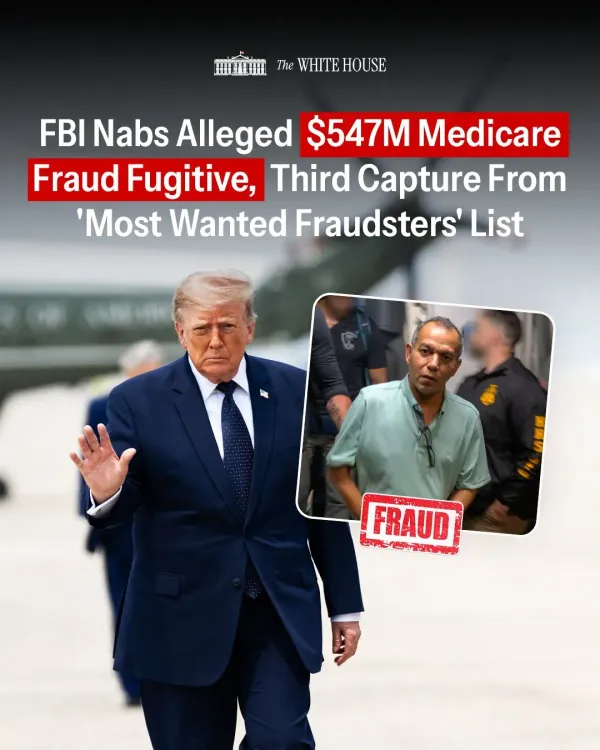
The White House announced the third capture from its 'Most Wanted Fraudsters' list on July 24, 2026, reaffirming President Trump's stated commitment to prosecuting those who steal American taxpayer dollars through a coordinated federal enforcement campaign.
Key Takeaways
The White House announced on July 24, 2026 , that a third person has been captured from its 'Most Wanted Fraudsters' list.
President Donald Trump's administration has framed the arrests as part of a zero-tolerance policy against theft of American taxpayer funds.
The enforcement campaign involves federal agencies including the Department of Justice and inspectors general across the government.
During Trump's first term ( 2017–2021 ), the administration expanded DOJ prosecutions targeting fraud in programmes such as Medicare and disaster relief.
Further arrests from the list, federal court filings, and inspector general reports on recovered funds are expected to follow.
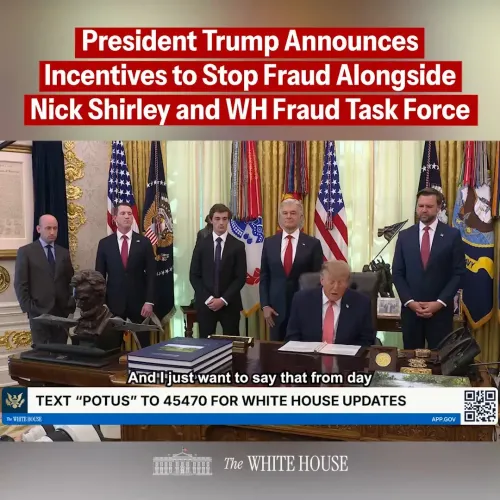
The White House announced on Thursday, July 24, 2026, that a third individual has been captured from what it is calling a 'Most Wanted Fraudsters' list, underscoring the Trump administration's continued push to prosecute those who steal from American taxpayers. The announcement, made via the official White House account on X, framed the arrest as a direct consequence of President Donald Trump's zero-tolerance stance on federal fraud.
Context
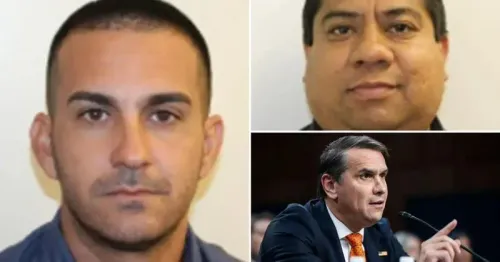
The White House post stated plainly: 'Stealing American taxpayer dollars will not fly under President Trump.' The announcement marks the third capture linked to the list, suggesting a coordinated, ongoing federal enforcement campaign. While the specific identity of the individual arrested and the nature of the fraud have not been detailed in the post, the administration has positioned the arrests as a signature law-and-order achievement.
The reference to a 'Most Wanted Fraudsters' list points to a publicly visible enforcement mechanism designed to name and pursue individuals accused of defrauding the federal government. Such lists have historically been used by agencies including the Department of Justice (DOJ) and various federal inspectors general to apply public pressure and aid in apprehensions.
Policy Backdrop
During Trump's first term from 2017 to 2021, the administration significantly expanded inspector general oversight and ramped up DOJ prosecutions targeting fraud in programmes such as Medicare and federal disaster relief funds. The current second term appears to be extending that posture with a more aggressive public communications strategy around anti-fraud enforcement.
U.S. administrations across party lines have long employed high-profile arrests and public wanted lists as deterrents against financial crimes targeting government funds. What distinguishes the current approach is the direct branding of such efforts under the presidential identity, signalling that anti-fraud action is a top executive priority rather than a routine prosecutorial matter.
Stakeholders and Impact
The primary stakeholders in such enforcement actions are American taxpayers, whose funds are the stated object of protection. Federal prosecutors, inspectors general across agencies, and law enforcement bodies such as the FBI and DOJ are the operational actors executing these captures.
For individuals on the list, the announcement signals sustained federal attention and active pursuit. For the broader public, the messaging is one of accountability — that defrauding government programmes carries real consequences, regardless of how long it may take to bring a suspect into custody.
What's Next
With three captures now announced, attention will turn to whether additional arrests follow from the same list, and whether the administration releases further details on the identities, alleged crimes, and amounts of taxpayer money involved. Federal court filings related to these cases, along with any forthcoming inspector general reports on recovered funds, will provide a clearer picture of the campaign's scope and impact.
The White House's choice to publicise each capture individually suggests a deliberate communications strategy — one likely to continue as further arrests are made. Whether this translates into legislative or structural changes to fraud prevention mechanisms remains to be seen.
Point of View
Not merely a law enforcement update. By tying arrests directly to President Trump's name, the administration is constructing a visible accountability narrative ahead of what could be a sustained campaign. This mirrors a broader pattern in Trump-era governance where executive action on crime and waste is amplified as a presidential achievement. The open question is whether the campaign produces structural reforms to fraud prevention or remains primarily a messaging exercise.
NationPress
21 Oct 2026
Frequently Asked Questions
What is the White House 'Most Wanted Fraudsters' list?
The 'Most Wanted Fraudsters' list is a federal enforcement tool publicised by the Trump White House to identify and pursue individuals accused of stealing American taxpayer money from government programmes.
Who was the third person captured from the fraudsters list?
The White House announcement did not name the individual captured third from the list; further details are expected through federal court filings and official agency releases.
How is President Trump fighting government fraud?
The Trump administration has pursued anti-fraud enforcement through expanded inspector general oversight, Department of Justice prosecutions, and public communications campaigns such as the 'Most Wanted Fraudsters' list.
What happens to people who defraud the US government?
Individuals who defraud the US government face federal prosecution by the Department of Justice, potential imprisonment, and recovery of stolen funds, with cases often investigated by agency inspectors general and the FBI.
Has the US government used wanted lists for fraud before?
Yes, US agencies including the DOJ and various inspectors general have long used public wanted lists to apply pressure on suspects and aid in apprehensions related to financial crimes against federal funds.