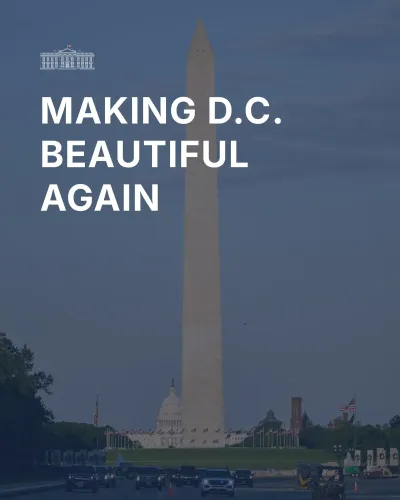
White House Touts D.C. Overhaul Ahead of America's 250th
Synopsis
The White House on June 1, 2026, credited President Trump and the Department of the Interior with transforming Washington D.C.'s streets over 14 months, calling the results 'incredible' ahead of America's 250th birthday commemorations planned for July 2026.
Key Takeaways
The White House on June 1, 2026 , announced that President Trump and the Department of the Interior have overhauled Washington D.C. 's streets over the past 14 months .
The initiative targets safety, aesthetics, and the capital's standing ahead of America's 250th birthday in 2026 .
The Department of the Interior , which oversees federal public lands and monuments, is the primary executing agency.
The effort mirrors Trump's first-term orders on classical federal architecture and the National Garden of American Heroes announced in 2020 .
Major public commemorations are planned for July 2026 in Washington, expected to draw large numbers of domestic tourists.
Precise funding sources and independently verified outcomes of the programme have not been publicly confirmed.
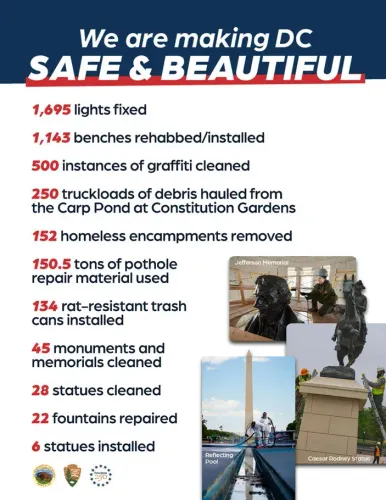
The White House on Monday, June 1, 2026, credited President Donald Trump and the Department of the Interior with dramatically transforming Washington D.C.'s streets and public spaces over the past 14 months, framing the effort as preparation for America's 250th birthday celebrations.
Context
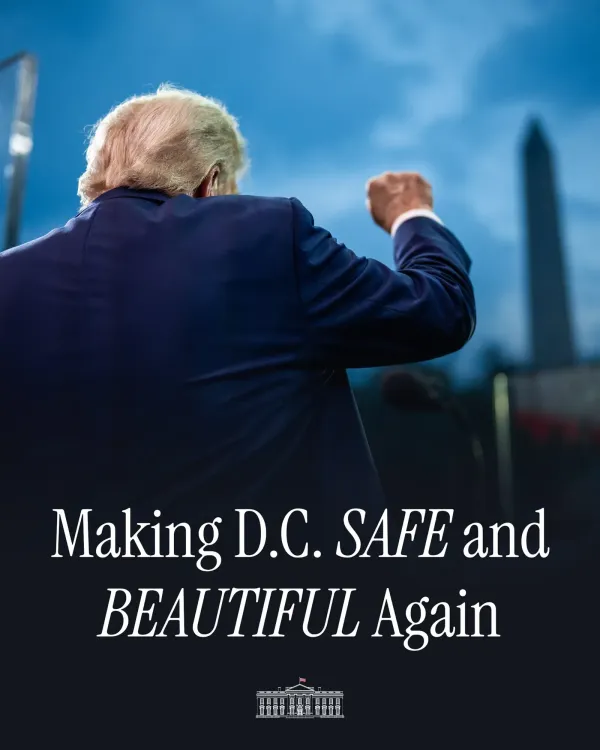
The official White House post declared that the results of the initiative have been 'INCREDIBLE,' citing vast improvements to the streets of the nation's capital. The statement ties the urban overhaul directly to the America 250 semiquincentennial — the landmark commemoration of 250 years since the country's founding in 1776, with major public events planned for July 2026.
The 14-month timeline places the start of the effort around April 2025, shortly after Trump's second term began in January 2025. The White House framed the initiative under three goals: making the capital 'safe, beautiful and respected again.'
Policy Backdrop
The drive to reshape Washington's public landscape is not new to the Trump administration. During his first term, Trump issued executive orders in 2020 directing a return to classical federal architecture and ordering the creation of a National Garden of American Heroes — both moves aimed at projecting national heritage through the built environment.
The Department of the Interior, which oversees public lands and national parks including the National Mall and federal monuments, has been the primary agency executing streetscape and monument-related projects in the capital. Such coordination between the White House and Interior is a recurring mechanism for visible capital improvements.
Historically, U.S. presidents have directed upgrades to Washington ahead of round-number anniversaries. The 1976 Bicentennial saw similar efforts combining law-enforcement visibility, landscaping, and maintenance — a pattern that echoes earlier City Beautiful-era initiatives from the early twentieth century.
Stakeholders and Impact
Washington D.C. residents and the federal workforce are among the most directly affected by changes to the capital's public spaces, from street safety to the condition of parks and monuments. Domestic tourists — who are expected to arrive in large numbers for the semiquincentennial — stand to be the most visible beneficiaries of any aesthetic and security improvements.
The framing of the initiative as a national-pride project ahead of America's 250th birthday also carries symbolic weight for the administration, positioning the federal government as an active steward of the capital's image at a globally watched moment. The precise operational details, funding sources, and independently measured outcomes of the programme have not been publicly verified.
What's Next
The focus now shifts to the rollout of public events, potential monument dedications, and security measures planned for the July 2026 semiquincentennial weekend in Washington D.C. The administration is expected to use the anniversary as a high-profile showcase for the capital's transformation.
How the improvements are received — by residents, independent observers, and the millions expected to visit the capital — will shape the political narrative around the initiative as the 250th anniversary draws closer.
Point of View
Tying a governance claim — urban safety and beautification — to the emotionally resonant milestone of America's 250th birthday. By crediting the Department of the Interior alongside President Trump, the administration distributes ownership of a visible, tangible outcome at a moment when symbolic gestures carry outsized political weight. The framing echoes a long bipartisan tradition of presidents using capital improvements as proxies for national confidence, but the absence of independently verified metrics leaves the 'incredible results' claim open to scrutiny. As July 2026 approaches, the semiquincentennial will serve as a live referendum on whether the administration's promises translated into a demonstrably transformed capital.
NationPress
15 Oct 2026
Frequently Asked Questions
What is the White House's Washington D.C. improvement initiative about?
The White House says President Trump and the Department of the Interior launched an effort 14 months ago to make Washington D.C. safer, more beautiful, and more respected, with major streetscape improvements completed ahead of America's 250th birthday in 2026.
What is America's 250th birthday celebration in 2026?
America's 250th birthday, known as the semiquincentennial or 'America 250,' marks 250 years since the United States declared independence in 1776. Major public commemorations are planned in Washington D.C. in July 2026.
What role does the Department of the Interior play in Washington D.C.?
The Department of the Interior oversees federal public lands, national parks, and monuments, including the National Mall and key sites in Washington D.C., making it the primary agency for capital streetscape and monument projects.
Did Trump do something similar to Washington D.C. during his first term?
Yes. During his first term, President Trump issued executive orders in 2020 directing classical federal architecture for government buildings and ordering the creation of a National Garden of American Heroes, both aimed at reshaping the capital's public identity.
When are the main America 250 events in Washington D.C.?
The main America 250 semiquincentennial events are planned for July 2026 in Washington D.C., coinciding with the anniversary of the country's founding on July 4, 1776.