White House Touts Trump's 'Made in America' Manufacturing Push
Synopsis
The White House declared on October 8, 2026 that President Trump has secured trillions in investments, imposed sweeping tariffs, and ignited a factory revival — pitching 'Made in America' as the defining economic legacy of his presidency against decades of perceived neglect.
Key Takeaways
The White House posted on October 8, 2026 claiming President Trump has secured trillions of dollars in manufacturing investments.
The administration credits effective tariffs as a central driver of its claimed factory resurgence.
The post accuses previous US administrations of favouring 'cheap foreign labor' over domestic workers — a core Trump political argument since 2015.
The phrase 'stop at nothing' signals continued aggressive trade and industrial policy action ahead.
The 'Made in America' brand unifies tariff, investment, and reshoring narratives into a single political and economic message.
The stance has direct implications for trading partners, including India , whose exporters face a persistently protectionist US posture.
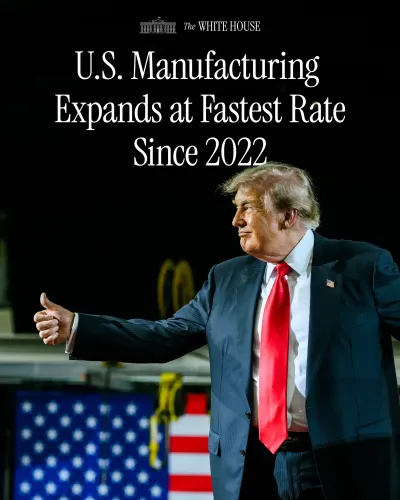
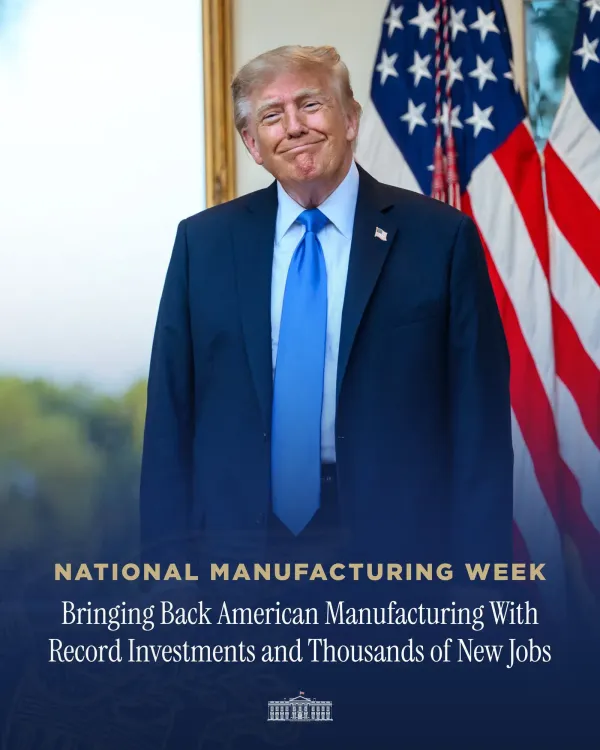
Trillions of dollars in secured investments, a wave of new tariffs, and a factory floor revival — the White House is making its loudest case yet that President Donald Trump has fundamentally rewritten America's industrial playbook. In a post on X on Thursday, October 8, 2026, the official White House account declared that Trump's policies have sparked a 'factory resurgence' while shielding 'hardworking Americans' from what it called decades of neglect by previous administrations.
The Three-Pillar Case: Investment, Tariffs, and Factory Revival
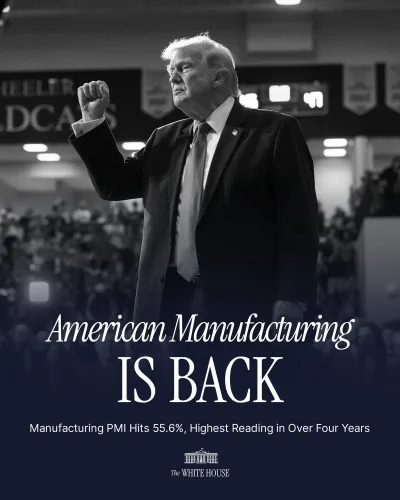
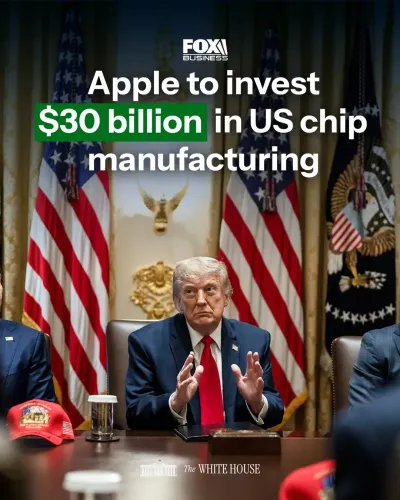
The White House framed Trump's manufacturing record around three concrete levers. First, trillions in secured investments — a figure the administration has pointed to as evidence that both domestic and foreign capital is returning to American soil. Second, effective tariffs levied on imported goods, a cornerstone of Trump's trade doctrine stretching back to his first term and sharpened in his second. Third, a claimed 'factory resurgence' — the on-the-ground payoff, in the administration's telling, of those upstream policy choices.
The post pulls no rhetorical punches: it accuses 'previous administrations' of trading away American blue-collar jobs in exchange for 'cheap foreign labor' — a framing that has been central to Trump's political identity since 2015 and remains the emotional engine of his economic nationalism.
Tariffs as the Central Instrument
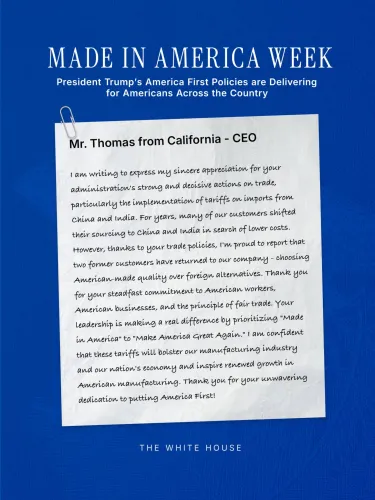
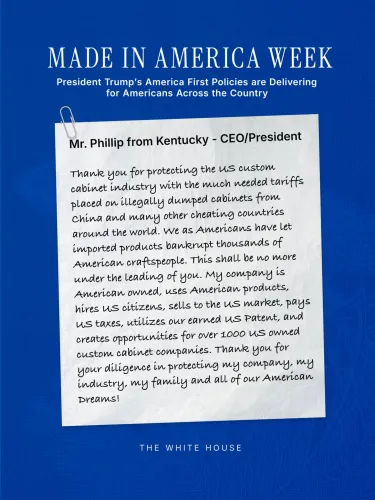
Tariffs have been the sharpest and most controversial edge of Trump's manufacturing agenda. In his second term, the administration escalated duties across a broad range of imported goods — from steel and aluminium to consumer electronics — arguing that price pressure on foreign products would tip the scales back toward domestic production. Critics have countered that tariffs raise input costs for American factories themselves, but the White House post makes clear the administration is doubling down, not retreating.
The phrase 'stop at nothing' signals that further measures — additional tariffs, investment incentives, or trade negotiations — remain on the table.
Why This Message, and Why Now
The timing and tone suggest a deliberate political and economic signal. Framing the manufacturing revival as a contrast with 'decades' of failure by unnamed predecessors is a move designed to lock in credit for any positive factory or employment data while pre-empting criticism. The capitalised 'MADE IN AMERICA' is more than a slogan — it is the brand under which the administration has sought to unify tariff policy, investment deals, and reshoring incentives into a single, voter-legible narrative.
For global markets — including India, which trades extensively with the United States — the persistence of this posture matters. An administration that publicly commits to protecting American manufacturing with this intensity is unlikely to soften its trade stance regardless of diplomatic pressure, a calculus that exporters and policymakers in New Delhi and elsewhere continue to watch closely.
The factory is back on the ballot — and the White House wants everyone to know it.
Point of View
Multi-year trade policy into a single voter-legible brand ('Made in America') and anchor it against a villain (previous administrations). For an administration entering what may be a politically sensitive stretch of its second term, locking in manufacturing as a legacy narrative insulates against any future data softness. From an Indian policy lens, the signal is unambiguous — Washington's protectionist industrial posture is not a negotiating tactic but a settled doctrine, meaning Indian exporters in sectors from textiles to pharmaceuticals must plan for a structurally higher-tariff US market. The long-term question is whether the claimed 'factory resurgence' translates into durable employment numbers that can sustain this narrative beyond a news cycle.
NationPress
8 Oct 2026
Frequently Asked Questions
What is Trump's 'Made in America' manufacturing policy?
'Made in America' is the umbrella brand for President Trump's industrial policy, combining sweeping tariffs on imports, incentives to attract investment back to the United States, and efforts to reshore factory production — with the stated goal of protecting American blue-collar jobs.
How much has Trump secured in manufacturing investments?
The White House claims Trump has secured 'trillions' in investments for American manufacturing, though the exact verified figure and breakdown by sector or source have not been specified in the announcement.
What tariffs has Trump levied to protect US manufacturing?
During his second term, the Trump administration has imposed broad tariffs on a range of imported goods — including steel, aluminium, and consumer electronics — arguing these duties make foreign products less competitive and incentivise domestic production.
How does Trump's manufacturing push affect India?
A persistently protectionist US trade stance directly affects Indian exporters in sectors such as textiles, pharmaceuticals, and IT services, raising costs and complicating market access for Indian goods headed to the United States.
What did the White House say about previous US administrations and manufacturing?
The White House post accused 'previous administrations' of neglecting hardworking Americans for 'decades' by favouring cheap foreign labor over domestic workers — a long-standing political argument central to Trump's economic nationalism.