Sam Altman: ChatGPT now builds custom UIs for users
Synopsis
OpenAI CEO Sam Altman announced that ChatGPT can now generate custom user interfaces on demand — shifting the AI assistant from a text responder to a real-time interface builder, with sweeping implications for developers, designers, and the broader AI product race.
Key Takeaways
Sam Altman announced on 8 October 2026 that ChatGPT can now generate a custom UI for any user on demand.
The capability moves ChatGPT beyond text output into real-time, interactive interface creation — no separate editor or developer required.
The feature is significant for ChatGPT's ~200 million weekly active users globally, including a large and growing Indian base.
It compresses a multi-step workflow — prompt, code, debug, render — into a single conversation, lowering the barrier for non-technical users.
The announcement intensifies competitive pressure on rivals and on no-code or low-code platform providers.
Indian developers and early-stage startups stand to benefit from dramatically faster prototyping cycles.
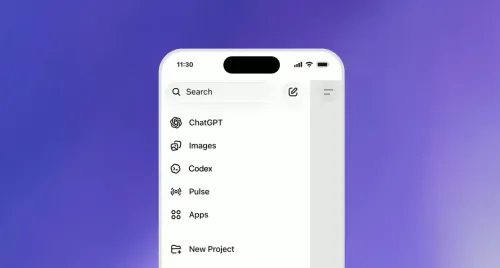
A single sentence from OpenAI chief executive Sam Altman on X on Thursday, 8 October 2026 landed like a product-launch salvo: ChatGPT can now generate a fully custom user interface on demand — moving the AI assistant from text-box responder to on-the-fly interface builder.
From words on a screen to a living interface
Until now, ChatGPT's output has been fundamentally textual — markdown, code snippets, structured lists. The ability to generate a custom UI marks a qualitative leap: the model is no longer just answering questions, it is assembling interactive visual environments tailored to whatever a user needs in the moment. Think a bespoke data-entry form, a styled dashboard, or a step-by-step wizard — conjured from a single prompt, no designer or front-end developer required.
The significance is hard to overstate for the roughly 200 million weekly active users ChatGPT has accumulated globally. A user who once had to paste generated code into a separate editor and run it themselves can now, apparently, see a functional, styled interface materialise directly inside the conversation.
Why this shifts the competitive landscape
The broader AI race has been converging on one question: can a model do the whole job, not just advise on it? Generating custom UIs pulls ChatGPT meaningfully closer to that finish line. It compresses what used to be a multi-step workflow — prompt, copy code, open editor, debug, render — into a single interaction. For developers, entrepreneurs, and non-technical users alike, that compression is the product.
Rivals across the industry have been pushing similar frontiers — code-execution sandboxes, artifact rendering, agentic loops — but Altman's announcement signals OpenAI is ready to ship the capability to its full user base rather than keep it in a research preview. The competitive pressure this creates is immediate and real.
What Indian developers and startups should watch
India is one of ChatGPT's largest and fastest-growing markets, with a deep base of developers and a startup ecosystem that relies heavily on rapid prototyping. A native UI-generation feature could dramatically cut the iteration time between an idea and a testable product — especially for early-stage founders who cannot yet afford design or front-end talent. The feature also raises the bar for no-code and low-code platforms that have built their value proposition on exactly this kind of visual, drag-and-drop accessibility.
The kicker: when an AI can build the interface as fluently as it writes the copy or generates the logic, the last friction between a human intention and a working product has just gotten a great deal thinner.
Point of View
Then basic coding assistance. By internalising the render step, OpenAI is staking out territory that no-code platforms and front-end scaffolding tools have occupied for years. The speed at which this capability reaches a mass consumer audience — rather than staying in an API tier — suggests OpenAI's product strategy has shifted firmly toward capturing non-developer users who want finished outputs, not raw ingredients.
NationPress
8 Oct 2026
Frequently Asked Questions
What does it mean that ChatGPT can generate a custom UI?
It means ChatGPT can now build a tailored, interactive visual interface — such as a form, dashboard, or wizard — directly inside a conversation based on a user's prompt, without the user needing to copy code into a separate tool or have design skills.
When did OpenAI announce the ChatGPT custom UI feature?
OpenAI CEO Sam Altman announced the feature on 8 October 2026 via a post on X.
How is ChatGPT custom UI different from what ChatGPT could do before?
Previously, ChatGPT could generate code for a UI that users then had to run themselves in a separate environment. The new capability renders a functional, styled interface directly within the chat, eliminating extra steps.
Will the ChatGPT UI generation feature help Indian developers?
Yes — Indian developers and early-stage founders can potentially prototype and test visual products far faster, reducing dependence on dedicated front-end or design talent for initial builds.
Does ChatGPT's UI generation threaten no-code platforms?
It raises the competitive pressure on no-code and low-code tools whose core value proposition — creating interfaces without writing code — now overlaps directly with what ChatGPT offers natively.