Sonowal Sets Maritime Targets: 10,000 MMTPA, Top-5 Shipbuilder by 2047
Synopsis
Union Ports Minister Sarbananda Sonowal has publicly committed India to three Amrit Kaal Vision 2047 maritime targets: 10,000 MMTPA port capacity, a 100 million GT national fleet, and a top-five global shipbuilding rank, framing the push as a civilisational undertaking under PM Modi's governance doctrine.
Key Takeaways
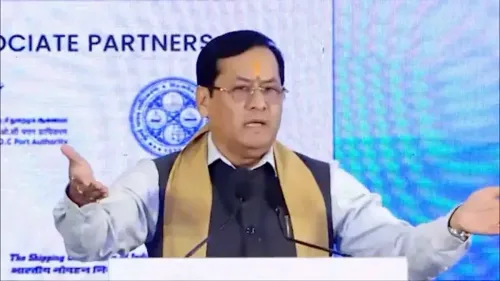
Union Minister Sarbananda Sonowal posted India's three maritime targets on X on 8 October 2026 under #Sagarmanthan2026 .
Target one: 10,000 MMTPA port handling capacity by 2047 , the centenary of independence.
Target two: a national shipping fleet of 100 million Gross Tonnage , aimed at reducing dependence on foreign-flagged vessels.
Target three: India to rank among the top five global shipbuilders , challenging South Korea, China, and Japan.
The goals sit within the government's Amrit Kaal Vision 2047 framework, linked to PM Modi's 'Reform, Perform and Transform' doctrine.
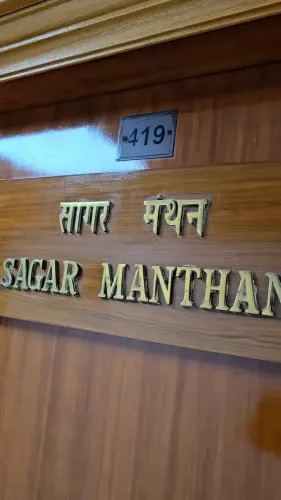
The hashtag #Sagarmanthan2026 signals a dedicated ministerial conclave or policy event anchoring these commitments.
India's maritime ambitions have a scoreboard — and Union Minister of Ports, Shipping and Waterways Sarbananda Sonowal has just put the numbers in public view. Posting on X on Thursday, 8 October 2026, the senior BJP leader and former Chief Minister of Assam laid out three hard targets under the government's Amrit Kaal Vision 2047 framework, framing them as the direct product of Prime Minister Narendra Modi's 'Reform, Perform and Transform' governance doctrine.
The post, shared under the hashtag #Sagarmanthan2026, states the goals plainly: a port-handling capacity of 10,000 MMTPA (Million Metric Tonnes Per Annum), a national shipping fleet of 100 million Gross Tonnage, and a place among the top five global shipbuilders — all to be achieved by 2047, the centenary of India's independence. The word 'Sagarmanthan' — sagar meaning ocean, manthan meaning churning — evokes the mythological churning of the cosmic sea, positioning the maritime push as a civilisational endeavour, not merely a sectoral policy.
What 10,000 MMTPA actually means
Port capacity is the circulatory system of a trading nation. India's major ports today handle a fraction of the 10,000 MMTPA target, making this an order-of-magnitude ambition that would require sustained investment in port infrastructure, mechanisation, landside connectivity, and regulatory reform over the next two decades. Hitting that number would position India as one of the highest-throughput port nations on earth, capable of anchoring regional supply chains across the Indian Ocean.
The 100 million GT shipping fleet and the shipbuilding climb
Equally striking is the 100 million Gross Tonnage fleet target. India's domestically-owned and flagged fleet has historically punched below its weight relative to the country's trade volumes, leaving freight earnings on the table and keeping the nation dependent on foreign-flagged vessels. A fleet of this scale would fundamentally alter India's shipping cost structure and strategic autonomy at sea.
The third target — cracking the top five in global shipbuilding — is perhaps the most ambitious. That leaderboard is currently dominated by South Korea, China, and Japan, nations that built their shipbuilding industries over decades of deliberate industrial policy. India's entry would require not just yards and steel, but a deep ecosystem of marine engineering, financing, and skilled labour. The target signals that the government views shipbuilding as a sunrise manufacturing sector, not a heritage industry.
Sagarmanthan 2026 as a policy signal
The #Sagarmanthan2026 tag suggests this post is tied to a specific event or ministerial conclave convened around India's maritime roadmap. Such forums typically bring together port operators, shipping companies, shipyard executives, financiers, and policymakers to align on timelines and investment frameworks. Sonowal's public articulation of these three benchmarks at this moment serves as both a political commitment and an investor signal — a statement that the 2047 Maritime Vision has measurable milestones, not just aspirational language.
India's geography has always been a maritime inheritance — a 7,500-kilometre coastline, proximity to the world's busiest east-west shipping lanes, and a diaspora spread across port cities from Dubai to Singapore. Whether the infrastructure and policy machinery can match the numbers Sonowal has now put on the clock is the defining question of the decade ahead.
Point of View
Fleet tonnage, and shipbuilding rank — marks a strategic shift from aspirational language to measurable accountability, one that will make future progress (or the lack of it) politically legible. The 'Sagarmanthan' branding signals the government is attempting to build a popular, civilisational narrative around maritime policy in the same way it has done with space and defence. The top-five shipbuilding target is the boldest ask, requiring India to compress decades of industrial catch-up, and will serve as the most reliable indicator of whether this vision has structural backing or remains a headline goal. Globally, it positions India as a contender in the geopolitically sensitive business of building the ships that move the world's trade.
NationPress
8 Oct 2026
Frequently Asked Questions
What is India's Amrit Kaal Vision 2047 for ports and shipping?
Amrit Kaal Vision 2047 is India's long-term maritime development framework targeting the country's centenary of independence. Under the plan, the government aims to achieve 10,000 MMTPA port capacity, a 100 million Gross Tonnage national shipping fleet, and a top-five global shipbuilding rank by 2047.
What is Sagarmanthan 2026?
'Sagarmanthan' — meaning 'churning of the ocean' — is the branding used by India's Ministry of Ports, Shipping and Waterways for its major maritime policy conclave. The 2026 edition appears to be a high-level forum where these 2047 targets are being anchored and signalled to investors and industry.
What does 10,000 MMTPA port capacity mean for India?
MMTPA stands for Million Metric Tonnes Per Annum — a measure of how much cargo India's ports can handle annually. A target of 10,000 MMTPA would place India among the highest-throughput port nations in the world, capable of supporting large-scale regional and global supply chains.
Can India really become a top-5 global shipbuilder by 2047?
The top five in global shipbuilding are currently dominated by South Korea, China, and Japan. India entering that tier by 2047 would require sustained investment in shipyards, marine engineering capacity, skilled labour, and financing ecosystems over the next two decades — an ambitious but not unprecedented industrial transformation.
Who is Sarbananda Sonowal and what ministry does he head?
Sarbananda Sonowal is a senior BJP leader and former Chief Minister of Assam. He currently serves as India's Union Minister of Ports, Shipping and Waterways, making him the principal political figure responsible for the country's maritime infrastructure and policy agenda.