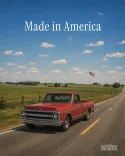
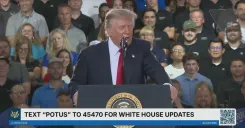
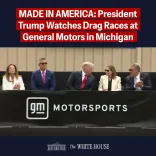
White House Touts US Car Manufacturing Revival at GM Proving Ground
Synopsis
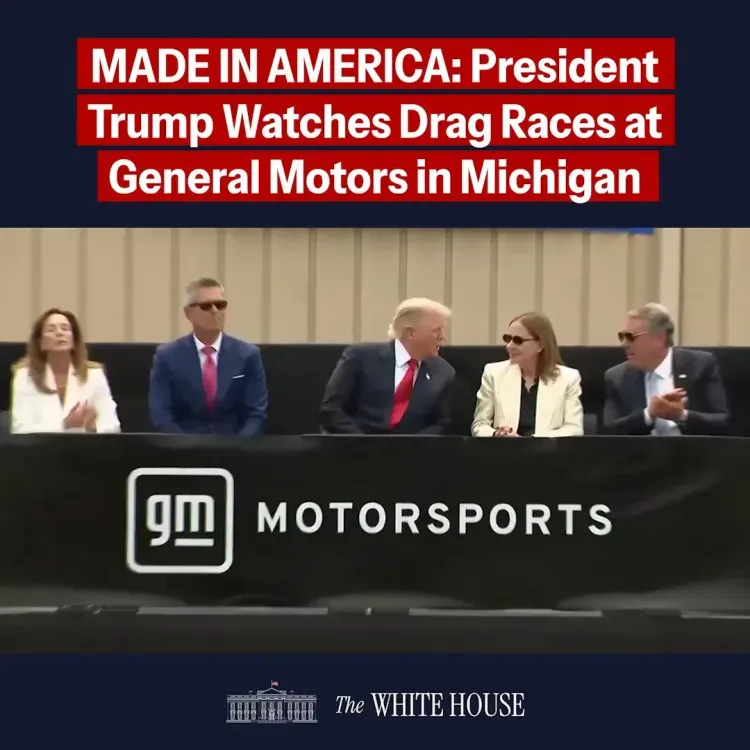
The White House on 28 July 2026 posted a video from the General Motors Proving Ground in Milford, Michigan, declaring US car manufacturing 'BACK in America.' The message signals the administration's focus on domestic auto revival, invoking the legacy of GM and America's industrial heartland.
Key Takeaways
The White House posted on 28 July 2026 declaring car manufacturing is 'back in America,' with a video from General Motors Proving Ground, Milford, Michigan .
General Motors , founded in 1908 , is one of three major US automakers and received an approximately $80 billion federal bailout in 2009 .
The GM Proving Ground in Milford has been a vehicle testing and development facility since the 1920s .
The 2020 USMCA agreement introduced stricter rules of origin to encourage more North American auto content.
US auto workers and Michigan manufacturers are the primary stakeholders in any domestic auto production revival.
Monthly federal data on US vehicle production and manufacturing employment will be the key metric to watch.
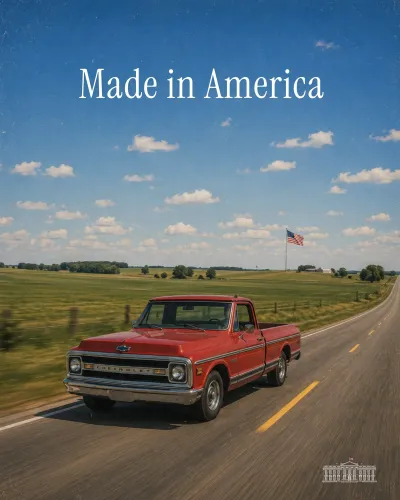
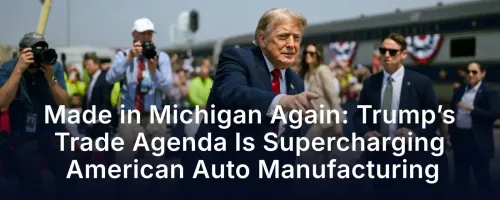
The White House on Tuesday, 28 July 2026, posted a celebratory message on X declaring that car manufacturing is 'back in America,' marking the occasion with a visit or event at the General Motors Proving Ground in Milford, Michigan. The post, accompanied by a video, was framed as a statement of national industrial pride by the official communications account of the Executive Office of the President of the United States.
Context
The White House declared, 'No one does it like the U.S.A. Car manufacturing is BACK in America!' — anchoring the message at the General Motors Proving Ground in Milford, Michigan, one of the oldest and most significant vehicle testing and development facilities in the country. The Proving Ground has been operational since the 1920s and serves as a symbol of American automotive engineering heritage. The choice of location underscores the administration's intent to associate the message with a tangible, storied institution in the US auto industry.
Policy Backdrop
General Motors, founded in 1908 and headquartered in Detroit, Michigan, is one of the three major American automakers. The company's history is closely tied to federal industrial policy — most notably the approximately $80 billion federal bailout extended to GM and Chrysler under the Obama administration in 2009 to avert bankruptcy and restructure the domestic auto sector. That intervention remains a reference point in debates over the government's role in sustaining US manufacturing. More recently, the 2020 USMCA agreement replaced NAFTA with updated rules of origin provisions designed to encourage more North American vehicle content, directly benefiting producers like GM. US administrations across party lines have periodically sought to highlight domestic auto manufacturing as a barometer of broader economic health, particularly in Midwestern swing states such as Michigan.
Stakeholders and Impact
US auto workers and Michigan manufacturers are the most immediate stakeholders in any policy or production shift signalled by such announcements. Michigan's economy has long been intertwined with the fortunes of the auto sector, and statements from the White House referencing facilities in the state carry both economic and political weight. The broader auto supply chain — spanning steel producers, parts manufacturers, and logistics firms — also watches closely for signals about trade measures, tariffs, or industrial incentives that could follow such high-profile messaging. Global supply chain realignments and competition from foreign vehicle producers, particularly from East Asia and Europe, have kept pressure on US automakers to demonstrate domestic production commitments.
What's Next
Observers will watch for the release of monthly US vehicle production and manufacturing employment data from federal statistical agencies, which will provide a factual baseline against which the administration's claims can be assessed. Any related congressional hearings on trade or industrial policy could amplify or complicate the White House's narrative. Whether the Milford event was accompanied by a specific policy announcement — such as new incentives, tariff measures, or production commitments from GM — will determine the lasting significance of the message beyond its symbolic value.
Point of View
Designed to connect the current administration's economic narrative to a tangible symbol of industrial revival in a pivotal Midwestern state. Michigan's outsized role in US electoral politics means that messaging around auto manufacturing carries weight well beyond the factory floor. The declaration that manufacturing is 'BACK' echoes a long bipartisan tradition of presidents using the auto sector as a proxy for broader economic confidence, a pattern that stretches from the 2009 bailout to USMCA renegotiations. Until specific production figures or policy measures are attached to the moment, the announcement functions primarily as a political signal rather than a verifiable economic milestone.
NationPress
28 Jul 2026
Frequently Asked Questions
What did the White House say about car manufacturing in July 2026?
The White House posted on X on 28 July 2026, declaring that 'car manufacturing is BACK in America,' with a video filmed at the General Motors Proving Ground in Milford, Michigan.
Where is the General Motors Proving Ground located?
The General Motors Proving Ground is located in Milford, Michigan, in Oakland County. It has been a major vehicle testing and development facility since the 1920s.
Why is Michigan important for US car manufacturing?
Michigan is the historic heartland of the American auto industry, home to major manufacturers including General Motors, Ford, and Stellantis. The state's economy and workforce are closely tied to the health of the auto sector.
What was the 2009 GM bailout?
The US federal government extended approximately $80 billion to General Motors and Chrysler under the Obama administration in 2009 to prevent bankruptcy and restructure the domestic auto industry following the global financial crisis.
What is USMCA and how does it affect US car manufacturing?
The USMCA, which replaced NAFTA in 2020, introduced stricter rules of origin requiring a higher percentage of North American content in vehicles to qualify for tariff-free trade, incentivising greater domestic production by US automakers.