WHO Warns: 2.1 Million Kids Missed Vaccines in Western Pacific
Synopsis
The WHO has revealed that 2.1 million children in the Western Pacific missed at least one vaccine dose in 2024, triggering an urgent call to reinforce immunisation systems across a region of 2.2 billion people. With measles, hepatitis B, and polio gains at risk, the warning marks a critical inflection point for global public health.
Key Takeaways
2.1 million children in the Western Pacific missed at least one vaccine dose in 2024 , according to the WHO .
The Western Pacific region is home to 2.2 billion people , representing over 25% of the global population.
WHO Regional Director Saia Ma'u Piukala warned that vaccine protection cannot be taken for granted amid rising disease risks.
The WHO VDI unit targets include eliminating measles, rubella, and maternal tetanus and sustaining polio-free status across member states.
Inequitable access to vaccines and disrupted supply chains remain the primary barriers to achieving immunisation goals in the region.
World Immunisation Week April 24 to 30 2025 is being used as a platform to accelerate government commitments across the region.
The World Health Organization (WHO) has issued an urgent call to strengthen immunisation programmes across the Western Pacific region, warning that a dangerous resurgence of vaccine-preventable diseases is underway as millions of children continue to miss critical vaccine doses. The alert, issued on April 24, 2025, from the WHO Regional Office in Manila, Philippines, underscores a growing public health crisis threatening decades of hard-won progress.
Scale of the Crisis
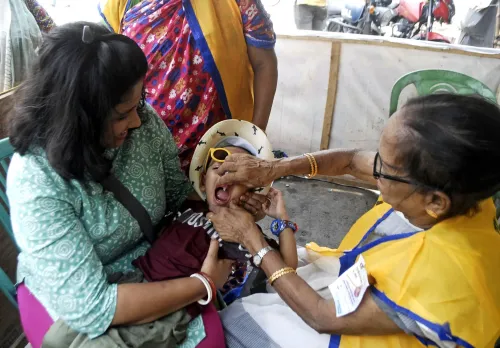
In 2024 alone, nearly 2.1 million children in the Western Pacific missed at least one vaccine dose, exposing a vast and vulnerable population to diseases that are entirely preventable. The Western Pacific region is home to 2.2 billion people representing more than a quarter of the world's total population, making the stakes extraordinarily high.
Despite significant historical gains in vaccination coverage, inequitable access to immunisation services remains a persistent and deeply structural problem across multiple countries in the region. Remote communities, underserved populations, and fragile healthcare infrastructure continue to leave millions of children unprotected.
WHO Leadership Sounds the Alarm
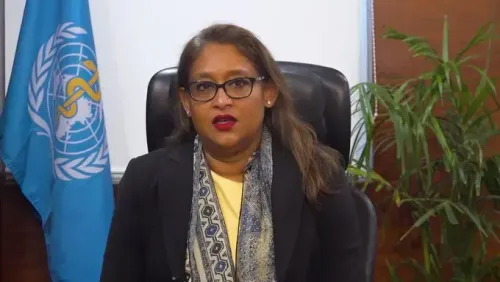
Saia Ma'u Piukala, WHO Regional Director for the Western Pacific, issued a stark warning alongside a message of hope. He stated: Vaccines are a miracle of science and medicine, and they have protected generations of families and communities across our region. But we cannot take this protection for granted.
The statement reflects growing concern within global health circles that vaccine hesitancy, supply chain disruptions, and post-pandemic healthcare system fatigue are collectively eroding immunisation rates that took generations to build. This comes amid broader global trends showing measles outbreaks returning in regions previously declared elimination-ready.
Key Immunisation Goals for the Region
The WHO Vaccine-Preventable Diseases and Immunisation (VDI) unit has outlined a comprehensive set of targets for the Western Pacific Region. These include sustaining polio-free status across all member states, eliminating maternal and neonatal tetanus, eliminating measles and rubella, accelerating control of hepatitis B and Japanese encephalitis, and introducing new vaccines while meeting regional vaccination coverage targets.
These goals are aligned with the Regional Framework for Implementation of the Global Vaccine Action Plan, which provides the strategic backbone for member state cooperation and accountability.
Why This Matters Beyond the Numbers
The WHO warning is not merely statistical. It signals a systemic breakdown in healthcare delivery that disproportionately affects the poorest and most geographically isolated communities. When routine immunisation falters, the consequences cascade across hospital systems, family productivity, and national economies.
Notably, the COVID-19 pandemic severely disrupted routine immunisation services globally between 2020 and 2022, and the Western Pacific region is still recovering from those setbacks. According to WHO data, vaccine coverage for diseases like measles dropped sharply during the pandemic years, and rebuilding that coverage has proven slower than anticipated.
Critics argue that underfunding of primary healthcare infrastructure, particularly in Pacific Island nations and parts of Southeast Asia, remains the single biggest obstacle to closing the immunisation gap. The WHO renewed call must be matched with concrete funding commitments from both national governments and international donors.
What Happens Next
The WHO has called on member states to prioritise three immediate actions: strengthening routine immunisation systems, improving outreach to underserved populations, and ensuring reliable uninterrupted vaccine supply chains. These measures are seen as critical to reversing the current downward trend before it escalates into full-blown disease outbreaks.
With World Immunisation Week running April 24 to 30 providing a global platform for advocacy, health ministries across the Western Pacific are expected to announce country-specific action plans in the coming weeks. The international health community will be watching closely to see whether political commitments translate into measurable improvements in vaccination coverage by the end of 2025.
Point of View
Geographic isolation, and chronic underfunding of primary healthcare. What is missing from the official narrative is accountability around which governments are falling furthest behind their own targets and which donors have quietly reduced immunisation funding post-COVID. The world cannot afford to treat this as a regional problem because in an interconnected world a vaccine-preventable outbreak anywhere is a threat everywhere.
NationPress
23 Sept 2026
Frequently Asked Questions
Why is WHO concerned about immunisation in the Western Pacific in 2025?
The WHO is alarmed because 2.1 million children in the Western Pacific missed at least one vaccine dose in 2024, raising the risk of resurgent vaccine-preventable diseases like measles and hepatitis B. The organisation warns that hard-won gains in vaccination coverage are being eroded by inequitable access and supply chain disruptions.
How many children missed vaccines in the Western Pacific in 2024?
Nearly 2.1 million children in the Western Pacific region missed at least one vaccine dose in 2024, according to the WHO. This leaves a significant portion of the region's population vulnerable to entirely preventable diseases.
What are the WHO immunisation goals for the Western Pacific region?
The WHO goals include sustaining polio-free status, eliminating measles, rubella, and maternal and neonatal tetanus, and accelerating control of hepatitis B and Japanese encephalitis. These targets are part of the Regional Framework for Implementation of the Global Vaccine Action Plan.
What diseases are at risk of resurgence in the Western Pacific?
Diseases including measles, rubella, hepatitis B, polio, and Japanese encephalitis are at risk of resurgence due to falling vaccination coverage. The WHO has specifically flagged these as priority areas requiring urgent government intervention.
What is the WHO calling on governments to do about vaccine gaps?
The WHO is urging member states to strengthen routine immunisation systems, improve outreach to underserved populations, and ensure reliable vaccine supply chains. These steps are considered essential to reversing declining vaccination rates before preventable outbreaks occur.