Putin, Witkoff meet in St. Petersburg; Ukraine peace and Iran discussed
Synopsis
Trump's envoy Steve Witkoff spent three hours with Putin at Constantine Palace, covering Ukraine, Iran, and a possible Trump-Putin China summit — the most substantive Kremlin-White House engagement since Trump's return. With Trump simultaneously warning Zelensky that delay is dangerous, Washington appears to be squeezing Kyiv while opening a diplomatic back-channel with Moscow.
Key Takeaways
Steve Witkoff met Vladimir Putin at Constantine Palace, St.
Petersburg on 21 October 2026 for approximately three hours .
Talks covered the Ukraine peace process , the Persian Gulf situation, the 'diesel deal', and a possible Trump-Putin meeting in China .
Putin thanked Trump and Witkoff for Ukraine peace efforts, and asked Witkoff to convey gratitude to First Lady Melania Trump for humanitarian work.
The release of American citizen Stephen Hubbard was discussed; Trump had signalled the development was expected within days.
Putin offered Russia as a potential mediator on the Iran crisis , citing Moscow's 'special relationship of trust' with Tehran.
Trump warned Zelensky that delaying a peace deal risks leaving Ukraine in an 'increasingly difficult position' as Russia continues to gain territory.
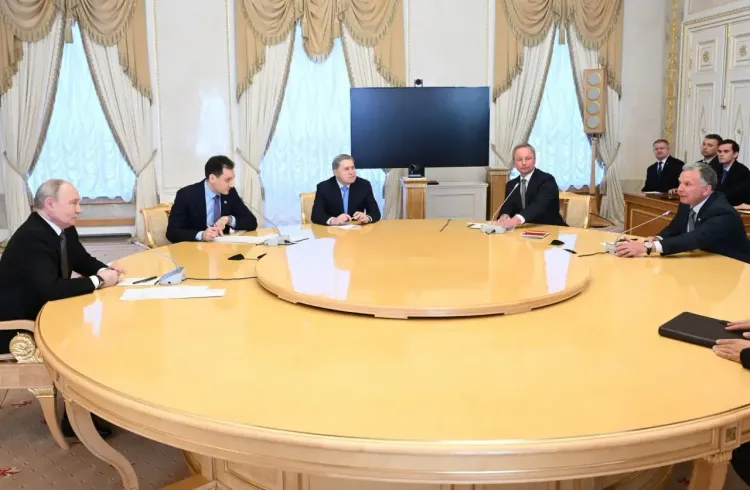
US President Donald Trump's special envoy Steve Witkoff held a nearly three-hour meeting with Russian President Vladimir Putin at Constantine Palace in St. Petersburg on Wednesday, 21 October 2026, where the two sides discussed the Ukrainian peace process, the situation in the Persian Gulf, and the prospects of a potential Trump-Putin summit in China, according to Russian state media reports.
Key Discussions at Constantine Palace
According to Russia's Tass news agency, the agenda covered a wide range of geopolitical issues, including a possible meeting between Putin and Trump in China, as well as the so-called 'diesel deal' and the situation in the Persian Gulf. Putin reportedly thanked Witkoff and Trump for their efforts to resolve the Ukraine conflict, and separately asked Witkoff to convey his gratitude to US First Lady Melania Trump for her work on humanitarian issues.
The two sides also discussed the release of American citizen Stephen Hubbard, which Trump had flagged a day earlier as a development likely to materialise within days. According to reports, Putin's decision to release Hubbard was among the agenda items formally addressed during the meeting.
Putin's Remarks on Iran and Middle East
According to the Russian Ministry of Foreign Affairs, Putin used the meeting to signal Moscow's willingness to act as a mediator on the Iran situation. 'If you would be willing to share them, I would also be very interested to hear your assessments of the situation in the Middle East and around Iran. You know that we have a special relationship of trust with Iran, with our Iranian partners and friends, built over decades. If we can do anything at all to help resolve this crisis, we will gladly do so. You are also well aware of our proposals in this regard,' Putin was quoted as saying.
The remarks underline Russia's continued positioning as a key interlocutor between Washington and Tehran, at a time when US-Iran tensions remain elevated. Notably, Moscow's offer to mediate on Iran arrives as it simultaneously seeks to shape the terms of a Ukraine settlement — suggesting a broader diplomatic transaction may be in the works.
Trump's Warning to Zelensky
Hours before the Witkoff-Putin meeting, Trump issued a stark warning to Ukrainian President Volodymyr Zelensky from the Oval Office, with US Vice President J D Vance present. Trump argued that Russia's military was 'grinding forward' and steadily capturing Ukrainian territory, making a negotiated settlement increasingly urgent for Kyiv.
'Russia's a big machine. They just keep grinding forward, and that's what they've done,' Trump said. He further cautioned: 'They've taken a very large piece of land. And, you know, you can say that Ukraine is doing well or poorly, but the land gets bigger and bigger all the time, week by week.'
Trump also cited Russia's larger population as a structural advantage in a prolonged conflict, warning that Ukraine faced greater demographic constraints. 'Ukraine has to want to settle this war. Zelensky has to want to settle this war. And if he doesn't, I think it's going to be a very bad thing,' he said. He added that Zelensky could have secured more favourable terms during earlier negotiations with Washington.
Restoring Russia-US Bilateral Ties
Beyond Ukraine, the meeting touched on the broader question of resetting the Russia-US relationship. According to the Russian Ministry of Foreign Affairs, Putin expressed interest in discussions around restoring bilateral ties and economic cooperation, indicating Moscow sees the current diplomatic window as an opportunity to ease the isolation it has faced since the full-scale invasion of Ukraine in 2022.
This is among the most substantive direct engagements between a senior Trump administration official and the Kremlin since Trump returned to the White House. Whether the meeting produces a concrete ceasefire framework — or merely sets the stage for a Trump-Putin summit — will determine its historical significance.
Point of View
While simultaneously pressuring Kyiv to accept terms it finds unacceptable. Trump's public warning to Zelensky, delivered hours before the meeting, follows a pattern of pairing diplomatic outreach to Russia with public coercion of Ukraine. Putin's offer to mediate on Iran is a classic Kremlin manoeuvre: trading leverage on one front for concessions on another. The real question is whether the reported Trump-Putin China summit materialises — and what Kyiv's role, if any, will be in shaping the outcome.
NationPress
21 Oct 2026
Frequently Asked Questions
What did Steve Witkoff and Putin discuss in St. Petersburg?
Witkoff and Putin met for approximately three hours at Constantine Palace in St. Petersburg on 21 October 2026, discussing the Ukrainian peace process, the Persian Gulf situation, a possible Trump-Putin summit in China, the release of American citizen Stephen Hubbard, and prospects for restoring Russia-US bilateral ties and economic cooperation.
What did Trump say about Ukraine and President Zelensky?
Speaking from the Oval Office alongside Vice President J D Vance, Trump warned Zelensky that delaying a peace deal could leave Ukraine in an increasingly difficult position. He cited Russia's steady territorial gains, larger population, and Ukraine's mounting casualties as reasons why a negotiated settlement was becoming more urgent for Kyiv.
What is the significance of Putin's remarks on Iran?
Putin offered Russia as a potential mediator in the Iran crisis, telling Witkoff that Moscow had a 'special relationship of trust' with Tehran built over decades. The offer signals Moscow's intent to leverage its ties with Iran as a diplomatic card in broader Russia-US negotiations.
Who is Stephen Hubbard and why was he discussed?
Stephen Hubbard is an American citizen whose release from Russian custody was discussed during the Witkoff-Putin meeting. Trump had said on Tuesday that he had personally raised Hubbard's case with Putin and suggested developments could come within days.
Is a Trump-Putin summit in China being planned?
According to Tass, the Witkoff-Putin meeting included discussions about 'some considerations regarding a possible meeting' between Trump and Putin in China. No confirmed date or format has been announced; the reports describe it as a topic of discussion rather than a finalised plan.