WMO report: Global temperatures to stay near record highs through 2030
Synopsis
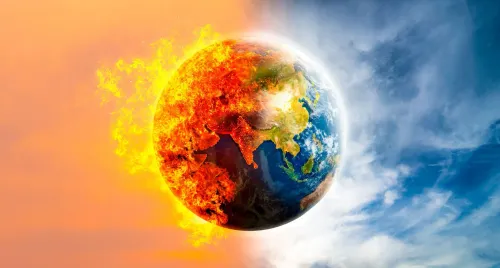
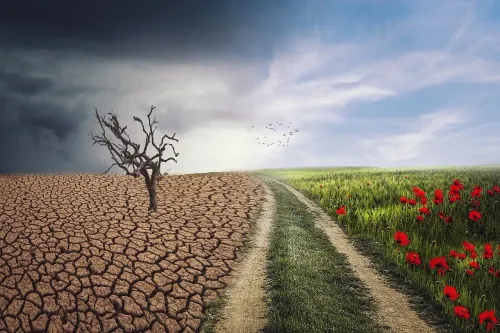
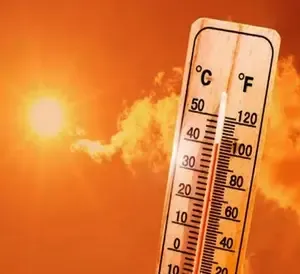
The WMO's latest decadal climate outlook projects that global temperatures will stay at or near record highs through 2030, with Arctic winters warming at more than three and a half times the global rate. An El Nino predicted for late 2026 raises the odds that 2027 could become the next hottest year on record — a trajectory that puts annual breaches of the Paris 1.5-degree threshold firmly on the table.
Key Takeaways
The WMO projects global mean temperatures between 2026 and 2030 will range 1.3 to 1.9 degrees Celsius above the pre-industrial 1850-1900 average.
At least one year in that window is likely to surpass 2024 as the warmest year on record.
Arctic winter temperatures are forecast to be 2.8 degrees Celsius above the 1991-2020 average — more than 3.5 times the global mean anomaly.
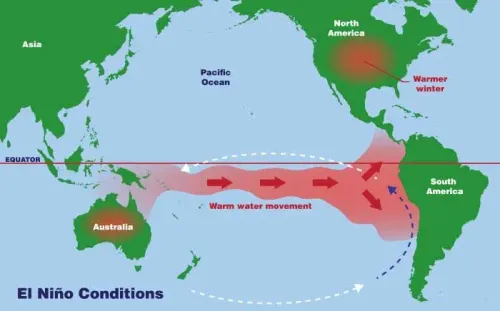
An El Nino is predicted for late 2026 , raising the probability of 2027 being the next record-breaking year, according to lead author Leon Hermanson .
The report, synthesising data from 13 institutes , was produced by Britain's Met Office and the WMO Lead Centre for Annual to Decadal Climate Prediction .
Annual breaches of the 1.5-degree Celsius Paris threshold do not signal permanent failure of the accord's long-term goals, the WMO clarified.
The World Meteorological Organisation (WMO) warned on Thursday, 28 May 2026 that global average temperatures are likely to remain at or near record levels over the next five years, with Arctic warming anomalies projected to outpace the global mean by a significant margin. The findings come from the WMO's flagship climate outlook, 'Global Annual to Decadal Climate Update 2026-2035'.
Key Findings of the WMO Report
According to the report, annual global mean near-surface temperatures between 2026 and 2030 will range between 1.3 and 1.9 degrees Celsius above the 1850-1900 pre-industrial average. The average for that five-year window will likely exceed 1.5 degrees Celsius above the pre-industrial baseline, though no single year is expected to breach the 2.0 degrees Celsius threshold.
Notably, at least one year between 2026 and 2030 is predicted to surpass 2024 as the warmest year on record. The report was produced by Britain's Met Office and the WMO Lead Centre for Annual to Decadal Climate Prediction, synthesising projections from 13 institutes worldwide.
El Nino in the Crosshairs
Leon Hermanson, lead author of the report, pointed to a specific near-term risk: 'There is an El Nino predicted for the end of 2026, which increases the chances of the following year, 2027, being the next record-breaking year.' Predicted conditions in the central tropical Pacific indicate a tendency towards El Nino patterns in the next five years, with 2027 and 2028 identified as particularly susceptible periods.
Arctic Warming Outpaces the Globe
One of the report's starkest findings concerns the Arctic. Temperatures across the polar region over the next five extended northern hemisphere winters — running from November to March — are predicted to be 2.8 degrees Celsius above the 1991-2020 average. That anomaly is more than three and a half times the global mean temperature anomaly over the same period, underscoring the accelerating pace of polar amplification.
What This Means for the Paris Agreement
The WMO was careful to contextualise the findings within the framework of the Paris Agreement. The 1.5 and 2.0 degrees Celsius thresholds in the accord refer to long-term warming sustained over an extended period — typically assessed over 20 years — rather than individual annual readings. Temporary exceedances of these levels in single years do not, by themselves, mean the Paris targets are permanently out of reach, the report clarified. However, the WMO noted that such temporary breaches will occur with increasing frequency as the underlying warming trend approaches these critical levels.
Context and What Comes Next
This comes amid a sustained run of record-setting temperatures globally, with 2024 already having been confirmed as the hottest year in recorded history. The WMO's decadal update reinforces what climate scientists have long argued: the window for stabilising warming below the Paris thresholds is narrowing. Governments and international bodies are expected to cite these projections in the lead-up to the next major UN climate conference. The report's regional precipitation and temperature forecasts will also inform national adaptation planning across vulnerable geographies, including South Asia and sub-Saharan Africa.
Point of View
Sea-level rise, and weather pattern disruption on timescales that dwarf policy cycles. The El Nino forecast for 2026 also matters beyond headline temperatures — it will intensify droughts and floods across South Asia and East Africa, regions that bear the least historical responsibility for emissions but face the sharpest near-term consequences. The gap between what the science is saying and what adaptation budgets reflect remains vast.
NationPress
13 Oct 2026
Frequently Asked Questions
What does the WMO climate report say about global temperatures through 2030?
The WMO projects that annual global mean temperatures between 2026 and 2030 will range 1.3 to 1.9 degrees Celsius above the pre-industrial 1850-1900 average, with the five-year mean likely exceeding 1.5 degrees Celsius. At least one year in this period is expected to surpass 2024 as the warmest year on record.
Will global temperatures breach the Paris Agreement's 1.5-degree limit?
Individual years between 2026 and 2030 may temporarily exceed 1.5 degrees Celsius, but the WMO clarified this does not mean the Paris Agreement's long-term goals are out of reach. The accord's thresholds refer to warming sustained over approximately 20 years, not single-year readings.
Why is 2027 flagged as a potential record-breaking year?
Lead author Leon Hermanson said an El Nino is predicted for late 2026, which historically elevates global temperatures in the following year. This makes 2027 the most likely candidate to set a new annual temperature record, according to the report.
How much faster is the Arctic warming compared to the global average?
Arctic temperatures over the next five extended northern hemisphere winters (November to March) are forecast to be 2.8 degrees Celsius above the 1991-2020 baseline — an anomaly more than three and a half times the global mean temperature anomaly over the same period.
Who produced the WMO decadal climate update?
The report, titled 'Global Annual to Decadal Climate Update 2026-2035', was produced by Britain's Met Office and the WMO Lead Centre for Annual to Decadal Climate Prediction, drawing on projections contributed by 13 research institutes worldwide.