World Bank Chief Economist: India is entering peak development potential
Synopsis
The World Bank's top economist says India isn't replicating China — it's charting its own course, backed by favourable demographics, low private debt, and deep domestic consumption. But Gill's optimism comes with a clear warning: without greater openness and a stronger push for foreign investment, India risks leaving its 'peak development potential' only partially realised.
Key Takeaways
World Bank Chief Economist Indermit Gill said on 11 June that India has entered its 'peak development potential.' Gill projects India's potential growth rates to remain 'fairly high' for the next two decades , even as comparable rates fall elsewhere.
India's advantages include favourable demographics , low private debt-to-GDP ratios, and domestic consumption near 60% of GDP.
Gill cautioned that India must become a 'much more open economy' and do more to attract foreign direct investment .
The World Bank projects global growth at 2.5% in 2026 — the slowest since the Covid-19 pandemic — making India's outlook relatively stronger.
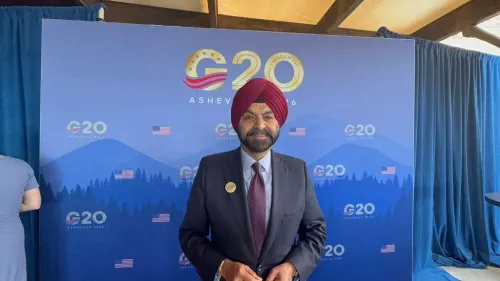
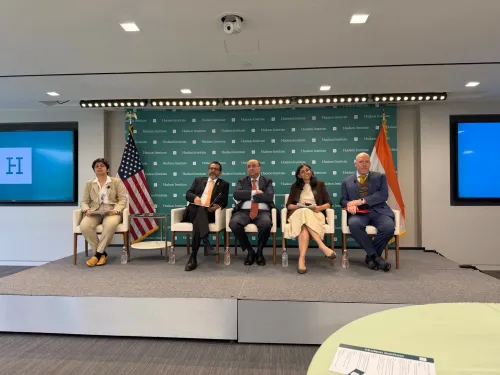
World Bank Chief Economist Indermit Gill said on 11 June that India has entered a phase of 'peak development potential' and is on course to sustain high growth over the next two decades — powered by its own structural strengths rather than by replicating any external model. Speaking during a briefing on the Bank's latest Global Economic Prospects report in Washington, Gill offered one of the most optimistic long-term assessments of the Indian economy from a multilateral institution in recent years.
India's Unique Growth Drivers
Gill identified three interlocking advantages that set India apart from most major economies. First, demographics: 'India's demographics work for it,' he said, at a time when several large economies face ageing populations and shrinking workforces. Second, debt: India carries 'relatively low debt-to-GDP ratios on the private side,' leaving room for credit expansion without triggering a balance-sheet crisis. Third, domestic consumption: 'India's domestic consumption to GDP ratios are very normal — they're close to 60-something per cent,' Gill noted, providing a durable demand base that is less exposed to global trade shocks than export-dependent models.
Not the Next China — The Next India
Gill drew a sharp distinction between India's development path and the export-led manufacturing model that powered China's rise. 'India's not going to be the next China, India's going to be the next India,' he said — a formulation that captures the Bank's view that India's scale, domestic market depth, and service-sector strengths make direct comparisons with earlier Asian growth stories misleading. He projected that potential growth rates for India would remain 'fairly high for the next two decades,' even as comparable rates in several large economies are expected to decline.
Structural Weaknesses That Must Be Addressed
Despite the favourable outlook, Gill cautioned that India must tackle specific structural gaps to fully capitalise on its position. 'One of them has to do with openness — India has to become a much more open economy,' he said. He also called for a more concerted push to attract capital: 'India could do a lot more to get private investment going again, especially foreign direct investment.' The economist said both 'business-friendly reforms' and 'trade-friendly reforms' would be necessary to maximise growth opportunities in the decades ahead.
Global Backdrop: Slowest Growth Since Covid
The comments come as the World Bank projects global growth to slow to 2.5% in 2026 — the weakest pace since the Covid-19 pandemic — amid disruptions linked to the conflict in the Middle East and rising energy costs. Against that backdrop, India continues to stand apart: the Bank's latest projections show it remaining the fastest-growing major economy, underpinned by favourable demographics, expanding domestic demand, and ongoing economic reforms. This comes amid a broader deceleration across emerging markets, making India's relative resilience all the more notable.
Point of View
Services-heavy model can generate the volume of manufacturing jobs its labour force actually needs. Low private debt and a large domestic market are real strengths, but they have coexisted with persistently weak formal employment creation. The FDI and openness warnings are not new; they have featured in nearly every multilateral assessment of India for a decade. The real test is whether this cycle of favourable demographics translates into productivity gains or merely into a larger informal workforce. Optimism from Washington is welcome — accountability frameworks for that optimism are what India needs next.
NationPress
26 Oct 2026
Frequently Asked Questions
What did the World Bank Chief Economist say about India's growth potential?
World Bank Chief Economist Indermit Gill said on 11 June that India has entered its 'peak development potential' and is poised to sustain high growth for the next two decades. He cited favourable demographics, low private debt, and strong domestic consumption as the key drivers.
Why did Gill say India is 'not the next China'?
Gill argued that India's growth will be driven by domestic consumption and its own structural strengths, not by the export-led manufacturing model that powered China's rise. He said 'India's going to be the next India,' reflecting the view that direct comparisons with earlier Asian growth stories are misleading.
What structural weaknesses did the World Bank flag for India?
Gill highlighted two key gaps: insufficient economic openness and weak foreign direct investment inflows. He called for both 'business-friendly reforms' and 'trade-friendly reforms' to help India fully capitalise on its favourable long-term conditions.
What is the World Bank's global growth forecast for 2026?
The World Bank projects global growth to slow to 2.5% in 2026, the weakest pace since the Covid-19 pandemic, driven by Middle East conflict disruptions and rising energy costs. India is projected to remain the fastest-growing major economy despite this global slowdown.
How does India's domestic consumption compare globally?
According to Gill, India's domestic consumption-to-GDP ratio stands at roughly 60%, which he described as 'very normal.' This makes India's growth less vulnerable to global trade shocks than export-dependent economies, providing a durable long-term demand base.