US senators Todd Young, Mark Kelly urge bipartisan courage over party loyalty
Synopsis
A Republican and a Democrat sat side by side on national television and agreed on one thing: American politicians lack the courage to put country above career. But their joint appearance on ABC masked a sharp divide — on Trump, on who is to blame for national division, and on what political courage actually demands in 2025.
Key Takeaways
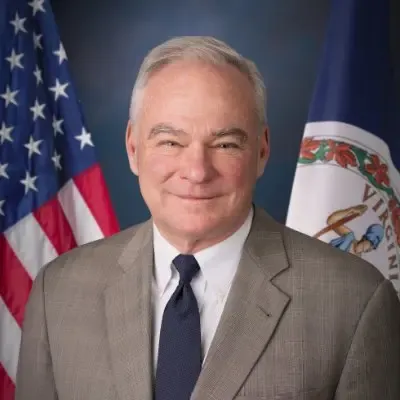
Republican Senator Todd Young and Democratic Senator Mark Kelly appeared jointly on ABC's This Week on 28 June , calling for greater political courage.
Kelly said elected officials must take positions 'politically harmful' to their own careers when the national interest demands it.
Young revealed he privately texted Kelly after President Trump accused Kelly's military remarks of amounting to sedition.
Young acknowledged Trump's unmatched political loyalty base but said it did not absolve lawmakers of independent responsibility.
Kelly argued Trump 'looks for every opportunity' to divide rather than unite the country; Young placed blame on voters for electing current leadership.
The exchange comes as the US prepares to mark its 250th anniversary .
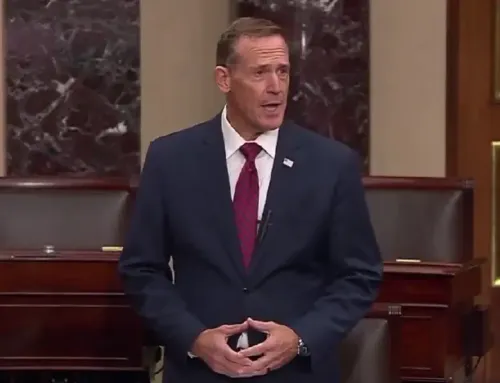
Republican Senator Todd Young of Indiana and Democratic Senator Mark Kelly of Arizona jointly called on American legislators to prioritise the national interest over partisan allegiance on 28 June, even as they offered sharply divergent assessments of President Donald Trump's leadership style. The two senators appeared together on ABC's This Week, making the rare bipartisan appearance a signal moment in an era of deepening political polarisation.
The Case for Political Courage
Kelly, the Arizona Democrat, argued that genuine public service demands a willingness to absorb personal political cost. 'You have to take stands that you know are the right thing for the nation that moves us forward in a positive way, but could be politically harmful to you and your career,' he said. 'That's hard for some folks.'
Young, a former Marine and Indiana Republican, framed courage differently — as the capacity to endure misunderstanding from one's own allies. 'It's the courage to be misunderstood by people you respect and love and whose values you share on difficult issues,' he said. 'It's courage to do unpopular things.'
Trump's Sedition Accusation and Private Outreach
The conversation took a pointed turn when the senators addressed Trump's recent claim that Kelly's remarks about military personnel amounted to sedition. Young revealed he reached out to Kelly privately on the same day the accusation surfaced. 'My first reaction was to text Mark and engage in a dialogue that very morning,' Young said, underscoring that legislators must balance public disagreement with the practical need to continue working together on legislation.
Kelly acknowledged the structural difficulty facing Republican senators who serve under a president he described as 'very unconventional about how he approaches this job.' 'It is very complicated for them,' Kelly said, adding that being in the majority under such leadership carried unique pressures that the minority did not face.
Young on Trump's Influence — and Its Limits
Young defended the President's extraordinary political hold over his base while insisting it did not override lawmakers' independent duty. 'He has more loyal political followers than I've ever encountered in political life,' Young said. 'But that in no way absolves myself or any of my colleagues, Republican or Democrat, from the agency we have. We still need to sacrifice when we feel like the common good can be advanced through personal sacrifice.'
This is a notable statement from a Republican senator who has otherwise broadly supported the administration, and reflects a tension that has defined the GOP caucus throughout Trump's political career.
A Divided Nation at 250
With the United States preparing to mark its 250th anniversary, the two senators offered contrasting diagnoses of the national mood. Kelly argued that the current administration actively deepens divisions. 'We have a President who looks for every opportunity, not as an opportunity to bring the country together, but to further divide us,' he said.
Young placed the accountability squarely on the electorate. 'The reason we're so divided right now and the reason we have a government that we're unhappy with is that the American people have elected the current crop of senators, of congressmen, of the President,' he said. 'If they have challenges with the way we're being led, then put people in office that can do a better job.'
The exchange illustrates a broader tension in American democracy as the country approaches its semiquincentennial: whether the remedy for institutional dysfunction lies with elected officials, or with the voters who put them there.
Point of View
Whether Trump's influence is a problem or a fact of life, and where accountability ultimately rests. Young's framing that voters are to blame is a convenient deflection for a senator who has largely backed the administration. Kelly's minority-party comfort cuts the other way: it is easier to call for courage when the political cost falls on someone else. What the interview actually reveals is how thin bipartisan goodwill is when it is tested against real accountability.
NationPress
27 Sept 2026
Frequently Asked Questions
What did Senators Todd Young and Mark Kelly say about political courage?
Both senators called on American politicians to prioritise the national interest over partisan loyalty during a joint appearance on ABC's This Week on 28 June. Kelly said officials must take stands that could be 'politically harmful' to their careers, while Young described courage as the willingness to be misunderstood by one's own supporters.
Why did Senator Young text Senator Kelly after Trump's sedition accusation?
Young said his immediate response to Trump's claim that Kelly's remarks about military personnel amounted to sedition was to privately reach out to Kelly that same morning. Young indicated the gesture reflected the need for legislators to maintain working relationships even amid sharp public disagreements.
How did the two senators differ on President Trump?
Kelly argued that Trump 'looks for every opportunity' to divide the country rather than unite it, and said being in the majority under such unconventional leadership was 'very complicated' for Republicans. Young defended Trump's political influence as historically unprecedented but insisted it did not remove lawmakers' independent duty to serve the common good.
Who do the senators hold responsible for America's political divisions?
Kelly attributed deepening divisions to the President's leadership approach. Young placed the responsibility on American voters, arguing that the electorate had chosen the current leadership and could change course at the ballot box.
Why is this interview significant ahead of the US 250th anniversary?
The joint appearance comes as the United States prepares to mark 250 years of independence, a moment that has prompted reflection on national unity. The senators' contrasting diagnoses — executive failure versus voter accountability — highlight the unresolved debate over where democratic responsibility truly lies.