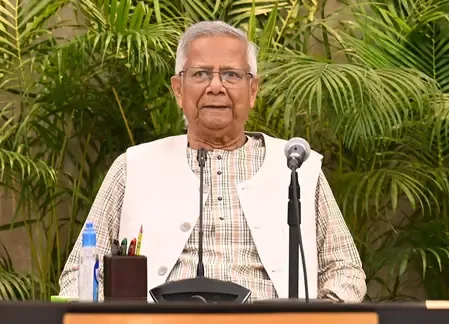
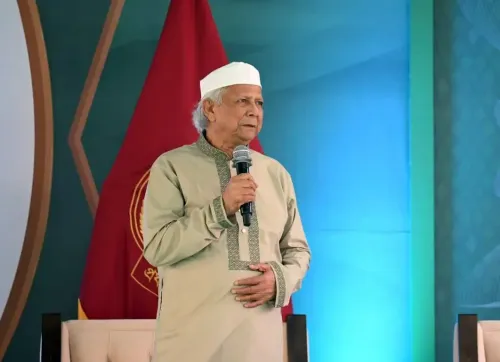
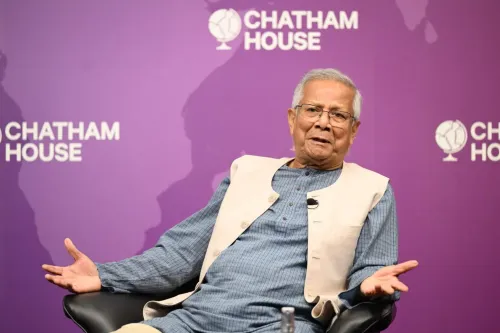
Muhammad Yunus confronted by Bangladeshi expats at JFK, branded 'terrorist'
Synopsis
Muhammad Yunus was confronted at JFK Airport by Bangladeshi expatriates who branded him a 'terrorist' and accused him of mass killings and dismantling democracy — a public flashpoint that crystallises the mounting criticism of his 18-month run as Bangladesh's interim Chief Advisor, from arbitrary arrests to alleged institutional capture by unelected figures.
Key Takeaways
Muhammad Yunus was confronted by Bangladeshi expatriates at JFK Terminal 8 , New York , on 12 October 2026 .
Protesters branded him a 'terrorist' and accused him of killing thousands, including Bangladeshi police personnel, and destroying democracy.
Yunus had arrived aboard a Qatar Airways flight from Doha and was being escorted in a wheelchair when the confrontation occurred.
Critics of his 18-month tenure cite arbitrary arrests, attacks on minorities, and prolonged detention of journalists, lawyers, and activists.
Governance was reportedly dominated by unelected civil society figures, some allegedly holding foreign citizenships, raising democratic accountability concerns.
Critics allege that Jamaat-e-Islami and the NCP expanded institutional influence under the interim administration.
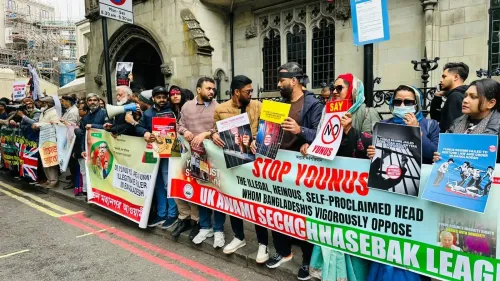
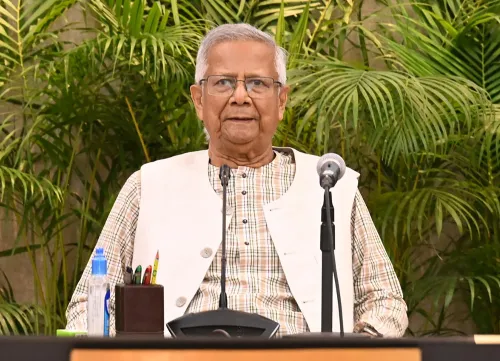
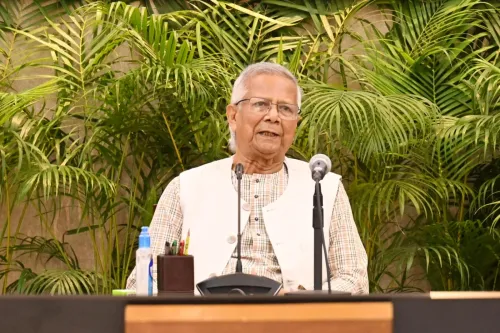
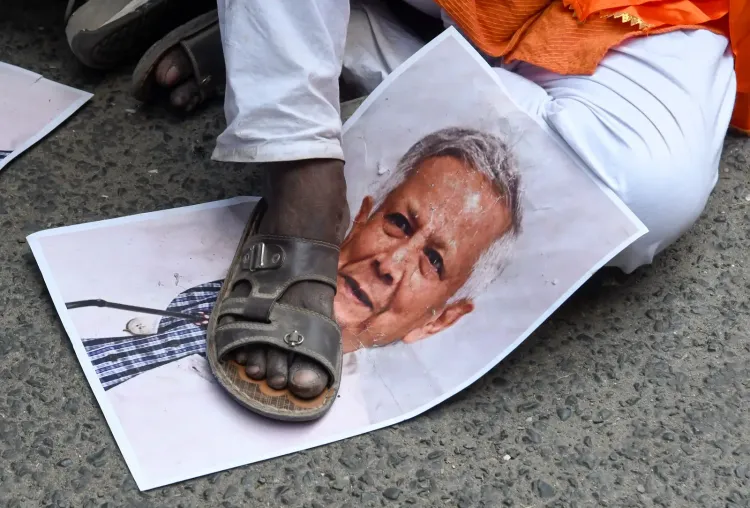
Muhammad Yunus, the Chief Advisor of Bangladesh's former interim government, was confronted by a group of angry Bangladeshi expatriates at John F Kennedy International Airport in New York on 12 October 2026, with protesters branding him a 'terrorist' and accusing him of destroying democracy and killing thousands of people in the South Asian country. The incident, captured on video that circulated widely on social media, adds to mounting international scrutiny of Yunus's tenure.
What Happened at the Airport
Yunus arrived at JFK Terminal 8 aboard a Qatar Airways flight from Doha when he was met by the protesting group. Video footage showed him being escorted out of the airport in a wheelchair as demonstrators hurled accusations at him. One protester was heard shouting, 'You terrorist, why did you come here? You have destroyed the democracy in my country!' Another individual directly accused Yunus of responsibility for mass casualties: 'You terrorist, you killed thousands of people in Bangladesh.' Several protesters also specifically alleged the deaths of thousands of Bangladeshi police personnel, while others shouted 'Go back.'
The Criticisms Behind the Confrontation
The airport confrontation reflects a broader wave of criticism that built over Yunus's 18-month tenure as head of the interim government. Critics have accused the administration of political vendetta, arbitrary arrests, escalating attacks on minorities, and the prolonged detention of lawyers, politicians, journalists, academics, and political activists. According to reports, there is a notable absence of publicly available records detailing the number of people arrested, formally charged, or prosecuted during that period.
Allegations of Institutional Politicisation
Critics contend that governance under the interim period became 'increasingly dominated by unelected civil society figures — many of whom reportedly held foreign citizenships,' along with an influential 'kitchen cabinet' and other vested interests that reportedly exercised considerable influence without democratic accountability. Separately, critics have alleged that the political instability during the interim period enabled Jamaat-e-Islami and the National Citizen Party (NCP) to expand their influence within sections of the bureaucracy and other state institutions. Rather than improving governance, the period was, according to critics, characterised by growing 'patronage, self-aggrandisement, and corruption.'
Reform Promises and Their Alleged Shortfalls
One of the stated priorities of the interim government had been comprehensive reform of state institutions in Bangladesh. However, critics argue those promises went largely unfulfilled. The accountability deficit, including the absence of transparent records on detentions and prosecutions, has become a focal point of opposition narratives both inside Bangladesh and among expatriate communities abroad.
What This Signals
The New York confrontation underscores the deepening divide in Bangladeshi public opinion over the interim government's legacy. As Yunus continues to engage with international audiences, the diplomatic and reputational fallout from such incidents is likely to intensify scrutiny of Bangladesh's political transition going forward.
Point of View
Yunus's international engagements will carry this shadow until Bangladesh produces transparent institutional records.
NationPress
13 Oct 2026
Frequently Asked Questions
What happened to Muhammad Yunus at JFK Airport in New York?
Muhammad Yunus, former Chief Advisor of Bangladesh's interim government, was confronted by a group of Bangladeshi expatriates at JFK Terminal 8 on 12 October 2026 after arriving on a Qatar Airways flight from Doha. Protesters branded him a 'terrorist,' accused him of killing thousands of Bangladeshis, and shouted 'Go back' as he was being escorted in a wheelchair.
Why are Bangladeshi expatriates angry with Muhammad Yunus?
Critics accuse Yunus's 18-month interim government of political vendetta, arbitrary arrests, attacks on minorities, and the prolonged detention of lawyers, journalists, academics, and political activists. They also allege a lack of transparent records on detentions and prosecutions during his tenure.
What were the main governance failures alleged against Yunus's interim government?
Critics contend that governance became dominated by unelected civil society figures — some reportedly holding foreign citizenships — and an influential 'kitchen cabinet' that operated without democratic accountability. The period has also been linked to the expanded institutional influence of Jamaat-e-Islami and the National Citizen Party.
Did Yunus's interim government deliver on its reform promises?
The interim government had pledged comprehensive reforms of state institutions in Bangladesh, but critics argue those promises went largely unfulfilled. The absence of publicly available records on arrests and prosecutions has been cited as a key accountability failure.
What is the significance of the New York confrontation?
The incident highlights growing opposition to Yunus's legacy among the Bangladeshi diaspora and signals that criticism of his tenure is now playing out on an international stage. It is likely to intensify scrutiny of Bangladesh's political transition as Yunus continues to engage with global audiences.