Are Zambian Farmers Taking a Stand Against Chinese Mining Firms for Environmental Disaster?

Synopsis
Zambian farmers have filed an $80 billion lawsuit against Chinese-linked mining firms after a dam collapse caused severe ecological damage. The situation has affected over 300,000 households and raised urgent health concerns. This case marks one of the largest environmental lawsuits in Zambia's history, highlighting the struggle of local communities against foreign corporations.
Key Takeaways
$80 billion lawsuit filed by Zambian farmers.
Dam collapse impacted over 300,000 households.
Health alerts issued due to severe water contamination.
Farmers demand a $20 million emergency fund for affected communities.
Case highlights corporate accountability in environmental disasters.
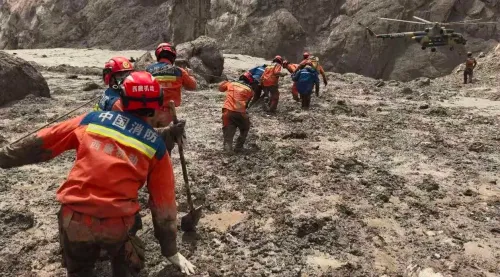
New Delhi, Sep 17 (NationPress) In a significant legal action, farmers from Zambia, located in Central Africa, have initiated an $80 billion lawsuit against two firms linked to Chinese interests, holding them accountable for an ecological disaster following the collapse of a dam that contained mining waste in February.
According to court documents, millions of liters of severely acidic waste flooded local waterways, resulting in devastating fish deaths, rendering water unsafe for consumption, and ruining agricultural lands.
This lawsuit marks a major confrontation between local communities, primarily composed of subsistence farmers, and the companies Sino Metals Leach Zambia and NFC Africa Mining, both subsidiaries of Chinese state-owned corporations.
The farmers claimed that approximately 300,000 households in the mining region were adversely affected, making this one of the largest environmental lawsuits in Zambia's history. They asserted that they were not informed about the hazardous nature of the water until days after the dam failure.
In August, the U.S. embassy issued a health warning about the “widespread contamination of water and soil” in the vicinity. A collective of 176 farmers has filed legal documents on behalf of their community at the High Court in Lusaka, Zambia’s capital.
The dam, owned by Sino Metals Leach Zambia, was situated on the site managed by NFC Africa Mining. The farmers alleged that the collapse stemmed from various issues, including engineering failures, construction defects, and management negligence.
While the firms have yet to respond to the allegations, Sino Metals Leach Zambia previously acknowledged a spillage of about 50,000 cubic meters.
In a statement released on September 3, the company claimed that the tailings release was quickly contained after detection.
Victims reported a range of health issues, such as blood in urine and chest discomfort, as stated in the court filings. Additionally, wells became contaminated, and crops had to be destroyed due to safety concerns, according to the petitioners.
The petitioners are also urging the establishment of a $20 million emergency fund to provide “immediate and urgent” assistance to those impacted by the calamity and to conduct comprehensive health and environmental evaluations. However, the Zambian government has maintained since August that there are no serious public health risks.
Point of View
It is crucial to emphasize the voice of the Zambian farmers in this landmark lawsuit. Their struggle against foreign corporations highlights significant concerns about environmental stewardship and community welfare. This case not only reflects the farmers' resilience but also raises essential questions about corporate responsibility and accountability in resource-rich nations.
NationPress
20 Sept 2026
Frequently Asked Questions
What caused the lawsuit filed by Zambian farmers?
The lawsuit was triggered by the collapse of a dam storing mining waste, which resulted in severe ecological damage and health hazards for the local community.
How many households are affected by the ecological disaster?
Approximately 300,000 households in the affected region are reported to be impacted by the ecological disaster.
What are the farmers seeking from the lawsuit?
The farmers are seeking $80 billion in damages and are also calling for a $20 million emergency fund to assist those affected by the disaster.
What health concerns have been reported since the dam collapse?
Reports include various health issues such as blood in urine, chest tightness, and widespread water contamination affecting local wells.
Have the mining firms responded to the allegations?
As of now, the mining firms have not provided a detailed response to the allegations presented in the lawsuit.