Jaishankar meets Zelensky in Kyiv: India's first standalone EAM visit to Ukraine
Synopsis
In India's first-ever standalone EAM visit to Ukraine, Jaishankar met Zelensky in Kyiv as Russian drones flew overhead. Zelensky publicly thanked India for its 'desire to end this unjust war' — and Ukraine's foreign minister called for India to take a more active mediation role, raising the stakes for New Delhi's carefully calibrated neutrality.
Key Takeaways
Jaishankar met President Zelensky in Kyiv on 3 September — the first-ever standalone bilateral visit by an Indian External Affairs Minister to Ukraine.
Zelensky publicly thanked India for its 'desire to end this unjust war' and called for other major powers to take a clear position on peace.
Russia launched jet-powered 'Shaheds' during the visit; the delegation was kept safe by Ukrainian air defences.
Ukraine-India bilateral trade currently stands at USD 2.6 billion , with both sides agreeing to explore further growth across energy, agriculture, pharmaceuticals, and technology.
Ukrainian FM Andrii Sybiha called for India's 'more active involvement' in international peace efforts and recalled that Indian seafarers were among conflict victims.
An Indian national was among 12 people killed in drone and missile strikes on Ukraine, announced by Zelensky days before the visit.
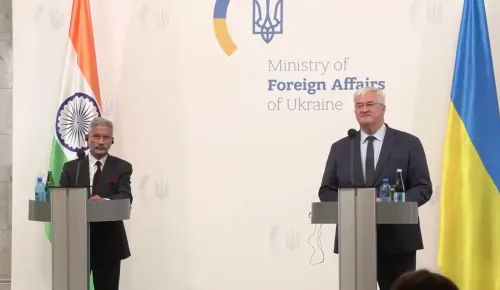
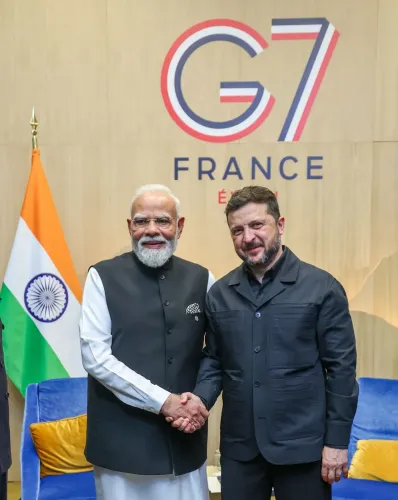
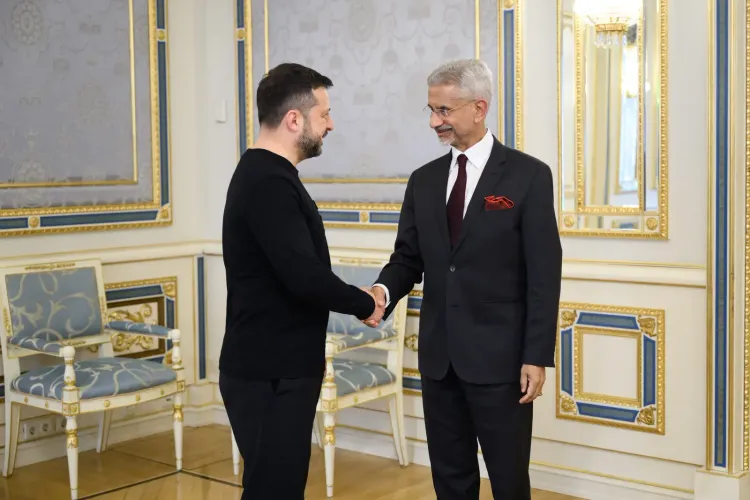
External Affairs Minister S. Jaishankar met Ukrainian President Volodymyr Zelensky in Kyiv on 3 September, marking the first-ever standalone bilateral visit by an Indian External Affairs Minister to Ukraine. The discussions spanned approaches to ending the ongoing Russia-Ukraine conflict, Black Sea security, global food supply chains, and the deepening of India-Ukraine bilateral ties.
What Jaishankar and Zelensky Discussed
After the meeting, Jaishankar posted on X: 'Pleased to call on President Zelensky today. Apprised him of discussions with FM Andrii Sybiha on deepening our bilateral cooperation. Our conversation centered on approaches to end the ongoing conflict.'
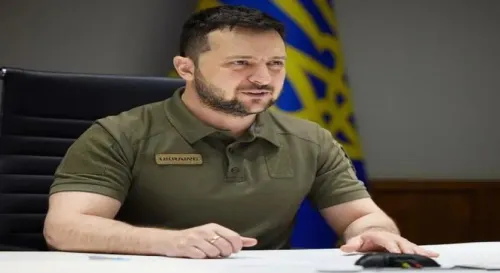
Zelensky also addressed the meeting publicly, writing on X: 'We are grateful to India for its desire to end this unjust war — the war of Russia against Ukraine. This time must certainly not be a time of war. Peace is needed. This is India's clear position.'
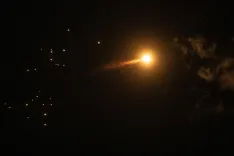
The Ukrainian President also noted that during the minister's visit, Russia launched jet-powered 'Shaheds' — drones he said were produced with Iran's assistance. He said the delegation remained safe owing to Ukrainian air defences, and called on 'other strong states' to take a clear position that the war must end.
Black Sea Security and Global Food Supply
A significant portion of the talks focused on threats to civilian shipping in the Black Sea. Zelensky described Russian actions targeting Ukrainian ports and grain corridors as 'injecting major disruption into global relations,' adding that blocking food supplies to food-sensitive regions was 'absolutely unacceptable.'
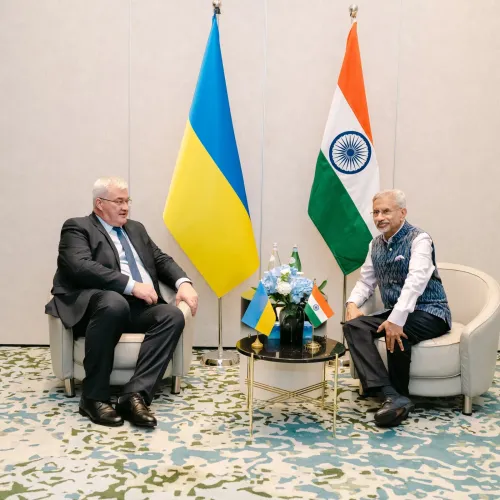
Earlier in the day, Ukrainian Foreign Minister Andrii Sybiha — who held a separate meeting with Jaishankar — stressed that it was 'Russian aggression' that had turned the Black Sea into a zone of hostilities. Sybiha recalled that Indian seafarers were among the victims of the conflict and extended condolences over their deaths.
India's Role in Peace Efforts
Sybiha explicitly called for a more active Indian role in international peace efforts. He quoted Prime Minister Narendra Modi's recent remarks — made in the presence of Russian President Vladimir Putin — that 'it is time to put an end to the endless war,' saying Ukraine supported this position. 'Ukraine is ready to end the war, and we have realistic proposals. It is time to move to diplomacy,' Sybiha said.
This visit comes days after Modi appealed for an end to the 'endless' war on the sidelines of the Shanghai Cooperation Organisation (SCO) summit in Bishkek, Kyrgyzstan. Notably, Zelensky had on Tuesday announced that an Indian national was among 12 people killed in drone and missile strikes across Ukraine — a development that added urgency to the diplomatic outreach.
Bilateral Trade and Economic Cooperation
Beyond the conflict, both sides devoted significant attention to bilateral economic ties. According to the Ukrainian Foreign Ministry, trade between Ukraine and India currently stands at USD 2.6 billion, with Sybiha describing 'significant potential for further growth.'
Ukraine expressed readiness to expand trade, investment, and business contacts, and invited Indian businesses to participate in post-war reconstruction. Promising sectors identified include energy, infrastructure, transport, agriculture, pharmaceuticals, digitalisation, and mechanical engineering. The two sides agreed to discuss scheduling a meeting of the Intergovernmental Ukrainian-Indian Commission to intensify trade relations.
Sybiha also highlighted Ukraine's emergence as a technology leader, noting: 'India is a global technological power. And as a result of the war, Ukraine is among the world's leaders in innovative technologies, including security technologies.'
What Comes Next
With India increasingly positioned as a potential diplomatic bridge — given its ties with both Moscow and Western capitals — the Kyiv visit signals a calibrated shift in New Delhi's engagement with the conflict. Ukraine has formally called for India's 'continued support for the principles of the UN Charter, Ukraine's sovereignty and territorial integrity, freedom of navigation and international law.' Whether India translates its stated desire for peace into a more active mediation role remains the defining question going forward.
Point of View
But the harder question is what it commits New Delhi to. Ukraine is not just expressing gratitude — it is explicitly asking for 'more active involvement' in peace efforts, which is a different ask altogether. India has so far leveraged its ties with Moscow and Western capitals to maintain strategic ambiguity; that space is narrowing. The death of an Indian national in the conflict, cited in the same diplomatic breath as trade proposals, is a signal that Ukraine intends to personalise the stakes for Indian public opinion. Whether Modi's 'it is time to end the endless war' translates into a concrete mediation framework — or remains a rhetorical posture — will define India's credibility as a genuine peace broker in this conflict.
NationPress
3 Sept 2026
Frequently Asked Questions
What was significant about Jaishankar's visit to Kyiv?
It was the first-ever standalone bilateral visit by an Indian External Affairs Minister to Ukraine, signalling a notable shift in India's diplomatic engagement with the Russia-Ukraine conflict. The visit included meetings with both President Zelensky and Foreign Minister Sybiha.
What did Zelensky say about India after meeting Jaishankar?
Zelensky publicly thanked India for its 'desire to end this unjust war — the war of Russia against Ukraine,' describing India's call for peace as a 'clear position.' He also noted that Russian drones were launched during the minister's visit but the delegation was kept safe by Ukrainian air defences.
What is the current state of India-Ukraine trade?
Bilateral trade between India and Ukraine currently stands at USD 2.6 billion, according to the Ukrainian Foreign Ministry. Both sides agreed to explore further growth, with promising sectors including energy, agriculture, pharmaceuticals, digitalisation, and mechanical engineering.
Why did Ukraine's foreign minister mention Indian seafarers?
Ukrainian FM Andrii Sybiha recalled that Indian seafarers were among the victims of the Russia-Ukraine conflict, particularly in the context of Black Sea hostilities. He extended condolences over their deaths and stressed that blocking civilian shipping and food supply routes was a result of Russian aggression.
What role is India being asked to play in ending the war?
Ukraine has called for India's 'more active involvement' in international efforts to end the conflict, citing Prime Minister Modi's recent appeal to stop the 'endless war.' Ukraine said it has 'realistic proposals' for peace and wants India to move beyond statements toward active diplomatic engagement.