Zelensky submits bill to extend Ukraine martial law through January 2027
Synopsis
Zelensky has moved to extend Ukraine's war footing through January 2027 even as Abu Dhabi trilateral talks with Russia and the US loom in November. The dual move — renew mobilisation at home, negotiate abroad — comes as Ukraine reports receiving just 24 Patriot interceptors in three months against a stated need of 350 per month, and as Washington reportedly pressures Kyiv to make territorial concessions.
Key Takeaways
President Zelensky submitted a bill on 27 October 2026 to extend martial law and mobilisation by 90 days , through 29 January 2027 .
Current measures were set to expire on 31 October ; both have been in force since February 2022 .
Zelensky rejected ceding 25 per cent of Ukrainian territory but expressed readiness to freeze frontlines for a ceasefire.
Ukraine received only 24 Patriot interceptor missiles from the US in three months, against a stated monthly need of 350 .
30 ballistic missiles struck Kyiv in a single night, underscoring the air defence shortfall.
Trilateral Russia-Ukraine-US talks are scheduled in Abu Dhabi in the first half of November .
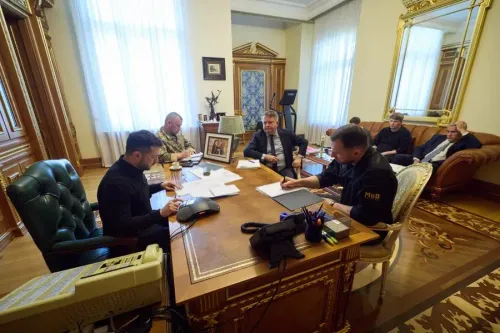
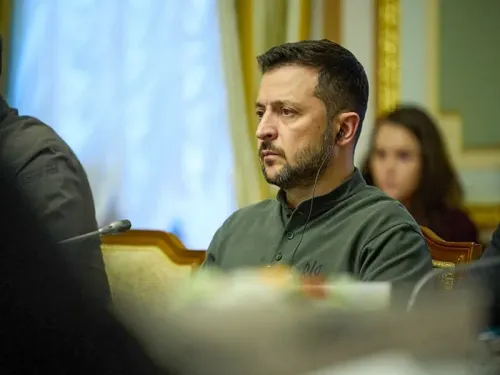
Ukrainian President Volodymyr Zelensky on Monday, 27 October 2026, submitted draft legislation to the Verkhovna Rada (Ukraine's parliament) to extend both martial law and general mobilisation by a further 90 days, according to the parliament's press service. If lawmakers approve the measures, they will remain in force through 29 January 2027, having been set to expire on 31 October.
Continuous War Footing Since February 2022
Martial law and general mobilisation have been in place in Ukraine continuously since February 2022, when Russia launched its full-scale military offensive. Both measures have been renewed multiple times, making this the latest in a series of extensions that reflect the unresolved nature of the conflict. The 90-day window aligns with the minimum parliamentary cycle required for such approvals under Ukrainian law.
Zelensky's Ceasefire Position
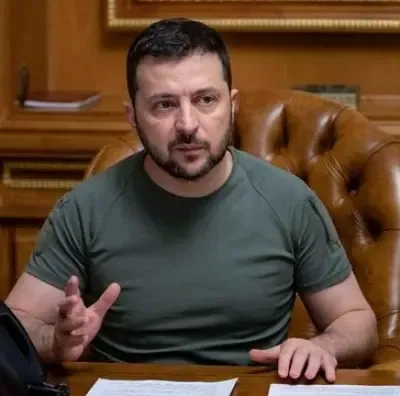
Separately, Zelensky has signalled conditional openness to ending active hostilities. In an interview with ABC News, he said Ukraine was prepared to freeze combat operations along existing frontlines to bring a swift end to the war, but firmly rejected any territorial concessions — including a proposal that would involve ceding roughly 25 per cent of Ukrainian territory. The two positions — extending mobilisation at home while exploring a ceasefire abroad — underscore Kyiv's negotiating posture: negotiate from strength, not surrender.
Patriot Missiles and the Weapons Gap
Zelensky also highlighted a critical shortfall in US military assistance, saying Ukraine had received only 24 interceptor missiles for its Patriot air defence systems from the United States over the previous three months — far below its stated average monthly requirement of 350 missiles. He underlined the operational urgency by noting that 30 ballistic missiles struck Kyiv on a single Thursday night. The figures, attributed directly to Zelensky, point to a widening gap between Ukraine's defensive needs and current US supply levels.
Washington's Pressure and Abu Dhabi Talks
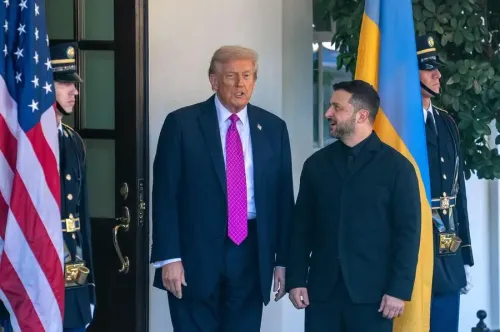
US media reports indicate growing pressure from Washington on Kyiv to make concessions in exchange for a peace agreement. US President Donald Trump has reportedly and repeatedly blamed Ukraine for the lack of progress in US-brokered negotiations. Trilateral talks between Russia, Ukraine, and the United States are scheduled to take place in Abu Dhabi, the capital of the United Arab Emirates, in the first half of November. Kremlin spokesman Dmitry Peskov confirmed on Friday that the talks would focus on post-settlement security arrangements for both Russia and Ukraine. Zelensky separately confirmed Ukraine's readiness to participate in the Abu Dhabi meeting.
What Comes Next
Parliamentary approval of the martial law extension is widely expected, given the Rada's consistent support for previous renewals. The more consequential question is whether the Abu Dhabi trilateral meeting can produce a workable ceasefire framework — one that neither requires Kyiv to surrender territory nor leaves its air defences critically depleted. The clock on both the October 31 expiry and the November talks is running simultaneously.
Point of View
But the context surrounding this particular renewal is anything but routine. The 24-versus-350 Patriot missile figure is the sharpest public articulation yet of how severely US military support has contracted under Trump — and Zelensky is clearly putting that number on the record before the Abu Dhabi talks. Washington's reported pressure on Kyiv to concede territory, paired with Zelensky's flat rejection of any handover, sets up the November trilateral as a high-stakes test of whether the US can function as a credible broker between two parties with incompatible opening positions. The martial law extension buys Kyiv time, but without a resupply commitment, it may be extending a mobilisation it cannot sustain militarily.
NationPress
26 Oct 2026
Frequently Asked Questions
Why is Zelensky extending martial law in Ukraine?
Zelensky submitted draft legislation to extend martial law and general mobilisation by 90 days because the existing measures were set to expire on 31 October 2026. Ukraine has maintained martial law continuously since February 2022 due to its ongoing armed conflict with Russia, and the extension would keep it in force through 29 January 2027.
What is Ukraine's position on a ceasefire?
Zelensky has said Ukraine is willing to freeze combat operations along current frontlines to achieve a swift end to the conflict. However, he firmly rejected proposals that would involve ceding approximately 25 per cent of Ukrainian territory, drawing a clear line between a ceasefire and a territorial surrender.
What is the Patriot missile shortfall Zelensky mentioned?
Zelensky stated that Ukraine received only 24 interceptor missiles for its Patriot air defence systems from the United States over the past three months, far below the country's stated average monthly requirement of 350. He cited 30 ballistic missiles striking Kyiv in a single night as evidence of the urgency.
What are the Abu Dhabi trilateral talks?
Trilateral talks between Russia, Ukraine, and the United States are scheduled to take place in Abu Dhabi, the capital of the United Arab Emirates, in the first half of November 2026. Kremlin spokesman Dmitry Peskov said the talks will focus on post-settlement security arrangements for both countries following a potential peace deal.
Is the US pressuring Ukraine to make concessions?
According to US media reports, Washington has increased pressure on Kyiv to make concessions to facilitate a peace agreement. US President Donald Trump has reportedly blamed Ukraine for the lack of progress in US-brokered negotiations, a characterisation Kyiv has resisted.