Zimbabwe begins BRICS New Development Bank membership talks
Synopsis
Zimbabwe has officially entered BRICS New Development Bank accession talks — a milestone two years in the making since President Mnangagwa's 2023 application. Paired with a fresh IMF Staff Monitored Programme, Harare is running a dual-track re-engagement play that could unlock multilateral financing it has been largely shut out of for a generation.
Key Takeaways
Zimbabwe has formally begun accession negotiations with the BRICS New Development Bank (NDB) , confirmed on 16 May 2025 .
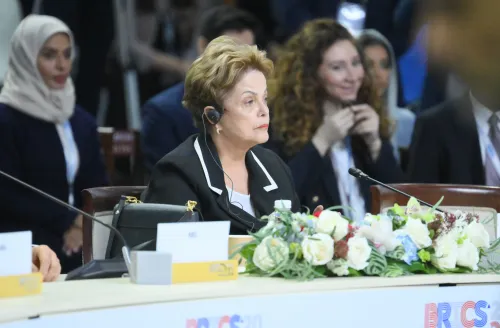
NDB President Dilma Rousseff officially communicated the start of the process and outlined next steps toward full membership.
Finance Minister Mthuli Ncube said membership would help mobilise long-term development financing aligned with Zimbabwe's goal of becoming an upper-middle-income economy by 2030 .
President Emmerson Mnangagwa had first applied for NDB membership in 2023 ; the formal negotiations mark a culmination of nearly two years of diplomatic effort.
The IMF separately approved a 10-month Staff Monitored Programme for Zimbabwe last month, targeting macroeconomic stability and arrears clearance.
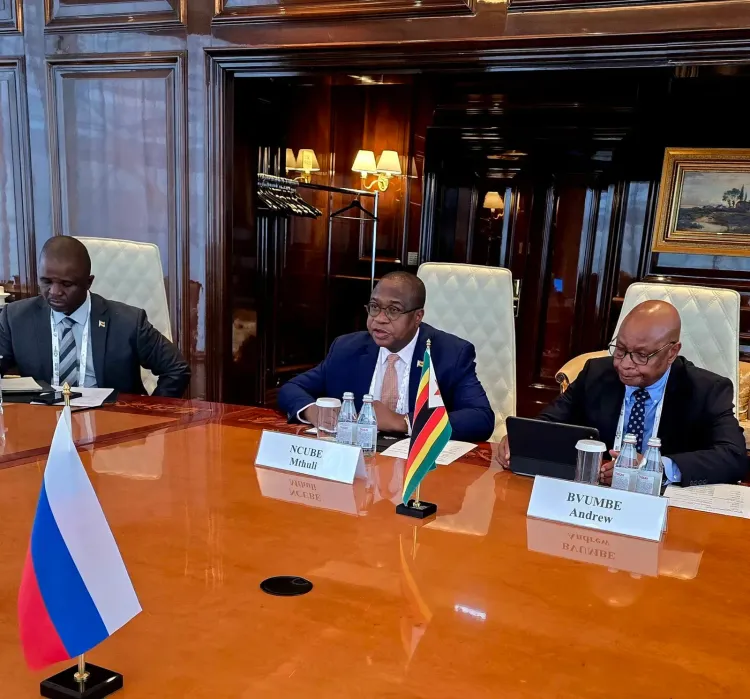
Zimbabwe has formally entered accession negotiations with the BRICS New Development Bank (NDB), with Minister of Finance, Economic Development and Investment Promotion Mthuli Ncube confirming the development in a statement on Saturday, 16 May. The move follows official communication from NDB President Dilma Rousseff, who confirmed the start of the accession process and outlined the steps toward full membership.
What the Negotiations Cover
The New Development Bank's Board of Directors has authorised the commencement of formal negotiations regarding Zimbabwe's membership. According to Ncube, membership is expected to strengthen Zimbabwe's capacity to mobilise long-term development financing for key national priorities, aligned with the country's ambition to achieve upper-middle-income economy status by 2030.
'The government of the Republic of Zimbabwe welcomes the decision by the Board of Directors of the New Development Bank authorising the commencement of formal negotiations regarding Zimbabwe's membership of the Bank,' Ncube said.
Strategic Significance for Zimbabwe
Ncube described the development as a 'landmark' milestone in Zimbabwe's re-engagement agenda, arguing it reflects growing international confidence in the country's economic reform programme, macroeconomic stability, and private sector-driven investment growth strategy. He added that the negotiations advance Zimbabwe's 'South to South win-win cooperation with emerging economies' and its integration into the financial and technological frameworks associated with BRICS.
Notably, President Emmerson Mnangagwa had applied for NDB membership as far back as 2023, making the formal accession launch a culmination of nearly two years of diplomatic groundwork. The NDB, established in 2015 by the original BRICS members, primarily funds infrastructure and sustainable development projects across emerging and developing economies.
IMF Programme Adds Momentum
The NDB bid comes alongside a separate but related development: last month, the International Monetary Fund (IMF) management approved a 10-month Staff Monitored Programme (SMP) for Zimbabwe, aimed at anchoring macroeconomic stability and advancing the country's re-engagement with the international community.
The IMF stated that the programme will help lay the foundations for strengthening the monetary policy framework, including measures to promote demand for the Zimbabwe Gold (ZiG) currency. 'The program will support efforts to maintain low and stable inflation and preserve progress in easing foreign exchange market pressures,' the IMF said. The SMP is designed to build a credible policy implementation track record — a critical stepping stone toward a potential Fund-supported financial arrangement and a comprehensive roadmap for arrears clearance.
What Comes Next
With both the NDB accession process and the IMF's SMP now active simultaneously, Zimbabwe is pursuing a dual-track international financial re-engagement strategy. Full NDB membership would unlock access to multilateral development financing that Harare has largely been cut off from for decades. The pace of negotiations and the outcomes of the IMF programme will together determine how quickly that access materialises.
Point of View
Even if secured, delivers limited near-term financing if Zimbabwe's arrears with other multilaterals remain unresolved. The real test is whether the IMF programme produces the policy track record that unlocks a full Fund arrangement — without that, the NDB ticket may be more symbolic than transformative.
NationPress
19 Sept 2026
Frequently Asked Questions
What is the BRICS New Development Bank and why does Zimbabwe want to join?
The BRICS New Development Bank (NDB) is a multilateral development institution established in 2015 by the original BRICS members — Brazil, Russia, India, China, and South Africa — to fund infrastructure and sustainable development projects in emerging and developing economies. Zimbabwe wants membership to access long-term development financing that it has largely been cut off from for decades, in support of its goal to become an upper-middle-income economy by 2030.
When did Zimbabwe apply to join the NDB?
President Emmerson Mnangagwa announced Zimbabwe's application to join the New Development Bank in 2023. The formal accession negotiations confirmed on 16 May 2025 represent the culmination of nearly two years of diplomatic engagement.
What did NDB President Dilma Rousseff communicate to Zimbabwe?
NDB President Dilma Rousseff sent official communication to Zimbabwe confirming the start of the accession process and outlining the next steps toward full membership, as stated by Finance Minister Mthuli Ncube on 16 May 2025.
What is the IMF Staff Monitored Programme approved for Zimbabwe?
The IMF management approved a 10-month Staff Monitored Programme (SMP) for Zimbabwe last month, aimed at anchoring macroeconomic stability and advancing the country's re-engagement with the international community. The programme supports monetary policy reforms, promotes demand for the Zimbabwe Gold (ZiG) currency, and is intended as a stepping stone toward a full Fund-supported financial arrangement and arrears clearance.
How does NDB membership fit into Zimbabwe's broader economic strategy?
According to Finance Minister Mthuli Ncube, NDB membership advances Zimbabwe's 'South to South' cooperation agenda with emerging economies and its integration into BRICS-associated financial and technological frameworks. Combined with the IMF programme, it forms part of a dual-track international re-engagement strategy designed to restore Zimbabwe's access to multilateral development financing.