Telangana Cyber Bureau arrests 101 in south India cybercrime sweep, traces ₹17 crore

Synopsis
The Telangana Cyber Security Bureau's second major multi-state sweep netted 101 accused across six southern states in just two weeks — and the suspect list is striking: a Flipkart employee linked to 50 cases, an MBA marketing head, an ex-serviceman, and a film-technology diploma holder. With ₹17 crore traced and 1,172 crime links identified nationally, the operation lays bare how deep the mule-account economy has embedded itself in everyday professional life.
Key Takeaways
101 people arrested — including 18 women — across Kerala, Andhra Pradesh, Karnataka, Tamil Nadu, Telangana, and Puducherry in a two-week TGCSB operation ending 7 October 2026 .
Approximately ₹17 crore in fraudulent transactions traced through mule accounts.
81 accused were mule account holders; 19 acted as agents facilitating the network.
Over 1,172 crime links identified nationally, including 206 connected to Telangana.
High-profile accused include a Flipkart employee (50 crime links), an M.Com businessman (34 links), and an MBA Marketing Head (15 links).
Fraudsters paid mule account holders commissions of up to 5 per cent of transacted amounts.
The Telangana Cyber Security Bureau (TGCSB) has arrested 101 accused — including 18 women — and traced fraudulent transactions worth approximately ₹17 crore in a sweeping two-week multi-state cybercrime operation across southern India. The crackdown, which ran from 23 September 2026 and concluded on 7 October 2026, spanned Kerala, Andhra Pradesh, Karnataka, Tamil Nadu, Telangana, and Puducherry.
Scale of the Operation
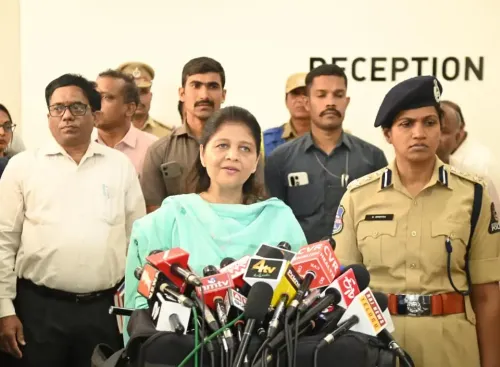
TGCSB Director Shikha Goel said that six dedicated special teams comprising more than 100 TGCSB personnel were deployed for coordinated field-level action. This is the second simultaneous multi-state operation led by the bureau, reinforcing its strategy to dismantle cybercrime networks that exploit multiple state jurisdictions.
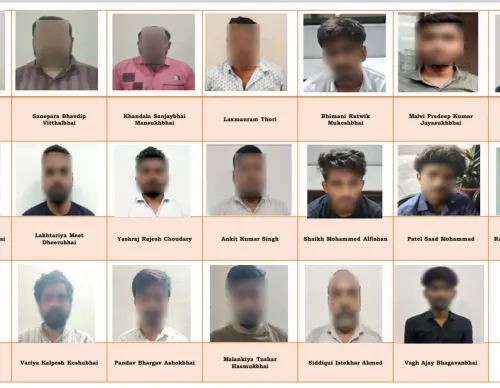
Of the 101 arrested, 19 were identified as agents and 81 as mule account holders. Kerala recorded the highest number of arrests at 35, followed by Andhra Pradesh (22), Karnataka (17), Tamil Nadu (14), Telangana (12), and Puducherry (1).
Who Was Arrested and Why It Surprises
The accused span a wide cross-section of society — a profile that underscores the normalisation of cybercrime participation at every economic level. A majority, 82 per cent, fell in the 20–50 years age group, while 17 per cent were above 50 years. Educationally, 24 per cent were graduates and 26 per cent had Intermediate-level schooling.
Among the most notable arrests: a Flipkart employee linked to 50 cybercrime cases across India; a businessman with an M.Com qualification tied to 34 cybercrime links; an MBA graduate serving as Marketing Head of a group of companies, linked to 15 cases; a person holding a Diploma in Film Technology connected to 26 cybercrime cases; an ex-serviceman linked to six cases nationwide; and a corporate employee who allegedly facilitated mule bank accounts for fraudsters in exchange for a commission.
How the Fraud Network Operated
Investigators found that cyber fraudsters procured mule bank accounts through agents and intermediaries, then used them to receive, transfer, and withdraw fraudulent funds via ATM withdrawals, bulk transfers, and overseas-linked transactions. Account holders and intermediaries were paid commissions of up to 5 per cent of the fraudulent amount routed through their accounts.
The operation also led to the seizure of multiple mobile phones, SIM cards, bank passbooks, and cheque books allegedly used in fraudulent transactions. Arrests are connected to 51 cases registered across seven TGCSB Cyber Crime Police Stations.
Crime Links and What Comes Next
So far, 1,172 crime links across India have been traced, of which 206 are connected to Telangana. Notably, 50 of the 101 arrested individuals have more than five crime links across India, pointing to a deeply entrenched interstate network rather than isolated offenders.
Director Goel confirmed that further investigation is underway to uncover additional crime links, interstate connections, and international networks involved in the operation. With mule account commissions flowing and overseas transaction channels identified, authorities are now probing whether the network extends beyond South Asia.
Point of View
A Flipkart employee, a corporate agent — signals something the headline numbers alone don't convey: mule-account participation has become a cottage industry for the salaried class, not just the economically desperate. The 5-per-cent commission structure is low-risk enough to attract educated, employed individuals who likely rationalise it as a grey-area transaction. TGCSB's cross-state coordination model is commendable, but 101 arrests against 1,172 identified crime links is a ratio that reveals how far ahead the network remains. The real test is whether the investigation's stated focus on 'international networks' produces actionable results, or whether the trail goes cold at the overseas transaction layer, as it so often does.
NationPress
7 Oct 2026
Frequently Asked Questions
What is the Telangana Cyber Security Bureau's multi-state cybercrime operation?
It is a two-week coordinated crackdown launched on 23 September 2026 by the Telangana Cyber Security Bureau (TGCSB) across six southern states — Kerala, Andhra Pradesh, Karnataka, Tamil Nadu, Telangana, and Puducherry — resulting in 101 arrests and the tracing of approximately ₹17 crore in fraudulent transactions. This is the bureau's second simultaneous multi-state operation targeting cross-border cybercrime networks.
How did the cybercrime fraud network operate?
Cyber fraudsters procured mule bank accounts through agents and intermediaries, then used them to receive and transfer fraudulent funds via ATM withdrawals, bulk transfers, and overseas-linked transactions. Account holders were paid commissions of up to 5 per cent of the fraudulent amount routed through their accounts.
Which state had the most arrests in the TGCSB operation?
Kerala recorded the highest number of arrests at 35, followed by Andhra Pradesh with 22 and Karnataka with 17. Tamil Nadu saw 14 arrests, Telangana 12, and Puducherry one.
Who are the most notable accused arrested in the operation?
Notable arrestees include a Flipkart employee linked to 50 cybercrime cases across India, an M.Com-qualified businessman with 34 cybercrime links, an MBA graduate serving as a Marketing Head connected to 15 cases, a Diploma in Film Technology holder tied to 26 cases, and an ex-serviceman linked to six cases across the country.
What happens next in the TGCSB cybercrime investigation?
TGCSB Director Shikha Goel confirmed that investigation is ongoing to uncover additional crime links, interstate connections, and potential international networks. The 101 arrests are connected to 51 cases across seven TGCSB Cyber Crime Police Stations, and 1,172 crime links have been identified nationwide so far.