TGCSB busts Delhi cybercrime call centres, 21 women telecallers arrested

Synopsis
Telangana's cyber police didn't just shut down three Delhi call centres — they exposed a calculated fraud architecture that weaponised language and gender. By recruiting Telugu-speaking women to impersonate Bajaj Finance agents, the network ran a 22-case fraud trail across Telangana for over a year, then used blackmail to silence victims. Three organisers remain at large.
Key Takeaways
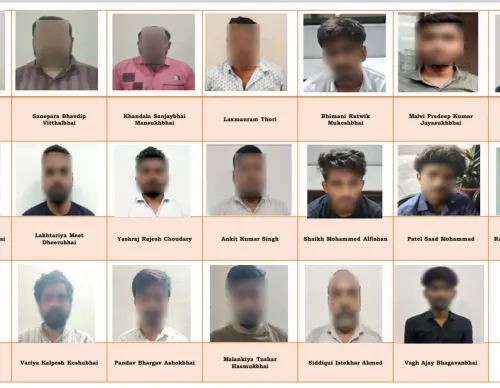
TGCSB arrested 21 Telugu-speaking women telecallers and one bank account holder in raids on three call centres in Shiva Market, Delhi on 10 August .
The network impersonated Bajaj Finance representatives to defraud victims across Telangana over approximately one and a half years .
Three organisers — Lalith Singh , Kuldeep Singh , and Anil — are currently absconding .
Investigators seized 23 mobile phones and two bank passbooks ; the operation is linked to 22 cybercrime cases so far.
Victims who sought refunds were subjected to intimidation and blackmail , including threats of legal action and misuse of personal data.
The Telangana Cyber Security Bureau (TGCSB) has dismantled a sophisticated cybercrime network running fraudulent call centres in Delhi, arresting 21 Telugu-speaking women telecallers and one male bank account holder in coordinated raids on 10 August. The operation has so far been linked to 22 cybercrime cases across Telangana, with further investigation ongoing.
How the Operation Unfolded
TGCSB officials conducted simultaneous raids on three call centres operating out of Shiva Market, Delhi. The centres functioned under separate teams headed by Lalith Singh, Kuldeep Singh, and Anil — all three of whom are currently absconding. The arrested individuals included team leaders, telecallers, and a bank account holder.
During the raids, investigators seized 23 mobile phones and two bank passbooks. The network had reportedly been operational for approximately one and a half years before it was detected.
The Fraud Playbook
According to TGCSB Director Shikha Goel, the organisers deliberately recruited Telugu-speaking women aged between 25 and 40, many of them from Korutla in Jagtial district, Saidabad and Borabanda in Hyderabad, and Mahabubnagar district, who were residing in Delhi. Their fluency in Telugu was weaponised to build trust with victims in Telangana.
The telecallers impersonated representatives of Bajaj Finance, offering fabricated loan approvals to lure targets. Victims were then induced to make payments under false pretexts — including loan processing fees, verification charges, documentation fees, and insurance premiums. Once money was received, the accused either cut off contact or continued extracting payments with false promises of loan disbursal.
Intimidation and Blackmail Tactics
The investigation revealed a particularly troubling layer: when victims questioned transactions or sought refunds, the accused resorted to intimidation and blackmail. They threatened legal action, reputational damage, and misuse of victims' personal information and identity documents — tactics designed to discourage reporting to police.
This pattern of post-fraud coercion is increasingly common in organised cybercrime networks and significantly raises the psychological cost for victims who attempt to seek redress.
Key Details of the Arrests
Director Shikha Goel confirmed that the three absconding organisers had built a structured recruitment pipeline, specifically targeting Telugu-speaking women in Delhi as a cover strategy. The linguistic and demographic profiling of both perpetrators and victims points to a calculated operational design rather than opportunistic fraud.
Investigators are continuing to trace the financial trails and the whereabouts of the three organisers as the probe widens.
Point of View
Exploiting trust before switching to coercion. The use of blackmail as a post-fraud containment tool is especially alarming — it effectively creates a second layer of victimisation that keeps cases unreported. With three organisers still at large, the arrests are necessary but incomplete. The deeper question is how a network running for over 18 months across three call centres evaded detection, and whether telecom and banking KYC systems flagged any of the suspicious account activity that must have accumulated over that period.
NationPress
25 Sept 2026
Frequently Asked Questions
What is the TGCSB cybercrime network that was busted in Delhi?
The Telangana Cyber Security Bureau dismantled a network of three fraudulent call centres operating from Shiva Market, Delhi, which impersonated Bajaj Finance representatives to defraud victims in Telangana. The operation led to the arrest of 21 women telecallers and one bank account holder, with the network linked to 22 cybercrime cases.
Who are the accused and what were their roles?
The arrested individuals include team leaders, telecallers, and a bank account holder. Three organisers — Lalith Singh, Kuldeep Singh, and Anil — who owned and ran the call centres are currently absconding.
How did the fraudsters target victims?
The accused recruited Telugu-speaking women aged 25 to 40 to impersonate Bajaj Finance agents and approach victims in Telangana. They collected money under fabricated pretexts such as loan processing fees, verification charges, and insurance premiums, then either disappeared or demanded further payments.
What happened when victims tried to get their money back?
According to the TGCSB, victims who questioned transactions or sought refunds were threatened with legal action, reputational damage, and misuse of their personal documents — a blackmail strategy intended to prevent them from approaching police.
Where were the telecallers recruited from?
Many of the recruited telecallers were Telugu-speaking women residing in Delhi, originally from Korutla in Jagtial district, Saidabad and Borabanda in Hyderabad, and Mahabubnagar district in Telangana.