1984 anti-Sikh riots trials were institutional fraud, says ex-Delhi HC judge Dhingra
Synopsis
A former Delhi High Court judge and SIT chief who handled 1984 anti-Sikh massacre cases has called the trials an institutional ‘fraud’ — detailing how 200 Trilokpuri murders were bundled into one FIR, inquiry commissions were rotated for eight years to block criminal cases, and a CBI arrest attempt was foiled within minutes while local police watched. Four decades on, the conviction rate stood at a damning six per cent.
Key Takeaways
Justice Shiv Narain Dhingra , former Delhi High Court judge and SIT chief, called the 1984 anti-Sikh massacre trials an institutional ‘fraud’ designed to protect political patrons.
Police bundled more than 200 distinct Trilokpuri murders into a single FIR , exploiting procedural law to stall trials for years.
Successive inquiry commissions were rotated between 1984 and 1992 solely to prevent formal criminal cases from being registered.
When FIRs were finally filed eight years later, the delay itself was weaponised by defence lawyers to secure acquittals.
During a CBI arrest attempt on Congress leader Sajjan Kumar , local police refused to assist; anticipatory bail was secured before noon.
The overall conviction rate in the trials stood at a dismal six per cent , according to Justice Dhingra.
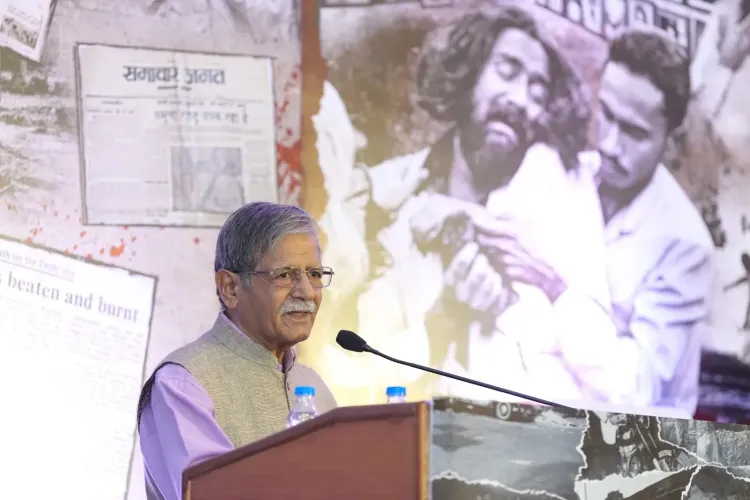
Former Delhi High Court judge Justice Shiv Narain Dhingra has declared that the criminal trials stemming from the 1984 anti-Sikh massacre were conducted as a deliberate institutional ‘fraud’ — systematically engineered to shield powerful political patrons from accountability. Speaking at Chandigarh on 6 November 2026, Justice Dhingra laid bare four decades of what he described as the convergence of police machinery, procedural manipulation, and political patronage to bury justice.
Key Allegations: A System Designed to Fail
Justice Dhingra, who also headed the Supreme Court-mandated Special Investigation Team (SIT) in 2018, was speaking at the session titled ‘Murder of Justice’ at the Bharatiya Janata Party (BJP)’s ‘Zakhm 84 De’ conclave in Chandigarh. He described how crowds from resettlement colonies were allegedly mobilised, armed, and given specific lists to target Sikh households. “No riot takes place on its own; every communal riot is managed and patronised,” he said.
Justice Dhingra charged that what followed in courtrooms was a ‘mockery of justice.’ He questioned a system with a six per cent conviction rate, saying, “If the accused brought before the Bench didn’t commit the murder, then who did? The state had an obligation to find out, but the system simply rolled over.”
The Trilokpuri Procedural Trap
Drawing on his tenure as Additional Sessions Judge at the Karkardooma Special Court handling East Delhi cases, Justice Dhingra detailed how police deliberately bundled more than 200 distinct murders from the Trilokpuri massacres into a single omnibus First Information Report (FIR). Since criminal procedural law bars trying more than three offences together, prosecutors allowed an application to separate the cases to languish for years — an intentional delay, he alleged.
Justice Dhingra said he personally retrieved the stalled plea, directed independent chargesheets for each of the 200 murders, and broke the matter into 200 distinct trials, bringing key political figures including H.K.L. Bhagat and local councillors to the dock.
Inquiry Commissions as a Shield
According to Justice Dhingra, successive inquiry panels were rotated between 1984 and 1992 for the sole purpose of preventing formal criminal cases from being registered. When FIRs were finally filed eight years later, following commission recommendations, state defence lawyers cynically deployed the ‘unexplained eight-year delay’ as the primary grounds to secure acquittals in trial courts — a legal trap the administration had effectively pre-set, he alleged.
The Sajjan Kumar Arrest Episode
Justice Dhingra recounted a particularly stark episode involving Congress leader Sajjan Kumar. When Central Bureau of Investigation (CBI) sleuths arrived at Kumar’s residence at 7 am to execute an arrest, a mob had encircled the property within 15 minutes. Local police reportedly refused to intervene or assist the central agency. Kumar’s lawyers secured anticipatory bail before noon, he said.
Justice Dhingra further noted that the CBI subsequently submitted an affidavit on court record revealing that the official police case file had come into the physical custody of Kumar’s defence counsel — a disclosure he described as emblematic of the entire breakdown of institutional integrity in the trials.
Four Decades Later: The Accountability Gap
The 1984 anti-Sikh violence, which erupted following the assassination of Prime Minister Indira Gandhi, resulted in the deaths of thousands of Sikhs across India, with Delhi bearing the worst of the carnage. Decades of litigation, multiple inquiry commissions, and scattered convictions have left survivors and rights groups arguing that justice remains incomplete. Sajjan Kumar was ultimately convicted by the Delhi High Court in 2018 and sentenced to life imprisonment — one of the few high-profile convictions to have held. Justice Dhingra’s remarks underscore the view that such outcomes were the exception rather than the product of a functioning system.
Point of View
The problem is not individual corruption but institutional design. The six per cent conviction rate is not an accident; it is the statistical signature of a system that worked exactly as it was intended to work. That the BJP chose this forum to amplify these findings — four decades later, in an election-sensitised political climate — adds a layer of political instrumentalisation that mainstream coverage has largely glossed over.
NationPress
6 Nov 2026
Frequently Asked Questions
What did Justice Shiv Narain Dhingra say about the 1984 anti-Sikh riot trials?
Justice Dhingra, former Delhi High Court judge and Supreme Court-mandated SIT chief, said the trials were conducted as an institutional ‘fraud’ deliberately designed to protect influential political patrons. He cited a six per cent conviction rate and detailed specific procedural traps used to block accountability.
What was the Trilokpuri FIR bundling controversy?
Police consolidated more than 200 separate murders from the Trilokpuri massacres into a single omnibus FIR. Because criminal procedural law bars trying more than three offences together, the prosecution allowed an application to separate cases to languish for years, effectively stalling accountability. Justice Dhingra said he personally intervened to split the matter into 200 distinct trials.
How were inquiry commissions used to delay justice after 1984?
According to Justice Dhingra, successive inquiry panels were rotated between 1984 and 1992 specifically to prevent formal criminal cases from being registered. When FIRs were eventually filed eight years later, state defence lawyers used the delay itself as grounds to secure acquittals in trial courts.
What happened during the CBI attempt to arrest Sajjan Kumar?
CBI officers arrived at Congress leader Sajjan Kumar’s residence at 7 am to arrest him, but a mob had encircled the property within 15 minutes while local police refused to assist the central agency. Kumar’s lawyers secured anticipatory bail before noon. The CBI later submitted an affidavit stating the official police case file had been in the physical custody of Kumar’s defence counsel.
What is the significance of the ‘Zakhm 84 De’ conclave where these remarks were made?
‘Zakhm 84 De’ is a BJP-organised conclave held in Chandigarh focused on the 1984 anti-Sikh violence. Justice Dhingra’s remarks were delivered at a session titled ‘Murder of Justice’ and form part of a broader political and legal effort to revisit accountability for the riots more than four decades after the events.