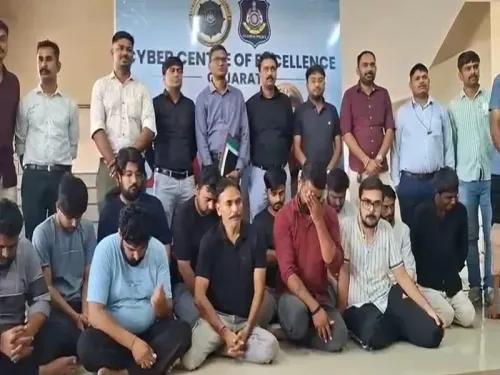
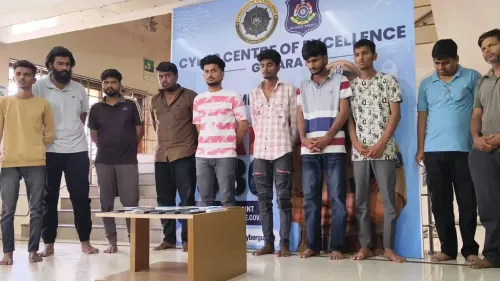
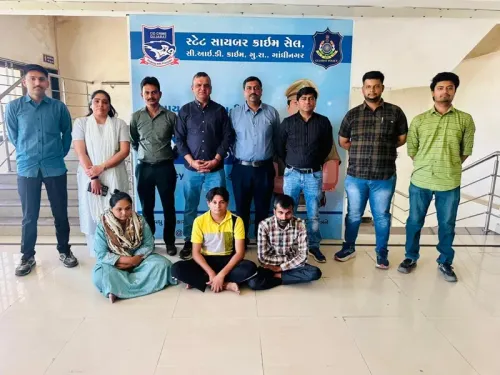
Gujarat Police arrest 2 in Mehsana for supplying bulk-mode bank accounts to cyber fraud syndicate
Synopsis
Gujarat Police's Operation Mule Hunt 2.0 has exposed a sophisticated money mule pipeline: two men from Visnagar were not just handing over bank accounts — they were collecting credentials, verifying logins, and getting victims to install APK files so the syndicate could bypass OTPs entirely. With ₹1.5 crore in fraud complaints across 22 acknowledgement numbers and digital-arrest cases in Maharashtra already flagged, the network's reach is wider than these two arrests suggest.
Key Takeaways
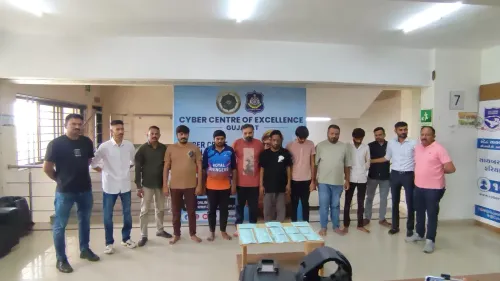
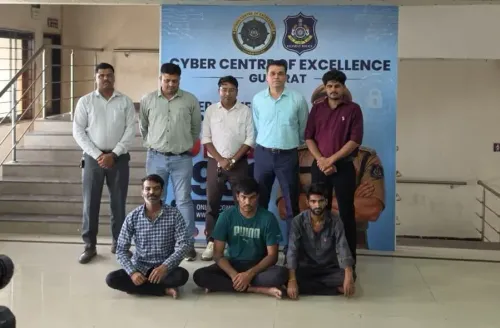
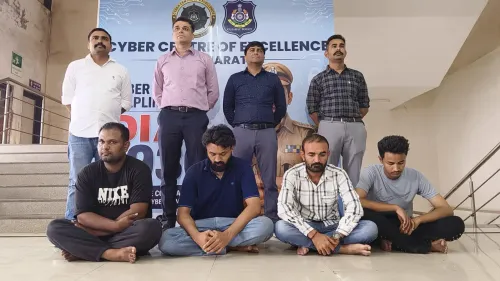
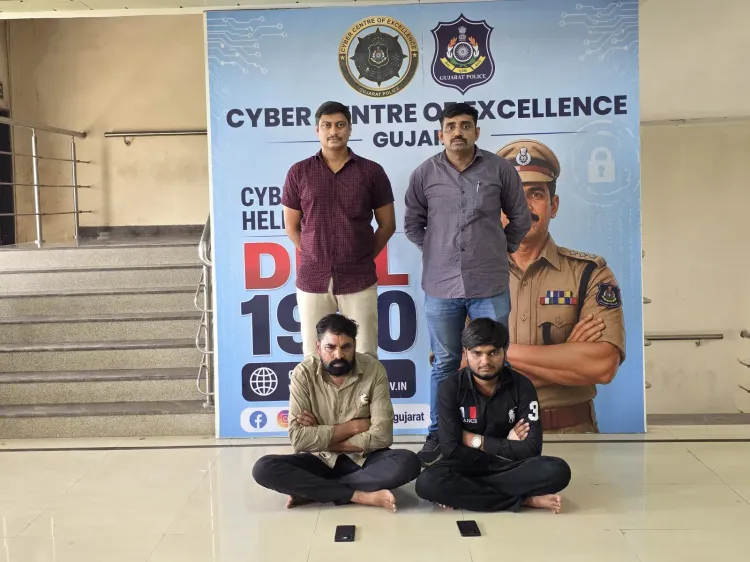
Gujarat Police's CCoE arrested Parth Barot and Rameshkumar Lavana from Visnagar, Mehsana district under Operation Mule Hunt 2.0 .
The accused allegedly supplied corporate bank accounts with Bulk Mode facilities to a cybercrime syndicate, enabling simultaneous mass transactions.
Accounts linked to the case are associated with cyber fraud complaints totalling approximately ₹1.5 crore across multiple states.
Investigators found 22 acknowledgement numbers tied to the accounts nationwide, including 6 in Gujarat and 2 digital-arrest cases in Maharashtra .
Six other accused had already been arrested in the same case before these two were apprehended.
Two mobile phones were seized; the investigation is ongoing to trace remaining syndicate members.
Gujarat Police's Cyber Centre of Excellence (CCoE) has arrested two men from Mehsana district for allegedly funnelling corporate bank accounts equipped with 'Bulk Mode' transaction facilities to a cybercrime syndicate. The accounts have been linked to cyber fraud complaints totalling approximately ₹1.5 crore across multiple states, according to officials.
The Arrests and Legal Charges
The two accused — Parth Barot, a resident of Ramnagar Society on Kamana Road in Visnagar, and Rameshkumar Lavana, a resident of Dipda Darwaja near Ashapuri Mata Temple in Visnagar — were apprehended in Visnagar before being formally placed under arrest. Both were taken into custody as part of 'Operation Mule Hunt 2.0', a targeted crackdown on money mule networks facilitating cybercrime.
The case was registered at the Cyber Crime Police Station under Sections 61(2), 317(2) and 318(4) of the Bharatiya Nyaya Sanhita, and Sections 66(C) and 66(D) of the Information Technology Act. According to the CCoE, six other accused had already been arrested in the same case, with investigators continuing to trace remaining members of the network.
How the Scheme Operated
Investigators allege that Barot and Lavana acted as intermediaries between account holders and the syndicate. The duo reportedly approached holders of corporate or business bank accounts — which carry Bulk Mode facilities enabling simultaneous multiple transactions or payments — and persuaded them to hand over sensitive credentials in exchange for commission.
According to police, the accused collected Aadhaar and PAN cards, cheque-book photographs, front and back images of ATM cards, and internet banking IDs and passwords from account holders. They also allegedly verified that the credentials were functional before passing them on to the syndicate.
In a further step, account holders were reportedly persuaded to install APK files on their devices — a tactic that would allow the syndicate to bypass one-time password (OTP) requirements and operate the accounts remotely without further contact with the holder.
Scale of Fraud Uncovered
Verification of the recovered account details against the national '1930' cybercrime reporting portal and the Samanvay portal revealed fraud complaints amounting to approximately ₹1.5 crore. Investigators found 22 acknowledgement numbers linked to the accounts across India, including six in Gujarat. Among the flagged complaints were two digital-arrest cases registered in Maharashtra, according to the CCoE. Two mobile phones were seized from the arrested accused.
Why Bulk Mode Accounts Are Targeted
Bulk Mode facilities — typically available on corporate internet banking platforms, business current accounts, and government department accounts — allow a single login to push multiple transactions simultaneously. This makes them significantly more valuable to fraud syndicates than ordinary savings accounts, as they enable rapid, large-scale movement of stolen funds before detection. This is not the first time such accounts have been exploited; investigators across states have flagged the misuse of corporate banking infrastructure as a growing vector in organised cybercrime.
What Comes Next
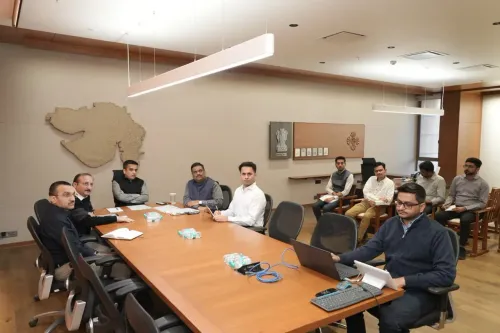
The investigation remains active, with the CCoE working to identify and trace additional members of the syndicate. The arrests mark the latest development in Gujarat's broader push against cyber-enabled financial crime, and the scale of the network — spanning multiple states and fraud categories including digital arrest scams — suggests the probe is far from complete.
Point of View
Confirm login access, and coach account holders to install APK files — effectively handing over full remote control. The use of Bulk Mode corporate accounts is a deliberate escalation, allowing syndicates to move stolen funds at scale before fraud alerts trigger. With 22 linked complaints across India and digital-arrest cases in Maharashtra already in the frame, this is a multi-state operation being dismantled one node at a time. The real question is how many such facilitator networks remain active — and whether the 1930 portal's data is being used proactively to map them before arrests, not after.
NationPress
17 Oct 2026
Frequently Asked Questions
Who were arrested in Gujarat under Operation Mule Hunt 2.0?
The two men arrested are Parth Barot of Ramnagar Society, Visnagar, and Rameshkumar Lavana of Dipda Darwaja, Visnagar, both from Mehsana district in Gujarat. They were apprehended by Gujarat Police's Cyber Centre of Excellence for allegedly supplying corporate bank accounts to a cybercrime syndicate.
What is a Bulk Mode bank account and why do cyber fraudsters target it?
A Bulk Mode facility, typically available on corporate internet banking platforms and business current accounts, allows a single user to execute multiple transactions simultaneously. Cybercrime syndicates target these accounts because they enable rapid, large-scale movement of fraudulently obtained funds — making them far more useful than ordinary savings accounts for laundering money quickly.
How much money is linked to the fraud in this case?
Verification against the national '1930' cybercrime reporting portal and the Samanvay portal revealed fraud complaints totalling approximately ₹1.5 crore. Investigators identified 22 acknowledgement numbers linked to the recovered accounts across India, including six in Gujarat and two digital-arrest cases in Maharashtra.
What charges have been filed against the accused?
The case was registered under Sections 61(2), 317(2), and 318(4) of the Bharatiya Nyaya Sanhita, and Sections 66(C) and 66(D) of the Information Technology Act. These provisions cover offences related to cheating, identity theft, and impersonation using computer resources.
How many people have been arrested in this case in total?
A total of eight people have been arrested so far — six prior to the latest operation and two more (Barot and Lavana) under Operation Mule Hunt 2.0. The investigation is ongoing, with authorities working to trace additional members of the syndicate.