20% EV share by 2030 could cut India's import bill by ₹1 lakh crore: SBI Research
Synopsis
A geopolitical shock — the US-Iran war — has done what years of policy nudges could not: push Indian EV monthly registrations up by 1 lakh units almost overnight. SBI Research now says a 20 per cent EV share by 2030 could save ₹1 lakh crore in import costs. Delhi's new EV policy, with ₹1.2 lakh incentives for three-wheelers and 32,000 new charging points, is being held up as the national template.
Key Takeaways
SBI Research projects a 20% EV adoption rate by 2030 could save India ₹1 lakh crore in import costs.
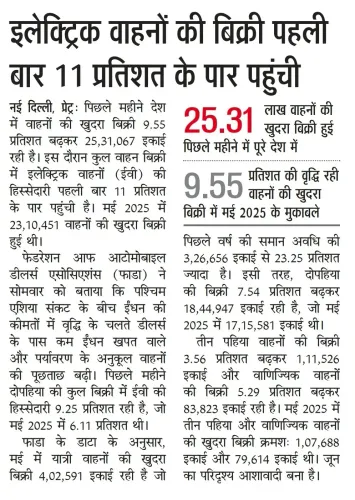
Monthly EV registrations surged from 1.3 lakh (2025 average) to 2.3 lakh during March–June 2026 , following the US-Iran war on 28 February .
Pure EV share in total registrations has risen from under 2% in 2024 to over 8% in 2026 .
India is projected to register 4 crore vehicles by 2030 , with 80 lakh (20%) expected to be EVs .
India has 29,151 charging stations ; Karnataka and Maharashtra hold 35% of them.
Delhi's EV policy offers up to ₹1,20,000 in incentives for three-wheelers and plans 32,000 new charging points in four years.
A 20 per cent electric vehicle (EV) adoption rate by 2030 could save India an import bill worth ₹1 lakh crore, up from the current 10 per cent penetration level, according to an SBI Research report released on Thursday, 2 July. The report links accelerating EV uptake directly to the West Asia crisis, which has reshaped Indian consumers' travel preferences and pushed registrations sharply higher.
EV Registrations Surge After West Asia Crisis
The onset of the US-Iran war on 28 February appears to have been a decisive inflection point for India's EV market. Monthly EV registrations, which averaged 1.3 lakh units through 2025, climbed to an average of 2.3 lakh units during the March–June 2026 period — an increase of 1 lakh registrations per month compared to the 2025 baseline. At this trajectory, the SBI Research report projects total EV registrations could cross the 25 lakh mark in 2026.
The share of pure EVs in overall vehicle registrations has also risen steeply — from under 2 per cent in 2024 to more than 8 per cent in 2026 to date. In several states, pure EV penetration has already crossed 10 per cent, according to the report.
Long-Term Projections: 4 Crore Vehicles by 2030
India registered 2.86 crore vehicles in 2025. SBI Research estimates that annual registrations will reach 4 crore vehicles by 2030, of which 20 per cent — or 80 lakh units — are projected to be EVs, up from 15.7 lakh in 2025. The report further estimates that during the 2027–2030 period, 35 lakh additional EVs are expected to replace petrol vehicles compared to a business-as-usual scenario.
Charging Infrastructure: The Critical Bottleneck
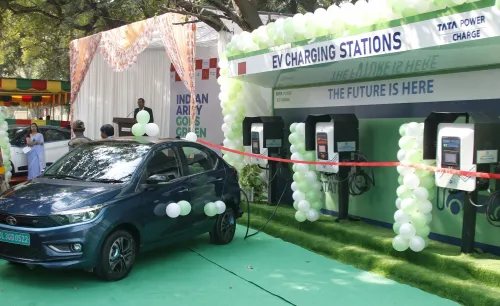
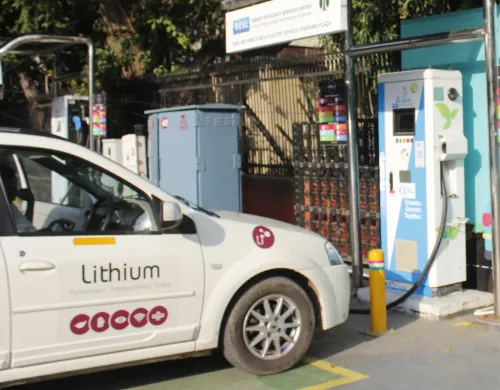
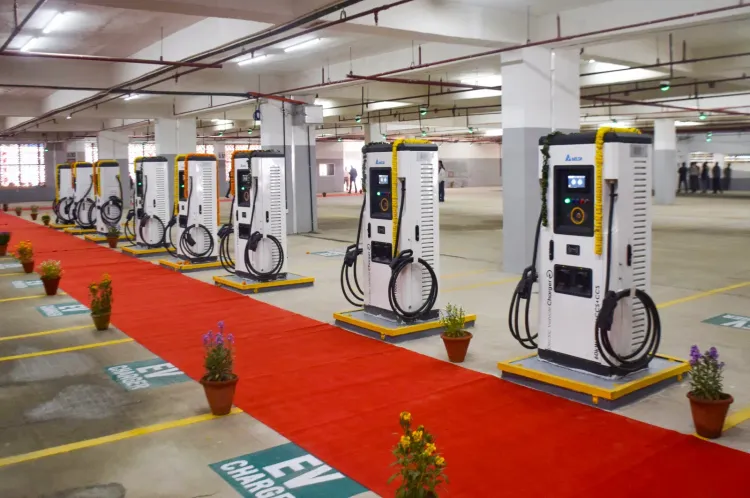
India currently has 29,151 charging stations, with Karnataka and Maharashtra together accounting for 35 per cent of the national total. The SBI Research report is unambiguous on the dependency: 'The success of EV will largely depend upon the availability of charging stations.'
This comes amid a significant policy push at the state level. Delhi's new EV policy plans to install 32,000 charging points within the next four years, a scale-up that the report singles out as commendable and potentially a model for other states.
Delhi's EV Policy: Incentives and Waivers
Delhi's framework offers a layered set of purchase incentives designed to accelerate adoption across vehicle categories. Two-wheeler buyers receive a cumulative incentive of ₹60,000 over the first three years. Three-wheeler buyers are eligible for a cumulative subsidy of ₹1,20,000. N1 commercial trucks qualify for a ₹1 lakh subsidy in the first year. All eligible EVs also benefit from a 100 per cent waiver on road tax and one-time registration fees.
As EV adoption accelerates and charging infrastructure expands, the next critical test will be whether state-level policies like Delhi's can be replicated at scale across India's largest vehicle markets.
Point of View
Not a decade of EV subsidies, to meaningfully move India's registration needle. That dependency on an external price shock rather than structural policy confidence is a vulnerability policymakers should not celebrate. Delhi's incentive framework is well-designed, but 29,151 charging stations for a country of 1.4 billion people — concentrated in just two states — is not infrastructure, it is a pilot. The ₹1 lakh crore import-saving projection is credible only if charging rollout keeps pace with sales; historically, India's infrastructure timelines lag its ambition timelines by years.
NationPress
2 Jul 2026
Frequently Asked Questions
How much could India save on its import bill with 20% EV adoption by 2030?
India could save approximately ₹1 lakh crore on its import bill if EVs account for 20 per cent of vehicle registrations by 2030, up from the current 10 per cent, according to an SBI Research report released on 2 July 2026. The savings would come primarily from reduced crude oil imports.
Why have EV registrations in India surged in 2026?
EV registrations surged following the onset of the US-Iran war on 28 February, which triggered the West Asia crisis and reshaped Indian consumers' travel preferences. Monthly registrations jumped from an average of 1.3 lakh units in 2025 to 2.3 lakh units during March–June 2026.
What are Delhi's EV policy incentives?
Delhi's EV policy offers two-wheeler buyers a cumulative incentive of ₹60,000 over three years, three-wheeler buyers ₹1,20,000 cumulatively, and N1 commercial trucks a ₹1 lakh subsidy in the first year. All eligible EVs also receive a 100 per cent waiver on road tax and one-time registration fees.
How many EV charging stations does India currently have?
India has 29,151 EV charging stations as of the SBI Research report dated 2 July 2026. Karnataka and Maharashtra together account for 35 per cent of the national total, highlighting a significant geographic concentration.
How many EVs are projected to be registered in India by 2030?
SBI Research projects that 4 crore vehicles will be registered in India annually by 2030, of which 80 lakh — or 20 per cent — are expected to be EVs. This compares to 15.7 lakh EV registrations recorded in 2025.