How Did 2.94 Crore Rural Women Get Trained in Financial Services by December 2025?

Synopsis
In a groundbreaking initiative, 2.94 crore rural women have been empowered with financial literacy, enhancing their ability to manage finances effectively. This training aims to transform the economic landscape of rural areas, fostering informed decision-making and greater financial access.
Key Takeaways
2.94 crore rural women trained in financial literacy.
National Livelihood Mission's initiative enhances financial inclusion.
56,727 trained women serve as Financial Literacy Community Resource Persons.
Focus on banking, savings, credit, and digital transactions.
National Cooperation Policy 2025 promotes women's empowerment in cooperatives.
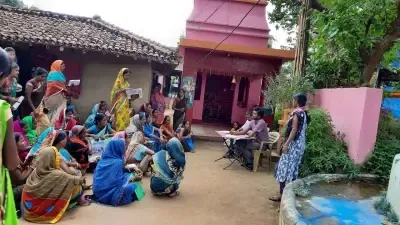
New Delhi, Feb 5 (NationPress) A remarkable 2.94 crore women members of self-help groups (SHGs) from rural regions have received training in various facets of financial inclusion, including banking services, during the initial nine months of the fiscal year 2025-26, up until December, as reported in Parliament on Wednesday.
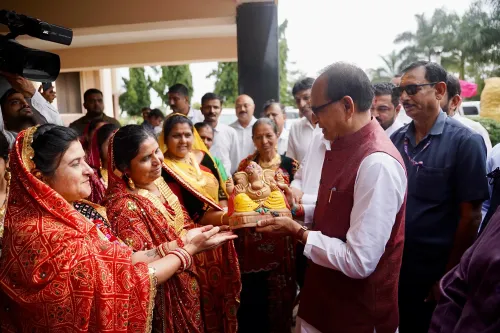
In order to raise awareness about financial products and services in rural communities, the National Livelihood Mission has launched comprehensive Financial Literacy initiatives through trained Financial Literacy Community Resource Persons (FL-CRPs).
To date, 56,727 women SHG members have been trained and designated as FL-CRPs throughout the nation, as stated by the Minister for Home and Cooperation, Amit Shah, in a written response to the Rajya Sabha.
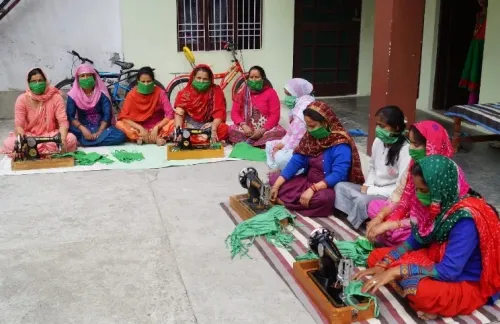
These FL-CRPs conduct ongoing training and awareness sessions at the community level, focusing on various elements of financial inclusion, such as the utilization of banking services, savings, credit, digital financial transactions, insurance, and pensions.
Their involvement aims to enhance financial behavior, strengthen access to formal financial services, and facilitate informed decision-making within households, the minister elaborated.
The National Cooperation Policy 2025 emphasizes the need for inclusive participation of women in cooperatives, with the goal of empowering them through legal recognition, supportive policies, digital advancements, financial access, and sectoral growth.
This policy positions cooperatives as instruments for social equity and economic development, prioritizing women as key stakeholders. It also specifies sector-specific cooperatives for women, including those in dairy, handicrafts, food processing, textiles, and community services.
To advance this policy, the Ministry of Cooperation, in collaboration with various central agencies such as the National Bank for Agriculture and Rural Development, National Cooperative Development Corporation (NCDC), and the National Council for Cooperative Training (NCCT), alongside the Ministry of Rural Development, has initiated several programs to strengthen cooperatives and empower women through the cooperative movement, the minister further stated.
The SHGs, as part of the Deendayal Antyodaya Yojna National Rural Livelihood Mission (DAY-NRLM), are informal groups managed and owned by women members. Though they are not registered under any formal regulations, the Cluster Level Federations (CLFs) of these SHGs are registered under the Cooperative Act.
So far, 10,381 CLFs have been officially registered under the State Cooperative Act, the Multi-Cooperative Act, or the Mutually Aided Cooperative Act across the nation.
Moreover, the NCDC plans and supports programs for women relating to production, processing, marketing, storage, supply chain, export, and import of agricultural products, food items, industrial goods, livestock, and services such as tourism, rural housing, renewable energy, banking, healthcare, and education, among others, based on cooperative principles and by providing financial support.
Since 2021, the NCCT has trained 3,12,006 women participants through both long-term and short-term programs aimed at developing leadership, financial literacy, governance, and managerial skills, thus boosting women’s involvement in cooperative management, the minister concluded.
Point of View
It is imperative to recognize the importance of initiatives aimed at empowering women in rural areas. The training of 2.94 crore women in financial services is a significant stride towards achieving gender parity in economic participation. Such programs foster not only individual growth but also contribute to the broader economic landscape of the country, ensuring that women are integral to the cooperative movement and financial inclusion strategies.
NationPress
20 Sept 2026
Frequently Asked Questions
What is the National Livelihood Mission?
The National Livelihood Mission is a government initiative aimed at promoting self-employment and organization of rural poor into self-help groups (SHGs) to enhance their livelihood opportunities.
How many women have been trained as FL-CRPs?
A total of 56,727 women self-help group members have been trained and deployed as Financial Literacy Community Resource Persons (FL-CRPs) across the country.
What are the key areas of training for rural women?
Rural women are trained in various aspects including banking services, savings, credit, digital financial transactions, insurance, and pensions.
What is the significance of the National Cooperation Policy 2025?
The National Cooperation Policy 2025 emphasizes women's participation in cooperatives, aiming to empower them through legal status, enabling policies, financial access, and sectoral expansion.
What is the role of NCDC in empowering women?
The National Cooperative Development Corporation (NCDC) supports programs for women in production, processing, marketing, and more, providing financial assistance to foster cooperative principles.