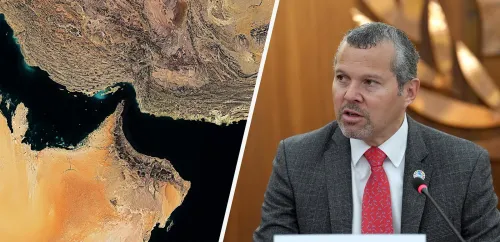
Tharoor mourns 3 Indian seafarers killed in US strike on Gulf tanker
Synopsis
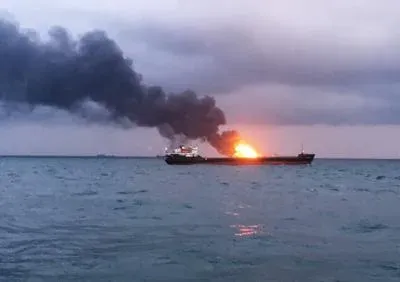
Congress MP Dr. Shashi Tharoor has mourned the deaths of three Indian civilian seafarers — Patnala Suresh, Shivanand Chaurasiya, and Aditya Sharma — killed when a US precision military strike hit the commercial oil tanker M/T Settebello in the Gulf of Oman, raising urgent questions about Indian diplomatic response and crew safety.
Key Takeaways
Three Indian seafarers — Patnala Suresh , Shivanand Chaurasiya , and Aditya Sharma — were killed in a US precision military strike on the commercial oil tanker M/T Settebello in the Gulf of Oman .
Shashi Tharoor described the victims as 'innocent Indian civilian seafarers' and called the strike 'targeted', raising questions of accountability under international law.
The Gulf of Oman is a strategically critical waterway for global oil shipments and has been the site of past tanker incidents, most notably a series of attacks in 2019 .
India is home to one of the world's largest seafarer workforces, with a significant number of nationals employed on commercial vessels in Gulf waters.
India's Ministry of External Affairs is expected to face calls to seek formal clarification from Washington and arrange consular support for the families of the deceased.
The incident may prompt parliamentary debate and renewed scrutiny of India's frameworks for protecting its maritime workforce in conflict-adjacent zones.
Congress MP Dr. Shashi Tharoor expressed grief on Thursday, June 11, 2026, over the deaths of three Indian civilian seafarers aboard the commercial oil tanker M/T Settebello, which was struck by a United States precision military strike in the Gulf of Oman. The deceased have been identified as Patnala Suresh, Shivanand Chaurasiya, and Aditya Sharma.
Context
Tharoor, a former Union Minister and former UN Under-Secretary-General who has consistently raised his voice on international incidents affecting Indian nationals, described himself as 'deeply devastated' by the news. He characterised the strike as 'targeted' and the victims as 'innocent Indian civilian seafarers', underscoring the non-combatant status of those killed aboard the commercial vessel.
The M/T Settebello was a commercial oil tanker operating in the Gulf of Oman, a strategically vital waterway that connects the Persian Gulf to the Arabian Sea and serves as a critical corridor for global energy shipments. The presence of Indian crew members on such vessels is not unusual — India is home to one of the world's largest merchant navy workforces, with tens of thousands of nationals employed on commercial ships traversing Gulf waters.
Policy Backdrop
The United States has maintained a robust military presence in the Persian Gulf and Gulf of Oman region, conducting operations against various threats including Iran-linked actors and non-state groups. Military actions in these waters have, on past occasions, resulted in collateral impact on commercial shipping lanes frequented by third-country civilian crews.
A precedent for international alarm over tanker safety in the Gulf of Oman was set in 2019, when a series of attacks on oil tankers drew widespread condemnation and prompted increased naval patrols by multiple nations. The latest incident, however, involves a direct US military strike on a commercial vessel, raising a qualitatively different set of legal and diplomatic questions about the protection of civilian mariners under international law.
Stakeholders and Impact
The families of Patnala Suresh, Shivanand Chaurasiya, and Aditya Sharma are among the most immediate stakeholders, awaiting consular support and formal notification from Indian authorities. India's Ministry of External Affairs is expected to face pressure to engage both with US counterparts and with the vessel's flag state to secure the repatriation of remains and any compensation due to the next of kin.
The incident also has wider implications for India's diplomatic posture. New Delhi maintains close strategic ties with Washington while simultaneously protecting the interests of its large seafaring community in Gulf waters. Any formal demand for accountability could test the calibration of that relationship. Indian merchant navy associations and maritime unions are likely to seek government assurances on crew safety protocols in conflict-adjacent zones.
What's Next
Attention will now turn to whether India's Ministry of External Affairs issues a formal statement seeking clarification from the United States on the circumstances of the strike and the steps being taken for the families of the deceased. Parliamentary questions during the next session of the Lok Sabha are anticipated, with opposition members likely to press the government on consular response timelines and any diplomatic representations made to Washington.
Tharoor's post signals that the political opposition will keep the issue in the public domain. The incident may also prompt a broader legislative conversation about the adequacy of India's frameworks for protecting its seafarers operating in high-risk maritime zones, and whether the government should issue updated advisories for Indian crew members on vessels transiting the Gulf of Oman.
Point of View
Exposing the gap between India's global maritime ambitions and its limited leverage when its nationals are caught in third-party conflicts. How the Ministry of External Affairs responds in the coming days will signal whether New Delhi is willing to publicly hold Washington to account, or will manage the matter quietly through back-channel diplomacy.
NationPress
26 Oct 2026
Frequently Asked Questions
Who are the Indian seafarers killed in the Gulf of Oman US strike?
The three Indian seafarers killed are Patnala Suresh, Shivanand Chaurasiya, and Aditya Sharma, who were crew members aboard the commercial oil tanker M/T Settebello when it was struck by a US precision military strike in the Gulf of Oman on or before June 11, 2026.
What is the M/T Settebello?
M/T Settebello is a commercial oil tanker that was operating in the Gulf of Oman, a key waterway linking the Persian Gulf to the Arabian Sea, when it was hit by a targeted US military strike, resulting in the deaths of at least three Indian civilian crew members.
What did Shashi Tharoor say about the Gulf of Oman tanker strike?
Congress MP Dr. Shashi Tharoor said he was 'deeply devastated' by the news and identified the three victims by name, describing them as 'innocent Indian civilian seafarers' killed in a 'targeted US precision military strike' on the commercial vessel.
Will India seek accountability from the US over the seafarers' deaths?
India's Ministry of External Affairs is expected to face pressure to formally engage with the United States and the vessel's flag state over the deaths, with parliamentary questions anticipated in the next Lok Sabha session regarding consular response and diplomatic representations.
How many Indians work as seafarers in the Gulf region?
India has one of the world's largest merchant navy workforces, with tens of thousands of nationals employed on commercial vessels operating in Gulf waters, making incidents in the region particularly consequential for Indian families and maritime unions.