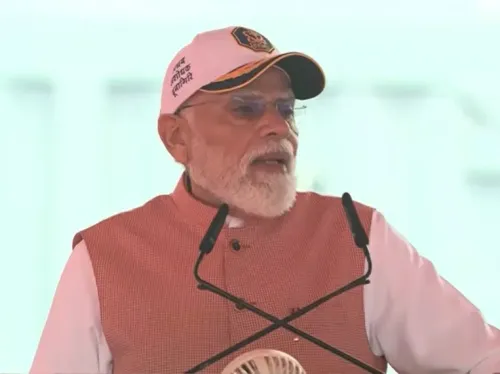
PM Modi commissioning INS Dunagiri, two warships in Kolkata: India must be Atmanirbhar
Synopsis
India commissioned three indigenously built warships in a single ceremony — a quiet signal that the country's defence-industrial ambition is moving from aspiration to delivery. With defence exports jumping from ₹700 crore to ₹40,000 crore since 2014 and 200-plus MSMEs embedded in just three ships, Modi's 'buyer to builder' pivot is gaining measurable traction.
Key Takeaways
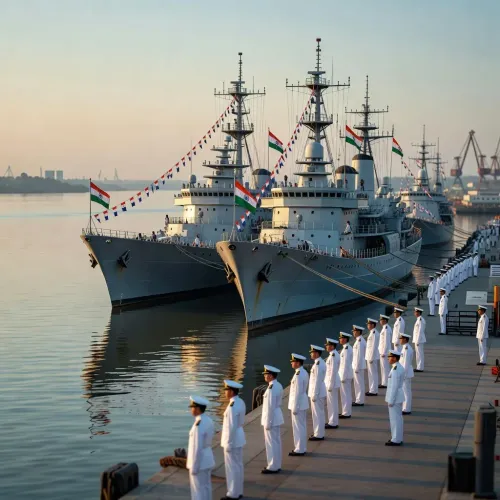
PM Modi commissioned INS Dunagiri , INS Sanshodhak , and INS Agray into the Indian Navy in Kolkata on 21 June .
All three warships were built by Garden Reach Shipbuilders and Engineers (GRSE) Ltd and delivered together on 30 March .
INS Dunagiri has nearly 75% indigenous content; INS Sanshodhak and INS Agray each exceed 80% .
More than 200 MSMEs contributed to building the three warships; ₹70,000 crore has been earmarked for domestic shipbuilding.
India's defence exports have grown from ₹700 crore in 2014 to ₹40,000 crore , reaching more than 80 countries .
INS Dunagiri was built 33% faster than the previous frigate of the same class, according to Admiral Krishna Swaminathan .
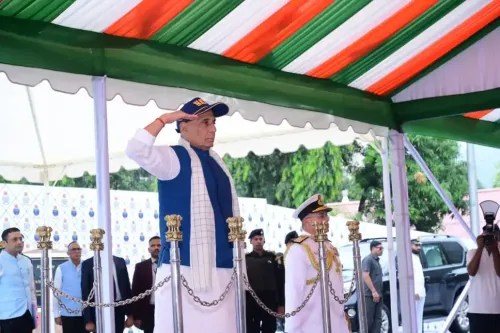
Prime Minister Narendra Modi on Sunday, 21 June commissioned three indigenously built warships into the Indian Navy at Kolkata, declaring that a nation can speak of peace only when it has the strength to defend itself. The event marked a significant milestone in India's push for self-reliance in defence manufacturing.
The Three Warships Commissioned
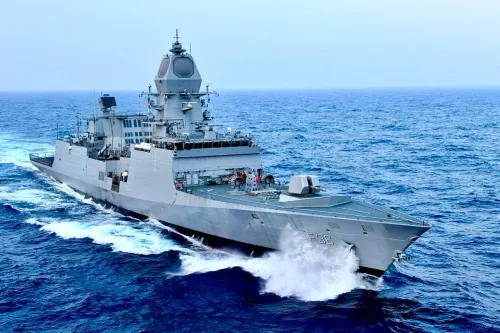
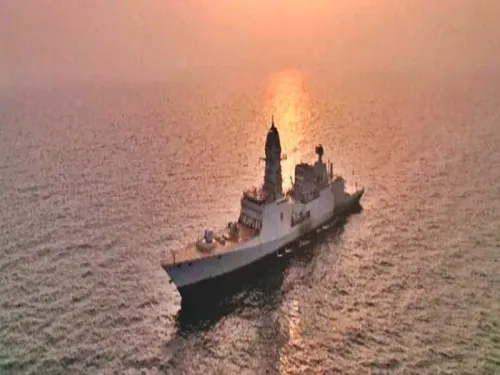
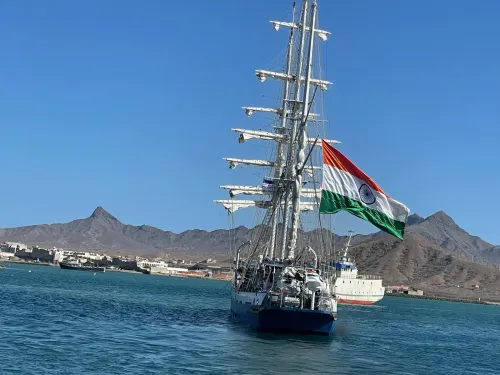
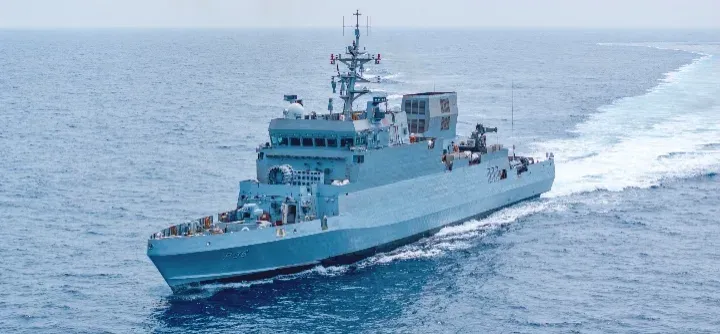
The vessels commissioned were the advanced stealth guided missile frigate INS Dunagiri, the survey ship INS Sanshodhak, and the anti-submarine warfare shallow water craft INS Agray — all built by Garden Reach Shipbuilders and Engineers (GRSE) Ltd. All three had been delivered together by the shipyard on 30 March.
INS Dunagiri carries nearly 75 per cent indigenous content, while INS Sanshodhak and INS Agray each exceed 80 per cent indigenous content — a benchmark that underscores the depth of India's domestic shipbuilding capability.
What PM Modi Said
'No country can progress unless it is a capable maritime power. The seas are linked to the economy, progress and growth. Satellite cables run under the seas and oceans. They are also the source of critical minerals. India understands the importance of maritime strength and is preparing itself accordingly,' Modi said.
Invoking the commissioning of the indigenous aircraft carrier INS Vikrant, he said: 'When we commissioned the indigenous aircraft carrier INS Vikrant, we announced to the world that India is capable. We have truly embarked on the path of self-reliance (Atmanirbharta) in the field of shipbuilding, and these three warships are an example of that.'
He added: 'We are proud that these warships have been designed and built in India, using Indian labour, equipment and resources. We do not want to be a buyer. We want to be a builder.'
MSMEs, Jobs and the ₹70,000 Crore Outlay
Modi highlighted the economic ripple effect of domestic shipbuilding, noting that more than 200 MSMEs contributed to the construction of the three warships alone. 'Shipbuilding requires steel, electronics, and spares. Thousands of companies are engaged in building them. It is not just another sector. It is an employment generator,' he said.
He also disclosed that ₹70,000 crore has been earmarked for shipbuilding in India, with ports being modernised and multi-modal logistics networks being established in parallel.
Defence Exports: From ₹700 Crore to ₹40,000 Crore
Modi pointed to a dramatic shift in India's defence posture since 2014. 'We used to be the largest buyer of defence equipment till 2014. That has now started changing. In 2014, our defence exports were about ₹700 crore. Today, that has gone up to ₹40,000 crore. We now export to more than 80 countries,' he said, while acknowledging that 'this is just the start. We still have a long way to go.'
Key Officials Present
The commissioning ceremony was attended by Admiral Krishna Swaminathan, Chief of the Naval Staff; West Bengal Governor R.N. Ravi; state Chief Minister Suvendu Adhikari; and Cmde P.R. Hari, IN (Retd), Chairman and Managing Director of GRSE. Admiral Swaminathan noted that INS Dunagiri was built in 33 per cent less time than the previous frigate of the same class, and praised the role of private shipyards in delivering vessels such as INS Agray.
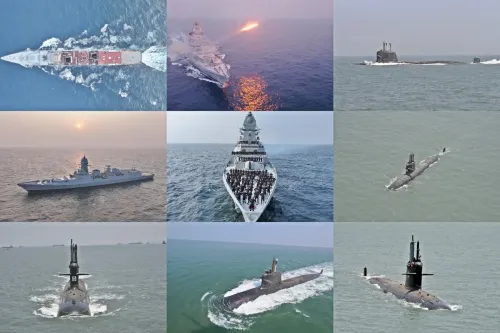
Modi also acknowledged West Bengal's contribution to India's maritime sector, noting the state's talent and skills as vital to the shipbuilding ecosystem. With the commissioning of these three vessels, India's naval modernisation drive — anchored in domestic production — moves another step forward.
Point of View
But the harder metric is the one Modi himself cited: defence exports at ₹40,000 crore, up from ₹700 crore in 2014. That 57-fold rise is real — yet India still imports the bulk of its high-end platforms and critical subsystems. The MSME supply chain embedded in these ships is a genuine structural gain, but the test is whether it survives the next procurement cycle or remains contingent on political will. The ₹70,000 crore shipbuilding outlay needs transparent milestone tracking; without it, the 'buyer to builder' narrative risks becoming a recurring headline rather than a durable industrial shift.
NationPress
21 Jun 2026
Frequently Asked Questions
Which three warships did PM Modi commission in Kolkata?
PM Modi commissioned the stealth guided missile frigate INS Dunagiri, the survey ship INS Sanshodhak, and the anti-submarine warfare shallow water craft INS Agray on 21 June in Kolkata. All three were built by Garden Reach Shipbuilders and Engineers (GRSE) Ltd and delivered together on 30 March.
How indigenous are the newly commissioned Indian Navy warships?
INS Dunagiri carries nearly 75 per cent indigenous content, while INS Sanshodhak and INS Agray each exceed 80 per cent indigenous content. More than 200 MSMEs contributed to their construction.
How much have India's defence exports grown since 2014?
India's defence exports have risen from approximately ₹700 crore in 2014 to ₹40,000 crore today, with products now reaching more than 80 countries. PM Modi attributed this shift to India's move from being a defence buyer to a defence manufacturer and exporter.
What is the government's investment in domestic shipbuilding?
The Indian government has earmarked ₹70,000 crore for the domestic shipbuilding sector. PM Modi also noted that ports are being modernised and multi-modal logistics networks are being developed alongside the shipbuilding push.
Who attended the warship commissioning ceremony in Kolkata?
The ceremony was attended by Admiral Krishna Swaminathan, Chief of the Naval Staff; West Bengal Governor R.N. Ravi; Chief Minister Suvendu Adhikari; and GRSE Chairman and Managing Director Cmde P.R. Hari, IN (Retd). Admiral Swaminathan noted that INS Dunagiri was built 33 per cent faster than the previous frigate of the same class.