AAP hits back at BJP over Delhi pollution blame on Punjab farmers

Synopsis
AAP's Punjab media in-charge Baltej Pannu has turned Parliament's own data against BJP — citing an 80% fall in stubble-burning incidents and 21,000+ CRM machines deployed — to argue that blaming Punjab's farmers for Delhi's smog is political deflection, not evidence-based policymaking.
Key Takeaways
AAP leader Baltej Pannu on 3 November accused BJP of scapegoating Punjab's farmers for Delhi's air pollution .
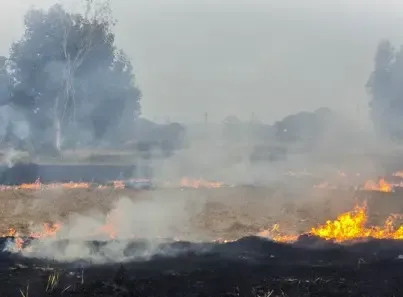
Parliament data cited by Pannu shows stubble-burning incidents in Punjab fell by 80 per cent last year.
The Bhagwant Mann government has deployed more than 21,000 CRM machines , including 14,274 Super Seeders .
Farmers are accessing machines through government subsidies of 50 to 80 per cent ; private operators are also renting equipment.
Pannu questioned why Haryana , with fewer stubble-management machines, faces less scrutiny than Punjab.
The Centre reportedly declined to share the financial burden of stubble management despite a state government offer.
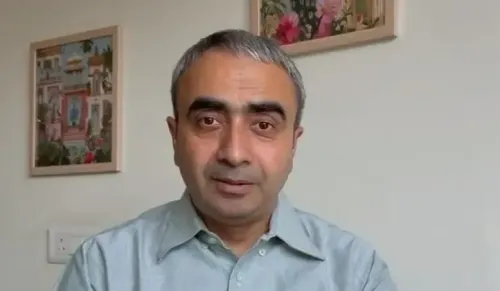
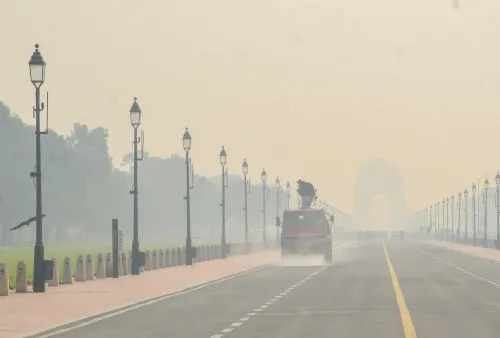
Aam Aadmi Party (AAP) leader and Punjab Media In-charge Baltej Pannu on Tuesday, 3 November sharply rebuked the Bharatiya Janata Party (BJP) for holding Punjab's farmers responsible for Delhi's worsening air pollution, arguing that the party is ignoring both the state government's stubble-management progress and the multiple pollution sources within the national capital itself.
Direct Attack on Delhi's Environment Minister
Pannu trained his fire specifically on Delhi Environment Minister Manjinder Singh Sirsa, accusing BJP leaders of scapegoating Punjab's farming community instead of confronting Delhi's own pollution drivers. He challenged Sirsa and other BJP leaders to visit Punjab and 'witness the ground reality instead of spreading propaganda.'
'Even before the paddy harvesting season had properly begun, certain leaders had started running a campaign to defame Punjab for Delhi's pollution,' Pannu said. He questioned the physical plausibility of the blame, asking: 'How can smoke from Punjab supposedly cross Haryana and reach Delhi through some imaginary pipeline so quickly?'
Data on Stubble-Burning Decline and CRM Machines
Citing Parliament's own records and a statement by Union Environment Minister Bhupender Yadav, Pannu noted that stubble-burning incidents in Punjab declined by 80 per cent last year. He said the Bhagwant Mann-led state government has deployed more than 21,000 Crop Residue Management (CRM) machines for paddy stubble handling, including 14,274 Super Seeders — described as the most popular among farmers — along with Mulchers, MB Ploughs, and Baling Machines. Punjab, he claimed, ranks among leading states in agricultural machinery usage.
Farmers are reportedly accessing these machines through government subsidies of 50 to 80 per cent, and private operators are also renting out machinery to expand access to smaller cultivators.
Stubble Bales and Industrial Use
Pannu pointed to visible evidence along major highway corridors — from Zirakpur to Bathinda, Chandigarh to Ludhiana, Mohali to Sirhind, and on the Amritsar highway — where large quantities of paddy stubble have been collected and compressed into bales. 'These bales are being transported to industries and used as raw material rather than being burnt in fields,' he said.
Centre's Refusal on Cost-Sharing and the Haryana Question
The AAP leader also reminded the Centre that it had declined to share the financial burden of stubble management even after the state government offered to split costs. He argued that BJP leaders must answer for Delhi's pollution rather than redirecting blame northward.
Pannu also questioned the selective scrutiny applied to Punjab, asking why Haryana — which has fewer stubble-management machines — is not being held to the same standard. He further pushed back on the geography of the blame: 'Travelling from Punjab to Delhi takes at least four to five hours by road. The simplistic claim that smoke from Punjab directly reaches Delhi is an attempt to mislead people rather than an evidence-based explanation.'
This political exchange comes amid the annual winter pollution crisis in Delhi, a recurring flashpoint between the AAP-governed state and the BJP at the Centre. With stubble-burning data and parliamentary statements now being cited on both sides, the dispute is likely to intensify as the peak harvest season progresses.
Point of View
Despite parliamentary data showing an 80% fall in incidents, looks increasingly like optics over accountability, especially when the Centre has reportedly refused to cost-share on CRM infrastructure. The Haryana omission is the starkest contradiction: a state with fewer machines and comparable harvesting activity that escapes equivalent scrutiny. Delhi's pollution is multi-source, multi-state, and structurally linked to traffic, construction, and industry — but stubble burning from Punjab is a simpler, politically oppositional story. Until the Centre funds a national stubble-management programme and holds all states equally accountable, this annual blame war will continue to produce heat without light.
NationPress
4 Nov 2026
Frequently Asked Questions
Why is AAP accusing BJP of blaming Punjab's farmers for Delhi's pollution?
AAP argues that BJP is scapegoating Punjab's farmers despite parliamentary data showing an 80% decline in stubble-burning incidents last year and the state government deploying over 21,000 CRM machines. AAP leader Baltej Pannu contends the blame ignores Delhi's multiple internal pollution sources and is politically motivated.
What progress has Punjab made in managing paddy stubble?
According to data cited in Parliament, stubble-burning incidents in Punjab fell by 80% last year. The Bhagwant Mann government has purchased more than 21,000 Crop Residue Management machines, including 14,274 Super Seeders, along with Mulchers, MB Ploughs, and Baling Machines, and farmers are receiving subsidies of 50 to 80% on purchases.
What is AAP's charge against the Centre on stubble management funding?
AAP claims the Centre refused to share the financial burden of stubble management even after the Punjab state government offered to split costs. Pannu said BJP leaders should answer for Delhi's pollution rather than shifting blame to Punjab's farmers.
Why does AAP question BJP's silence on Haryana's stubble burning?
Pannu pointed out that Haryana has fewer stubble-management machines than Punjab yet faces far less political scrutiny, calling the asymmetry evidence of selective targeting of Punjab. He argued the comparison undermines BJP's claim that Punjab is the primary driver of Delhi's air pollution.
How does stubble burning fit into Delhi's broader pollution picture?
According to AAP, several reports and parliamentary discussions have established that stubble burning is not the sole cause of Delhi's pollution, with traffic, construction dust, and industrial emissions also playing major roles. Pannu also questioned the geography, noting that a road journey from Punjab to Delhi takes four to five hours, casting doubt on claims that farm smoke reaches the capital directly.