AAP hits back at BJP's Sirsa: 'Defaming Punjab won't fix Delhi's pollution'
Synopsis
As Delhi's air turns toxic, AAP is flipping the pollution blame game — claiming Punjab's farm fires have dropped from 80,000 to near zero under Bhagwant Mann, while pointing to BJP-ruled Madhya Pradesh contributing 52% of all national farm-fire incidents last year. The row exposes how India's most politically charged seasonal crisis doubles as an annual accountability vacuum.
Key Takeaways
AAP national media in-charge Anurag Dhanda rejected Delhi Environment Minister Manjinder Singh Sirsa's claim that Punjab stubble burning is causing Delhi pollution.
Dhanda claimed farm-fire incidents in Punjab fell from around 80,000 in 2022 to fewer than 5,000 last year and are 'almost negligible' this season.
He alleged farm-fire incidents in Uttar Pradesh are rising 25–30% annually and in Madhya Pradesh by 150% per year.
AAP claimed that 52% of all national farm-fire incidents last year occurred in Madhya Pradesh alone.
Dhanda challenged the Rekha Gupta government to cite a single concrete step taken to reduce Delhi's pollution, also holding PM Modi and Home Minister Amit Shah accountable.
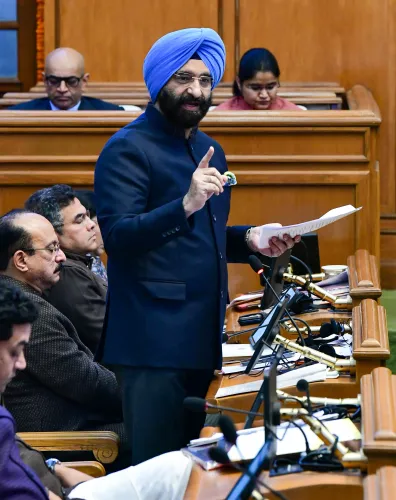
The Aam Aadmi Party (AAP) on Tuesday, 3 November launched a sharp counter-offensive against Delhi Environment Minister Manjinder Singh Sirsa of the Bharatiya Janata Party (BJP), rejecting his claim that stubble burning in Punjab is the primary driver of Delhi's worsening air quality. AAP's national media in-charge Anurag Dhanda said the BJP's attempt to shift blame onto Punjab would 'not benefit their politics, nor help the people of Delhi.'
What Triggered the Spat
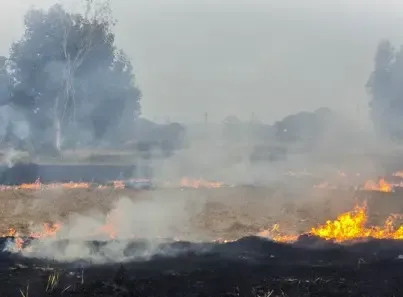
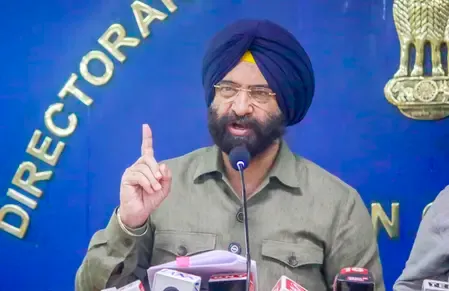
Earlier on Tuesday, Sirsa alleged that the AAP Punjab government had failed to contain stubble burning, directly linking it to the toxic air blanketing the national capital. The remark escalated the already fraught political battle over Delhi's annual winter pollution crisis — a flashpoint that has recurred every October-November for years, with rival governments trading blame rather than solutions.
AAP's Counter-Argument: Numbers and a Sharp Analogy
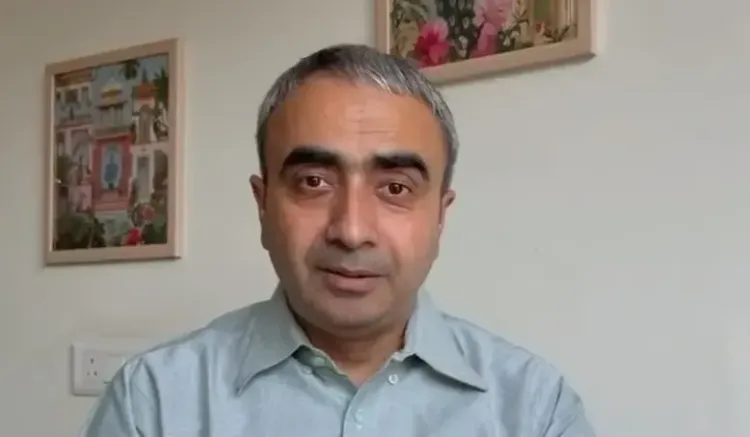
Dhanda responded through a self-made video, comparing Sirsa's position to that of 'a student who did not study all year and then complains that the child sitting on the bench beside him did not allow him to take the exam.' He asked the Delhi government to 'stop making excuses.'
On the farm-fire data, Dhanda claimed that when AAP came to power in Punjab in 2022, the state recorded roughly 80,000 farm-fire incidents annually. He asserted that under Chief Minister Bhagwant Mann, this figure was brought down to fewer than 5,000 last year through sustained farmer outreach, and that incidents have become 'almost negligible' this season.
AAP Points Finger at UP and Madhya Pradesh
Dhanda broadened his critique beyond Punjab, claiming that farm-fire incidents in Uttar Pradesh are rising by 25 to 30 per cent every year, with regions such as Meerut, Aligarh, and Agra and the wider western UP belt witnessing sharp increases. He attributed this to the NDA government led by Chief Minister Yogi Adityanath failing to support farmers with alternatives or resources.
On Madhya Pradesh, Dhanda went further, claiming farm-fire incidents in the state are growing by 150 per cent annually. 'Last year, 52 per cent of all farm-fire incidents in the country occurred in Madhya Pradesh alone,' he said, arguing that the BJP-governed state's record undermined the party's credibility on the issue.
AAP Questions Delhi Government's Own Record
Dhanda also turned the lens on the Rekha Gupta-led Delhi government, demanding concrete examples of pollution-control measures taken by the administration. 'If you do nothing, how can pollution reduce on its own?' he asked.
He recalled that the previous Delhi government had proposed cloud seeding and artificial rainfall as a solution, alleging that the exercise 'led to corruption and wasted money' without results. He also questioned why no advance preparations were made despite the predictable seasonal spike in pollution every year.
Dhanda concluded by holding Home Minister Amit Shah and Prime Minister Narendra Modi accountable, arguing that the responsibility to explain where Delhi's smoke originates ultimately rests with the BJP leadership at the Centre. He maintained that Punjab currently has 'clear skies and clean air,' with no stubble-burning smoke visible at this time.
The Broader Context
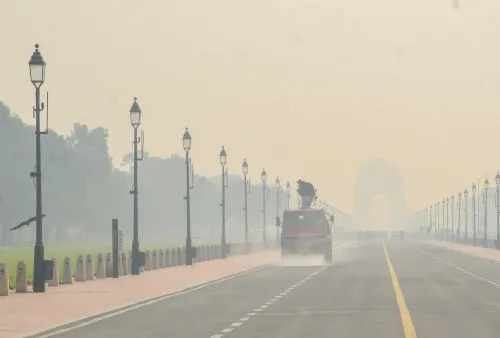
Delhi's air quality typically plunges to hazardous levels between October and January, with a combination of vehicular emissions, construction dust, industrial activity, and trans-boundary stubble smoke cited as contributing factors. The political blame game between Delhi's BJP government and AAP — which governs Punjab — has intensified this season as the Air Quality Index (AQI) across the capital region deteriorates. Independent assessments suggest stubble burning accounts for a variable but significant share of Delhi's pollution load during peak season, though attributing precise percentages remains contested among scientists.
Point of View
And every party has a finger to point elsewhere. What is striking this time is AAP's decision to go numerical — citing an 80,000-to-5,000 farm-fire reduction in Punjab — because numbers can be verified or disproved, raising the stakes for both sides. Yet the claims about Madhya Pradesh contributing 52% of national farm fires and UP rising 25–30% annually have been asserted without independent sourcing, and the BJP has not yet responded with counter-data. Delhi's pollution is structurally multi-causal; attributing it primarily to any one state is a political argument, not a scientific one, and voters in the capital deserve a policy response rather than a press-video war.
NationPress
3 Nov 2026
Frequently Asked Questions
Why is AAP accusing BJP of defaming Punjab over Delhi pollution?
AAP says Delhi Environment Minister Manjinder Singh Sirsa wrongly blamed Punjab stubble burning for Delhi's air quality crisis without acknowledging pollution sources in BJP-governed states. The party argues that Punjab has significantly reduced farm fires under Chief Minister Bhagwant Mann and that the BJP government in Delhi has itself taken no concrete pollution-control measures.
How much has Punjab reduced stubble burning, according to AAP?
According to AAP's Anurag Dhanda, farm-fire incidents in Punjab stood at around 80,000 when the party came to power in 2022, dropped to fewer than 5,000 last year, and are described as 'almost negligible' this season. These figures have been cited by AAP but have not been independently verified in the source material.
What is AAP saying about farm fires in Madhya Pradesh and Uttar Pradesh?
Dhanda claimed that farm-fire incidents in Uttar Pradesh are rising 25–30% annually, particularly in western UP districts like Meerut, Aligarh, and Agra. He further alleged that Madhya Pradesh alone accounted for 52% of all farm-fire incidents nationally last year, with incidents growing at 150% per year — all in BJP-governed states.
Who is Manjinder Singh Sirsa and what did he allege?
Manjinder Singh Sirsa is Delhi's Environment Minister from the BJP. On Tuesday, he alleged that the AAP-led Punjab government had failed to check stubble burning, which he said is contributing directly to the dangerous pollution levels in Delhi.
What measures has AAP demanded from the Delhi government?
AAP's Dhanda challenged the Rekha Gupta-led Delhi BJP government to name even one concrete step it has taken to reduce pollution, arguing that without action pollution cannot improve on its own. He also referenced a past cloud-seeding proposal which he alleged resulted in corruption and wasted funds without any impact on air quality.