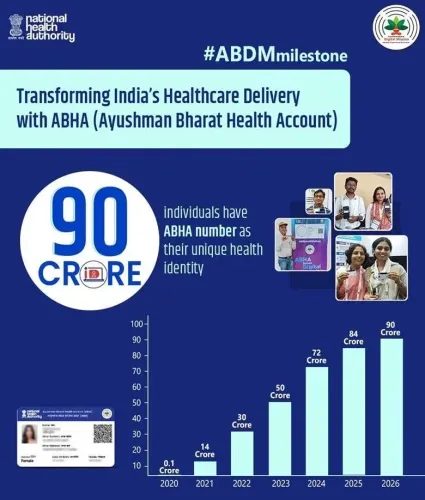
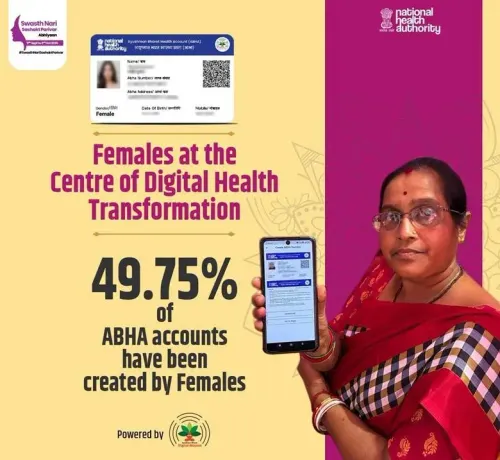
CM Himanta shares ABHA digital health registrations hit 93.95 cr
Synopsis
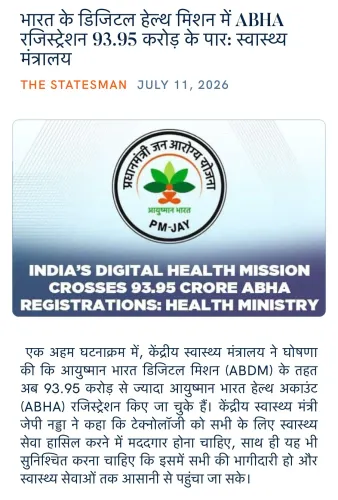
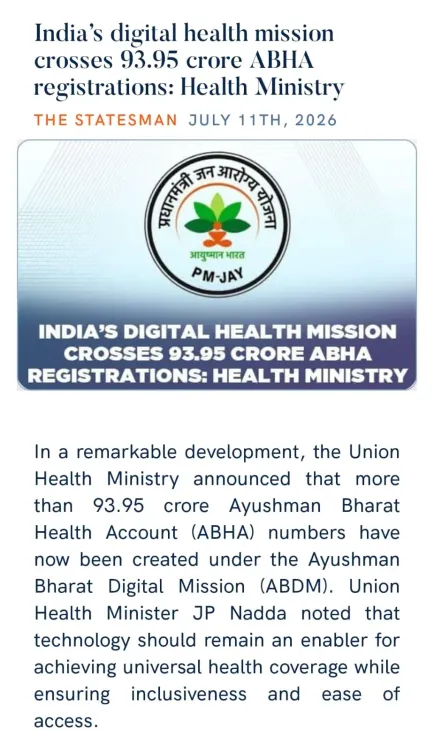
Assam Chief Minister Himanta Biswa Sarma amplified a Health Ministry update on 13 July 2026 stating India's Ayushman Bharat Digital Mission has crossed 93.95 crore ABHA health account registrations, underlining accelerating citizen adoption of the country's digital health infrastructure under the Digital India framework.
Key Takeaways
Assam CM Himanta Biswa Sarma shared a Union Health Ministry update on 13 July 2026 via the NaMo App .
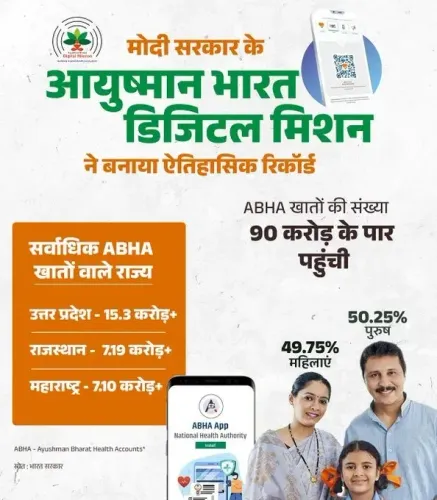
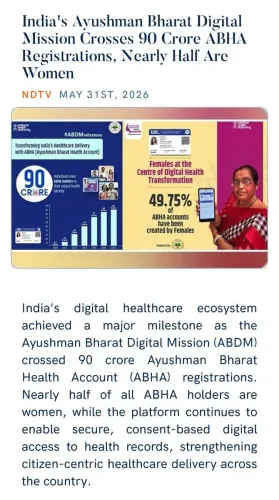
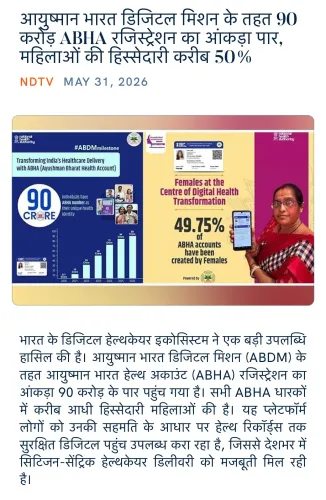
India's Ayushman Bharat Digital Mission has reportedly crossed 93.95 crore ABHA registrations.
ABHA (Ayushman Bharat Health Account) provides citizens with a unique, portable digital health ID linking records across facilities.
The National Digital Health Mission was announced on 15 August 2020 and formally operationalised in 2021 .
High registration volumes reflect accelerating state-level implementation and citizen adoption of the central digital health architecture.
Future focus will be on state-level integration of ABHA with insurance schemes and parliamentary review of digital health data governance.
Assam Chief Minister Himanta Biswa Sarma on Sunday, 13 July 2026, shared data from the Union Ministry of Health and Family Welfare indicating that India's digital health mission has crossed 93.95 crore Ayushman Bharat Health Account (ABHA) registrations, amplifying the milestone via the NaMo App.
Context
The post shared by CM Sarma relays a Health Ministry update on the Ayushman Bharat Digital Mission (ABDM), which was formally rolled out in 2021 with ABHA as its primary citizen-facing component. Each ABHA provides a unique digital health identifier, enabling citizens to link and access their health records across public and private facilities. The milestone of 93.95 crore registrations — if sustained by official data — would represent coverage approaching three-quarters of India's population.
The update was shared through the NaMo App, the official platform used by the central government and allied leaders to disseminate scheme-related information directly to citizens and party workers.
Policy Backdrop
The ABDM traces its lineage to the National Digital Health Mission, announced by Prime Minister Narendra Modi on 15 August 2020, which aimed to create a unified, interoperable digital health architecture for India. This built on the broader Ayushman Bharat Pradhan Mantri Jan Arogya Yojana, launched in 2018, which sought to expand health coverage through insurance linkages and digital infrastructure.
ABHA functions as the connective tissue of this architecture — a portable, consent-based health ID that allows records created at one facility to be accessed at another. The mission sits within the wider Digital India framework, which has pushed interoperability across sectors from banking to agriculture.
Stakeholders and Impact
The primary beneficiaries of ABHA adoption are Indian citizens, particularly those navigating fragmented public health systems across states. For healthcare providers — hospitals, clinics, and diagnostic centres — high registration volumes signal a growing base of patients whose records can be accessed digitally, reducing duplication and improving continuity of care.
State health departments, including Assam's, play a critical role in driving on-the-ground registration and integration with state-level insurance schemes. The fact that a state chief minister is actively amplifying central health metrics underscores the federal coordination model on which the mission depends. CM Sarma's role as convenor of the North-East Democratic Alliance (NEDA) also positions him as a key conduit for disseminating central scheme updates across the north-eastern region.
What's Next
The immediate focus for policymakers will be deepening state-level integration of ABHA with existing health insurance schemes and ensuring that registration numbers translate into active, verified health record usage. Analysts and parliamentary committees are expected to scrutinise data governance frameworks governing the digital health ecosystem, particularly around patient consent and data portability.
As India's digital health infrastructure matures, the interoperability of ABHA with private sector health platforms and insurance providers will be a key indicator of whether the mission moves beyond registration volumes to meaningful health outcomes.
Point of View
Especially in the north-east, to reinforce the visibility of flagship national schemes. The 93.95 crore ABHA figure, if verified, would mark a significant inflection point in India's decade-long push to digitise health records — a goal that has historically struggled with last-mile adoption. However, the gap between registration and active usage remains the critical policy challenge: high enrolment numbers do not automatically translate into interoperable, clinician-accessed health records. The broader arc here is India's ambition to build a consent-based health data layer that can eventually underpin insurance portability, telemedicine, and AI-assisted diagnostics at scale.
NationPress
10 Oct 2026
Frequently Asked Questions
What is ABHA and how does it work?
ABHA, or Ayushman Bharat Health Account, is a unique 14-digit digital health ID issued to Indian citizens under the Ayushman Bharat Digital Mission. It allows individuals to link their health records — from hospitals, clinics, and labs — so that medical history can be accessed across facilities with the patient's consent.
How many ABHA registrations has India crossed as of 2026?
According to a Health Ministry update shared by Assam CM Himanta Biswa Sarma on 13 July 2026, India's ABHA registrations have crossed 93.95 crore, though this figure is sourced from the ministry's own reporting.
When was the Ayushman Bharat Digital Mission launched?
The National Digital Health Mission was announced on 15 August 2020 and the Ayushman Bharat Digital Mission was formally rolled out in 2021, with ABHA as its core citizen-facing component.
Why did Assam CM Himanta Biswa Sarma share the ABHA milestone?
CM Sarma shared the Health Ministry update via the NaMo App, consistent with his role as a senior BJP leader and NEDA convenor who regularly amplifies central government scheme updates across the north-eastern states.
What is the difference between Ayushman Bharat and ABHA?
Ayushman Bharat is the broader health umbrella that includes the PM Jan Arogya Yojana insurance scheme and the Digital Mission. ABHA is specifically the digital health ID component of the Ayushman Bharat Digital Mission, designed to create interoperable health records for every enrolled citizen.