What Does Abhishek Banerjee’s Thakurnagar Visit Mean for the Matua Vote Bank?
Synopsis
Abhishek Banerjee's visit to Thakurnagar has ignited a political conflict, emphasizing the Matua community's crucial role ahead of the 2026 Assembly elections. The accusations exchanged between Trinamool and BJP leaders reveal the intense competition for this influential vote bank, making it a focal point in West Bengal politics.
Key Takeaways
The Matua community plays a crucial role in West Bengal’s electoral politics.
Abhishek Banerjee's visit underscores the Trinamool Congress's focus on community relations.
The BJP's response highlights the competitive political landscape.
The community's historical grievances continue to influence their political alignment.
Upcoming elections will be significantly affected by the Matua vote bloc.
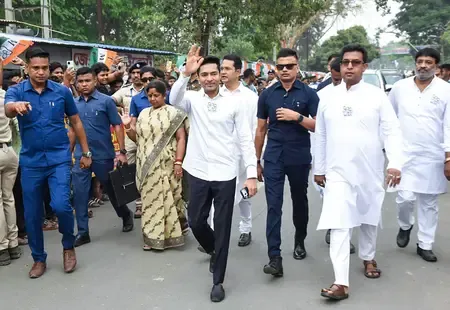
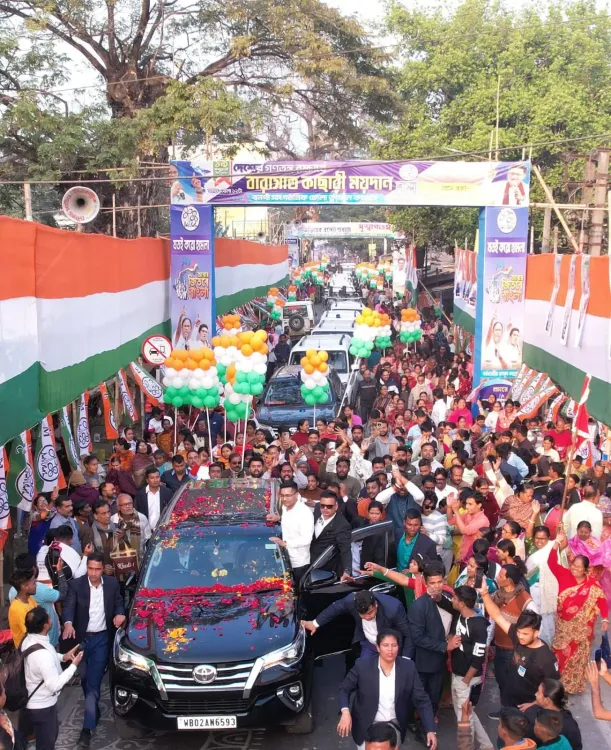
New Delhi, Jan 10 (NationPress) The visit of Abhishek Banerjee, General Secretary of West Bengal’s ruling Trinamool Congress, to Thakurnagar in the North 24 Parganas district on Friday has ignited a political controversy. Thakurnagar is recognized as the cultural and spiritual heart of the Matua community. His participation in a temple ceremony has brought to light the community’s pivotal role in determining political outcomes as the Assembly elections approach in the first half of 2026.
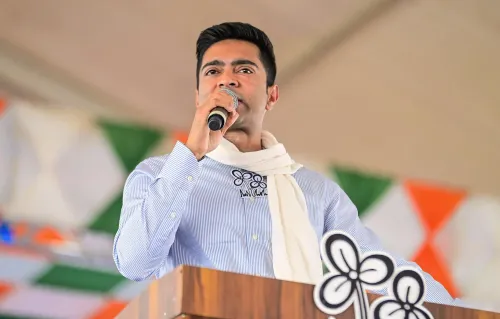
During his brief visit, Abhishek accused the Bharatiya Janata Party (BJP) of failing the Matua community by not fulfilling its promises regarding citizenship under an amended act (CAA), while also showcasing his party’s efforts in developing Thakurnagar.
In response to Abhishek's remarks targeting Prime Minister Narendra Modi, BJP MP and Matua leader Shantanu Thakur conducted a “purification” ceremony at the temple, asserting that Abhishek’s visit compromised the shrine's sanctity.
Abhishek emphasized the contributions made by the Trinamool to Thakurnagar's progress and demanded a “report card” from the BJP regarding their achievements in serving the Matua community. Thakur contended that no administration has supported the Matuas more than Prime Minister Modi.
The Matua community represents a significant and politically active Scheduled Caste group in West Bengal, with roots in the reform movements of the 19th and 20th centuries. Many families within this community migrated from present-day Bangladesh during the Partition and subsequent persecutions. Their size and unity have made them a powerful force in state politics.
Concentrated primarily in North 24 Parganas, Nadia, South 24 Parganas, Cooch Behar, Malda, and Howrah, the community holds substantial sway over numerous electoral seats. They influence at least nine Lok Sabha seats and 45 to 55 Assembly constituencies, comprising nearly 20% of the state's Scheduled Caste electorate. As the second-largest Scheduled Caste group in the state, primarily from the Namasudra caste, they have faced historical marginalization.
In neighboring states like Assam, Tripura, Odisha, and Jharkhand, the Matua population is estimated to range from 5 to 8 million. Many within this group are engaged in ongoing discussions about citizenship documentation under the CAA and voter registration due to historical migrations from Bangladesh. Their spiritual center is Thakurnagar, which also acts as the community's socio-political hub.
From 1977 to 2006, the Matua community primarily aligned itself with the Left Front, despite having limited direct representation. Community leaders believed strengthening ties with the state government would foster peaceful coexistence in a foreign land. This strategy shifted towards the Trinamool Congress following Mamata Banerjee's rise to power in 2011.
Some analysts suggest this shift is partly due to state welfare initiatives, acknowledgment of Matua identity, and political outreach to marginalized groups.
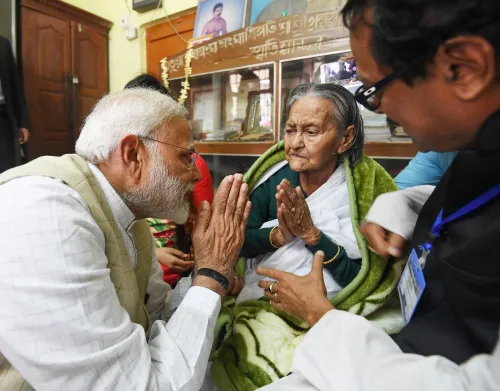
During the 2014 Lok Sabha elections, while support for the Trinamool continued, the BJP started to gain traction. Modi's visit to Thakurnagar in early 2014 during his campaign resonated with the Matua community, who felt overlooked by previous governments. His engagement marked the BJP’s initial significant effort to court the Matua vote, which paid off during the 2019 Lok Sabha elections when Shantanu Thakur secured the Bongaon seat.
The 2021 Assembly elections reflected a divided Matua vote; some leaned towards the BJP's promises, while others remained loyal to the Trinamool’s welfare programs. This trend persisted in the 2024 Lok Sabha elections, with a vigorous Trinamool campaign sowing doubts about the BJP's delivery on the CAA. As the upcoming elections approach, the Matua community remains a crucial swing vote bloc, influencing outcomes in over 50 of the state’s 294 Assembly constituencies.
Point of View
I believe the political dynamics surrounding the Matua community are indicative of broader electoral strategies in West Bengal. Both the Trinamool Congress and the BJP recognize the Matua vote as crucial for upcoming elections. This ongoing rivalry reflects the evolving landscape of state politics, where community interests and historical grievances intersect with contemporary electoral promises.
NationPress
23 Sept 2026
Frequently Asked Questions
What is the significance of the Matua community in West Bengal politics?
The Matua community is a large and politically influential Scheduled Caste group in West Bengal, with substantial sway over multiple electoral constituencies. Their voting patterns can significantly affect election outcomes.
Why did Abhishek Banerjee visit Thakurnagar?
Abhishek Banerjee visited Thakurnagar to pay respect at a temple and to highlight the Trinamool Congress's contributions to the community's development, while criticizing the BJP's failure to deliver on citizenship promises.
What was the BJP's response to Banerjee's visit?
BJP leader Shantanu Thakur conducted a purification ritual at the temple after Banerjee's visit, claiming that his presence had compromised the shrine's sanctity.
How does the Matua community influence elections?
The Matua community influences at least nine Lok Sabha seats and around 45-55 Assembly constituencies, representing about 20% of the state's Scheduled Caste electorate. Their cohesive voting can sway electoral results.
What historical context shapes the Matua community's political alignment?
Historically aligned with the Left Front, the Matua community has shifted towards the Trinamool Congress in recent years due to increased political outreach and state welfare programs.