Acharya Prashant at PETA London: 'Violence towards animals breeds a violent society'

Synopsis
At PETA's London office, Acharya Prashant made a striking case: conditioning a child to see animals as food doesn't produce a child violent toward animals — it produces a violent child, full stop. His argument, linking animal exploitation to ego-driven violence against women, forests, and rivers alike, gave the animal rights conversation a philosophical depth rarely heard in policy circles.
Key Takeaways
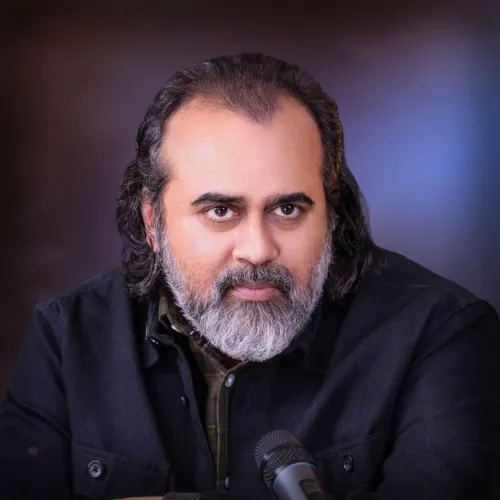
Acharya Prashant held a fireside dialogue with PETA Foundation President Mimi Bekhechi at PETA's London office on 5 July .
He argued that violence towards animals is not isolated — it conditions an entire society toward violence, stating 'We are raising a violent society.' His book 'Is She Just Food to You' links the exploitation of animals and women to the same conditioned human ego.
This was his fourth dialogue with PETA leadership; PETA named him Most Influential Vegan of the Year in 2022 .
The UK tour continues until 10 July , with engagements at University College London and Queen Mary University of London ahead.
Acharya Prashant reaches more than 100 million subscribers and was listed among the world's most influential living thinkers in the Watkins 2026 list.
Philosopher and author Acharya Prashant joined PETA Foundation President Mimi Bekhechi for a fireside dialogue at PETA's London office on 5 July, exploring the philosophical roots of animal consciousness, veganism, and non-violence before a packed audience. The conversation marked Acharya Prashant's fourth engagement with PETA's senior leadership and formed part of his ongoing UK tour.
Key Themes of the Dialogue
Central to the discussion was Acharya Prashant's argument that compassion is not an acquired virtue but the innate nature of human beings — and that the real question is who taught humanity violence. He said, 'Does the human being have to be taught compassion, or does he have to be freed of the violence he has been taught? Then one must see who spoiled the child, who planted in the child's mind that a living being is food.'
He drew a direct line between violence towards animals and broader social conditioning, warning: 'Now you don't have a child violent towards a rabbit or a goat. Now you have a violent child. We are raising a violent society.'
The Book and Its Central Argument
Opening the conversation, Bekhechi praised Acharya Prashant's book 'Is She Just Food to You', describing it as addressing the core challenge of the animal rights movement — shifting public perception of animals from objects of consumption to thinking, feeling beings. Acharya Prashant explained that the violence inflicted on animals and on women are not separate phenomena, which is why the book carries the pronoun 'She' in its title. He argued that the exploited could be 'anyone — a forest, a river, a woman, or a cow — but the exploiter remains the same: the conditioned human ego.'
On Human Nature and the Ego
Acharya Prashant offered a philosophical reframing of the human-animal divide, stating that humans are 99.9 percent animal, and the remaining 0.1 percent is not superiority but 'its disease: the social and cultural ego.' Drawing on the Indian non-dual tradition, he described the conduct of the liberated person as 'sahaj' — as natural as that of an animal — and said this naturalness is the true mark of inner freedom.
He also addressed individual responsibility directly: 'Every gram of flesh that leaves the slaughterhouse is ultimately consumed by a solitary individual, so demand begins with the individual and change too will begin with the individual.' He acknowledged that legislation and policy are necessary but insufficient, noting that in a democracy, the voter who elects the legislator is also the consumer.
Personal Account and Audience Exchange
During the session, Acharya Prashant shared a personal account of an injured rabbit he had rescued, who lived with him in his study for years and died in his arms. He said, 'If a relationship demands the life of an innocent as its price, that relationship was never valuable in the first place.'
On the spread of animal cruelty videos online, he observed: 'Violence is never taught as violence. Violence is taught as tradition, as ambition, as responsibility, even as love. If violence were taught as violence, it would never succeed.'
Context: UK Tour and PETA History
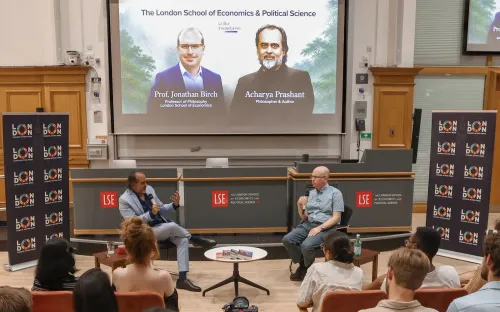
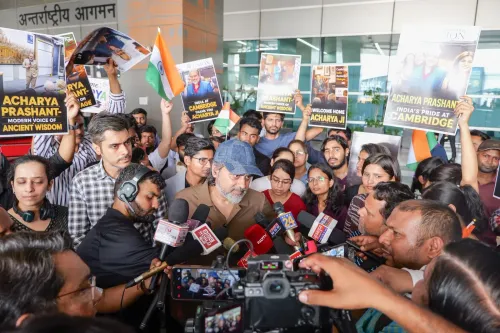
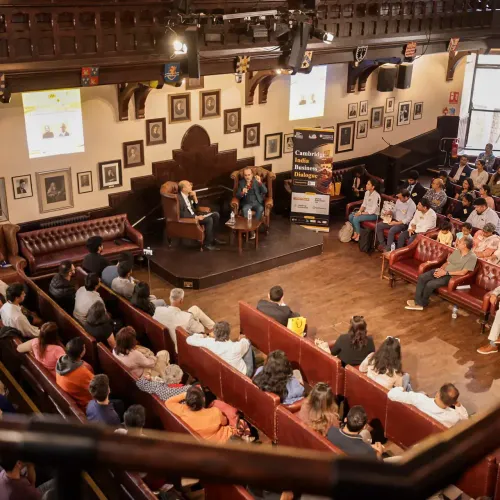
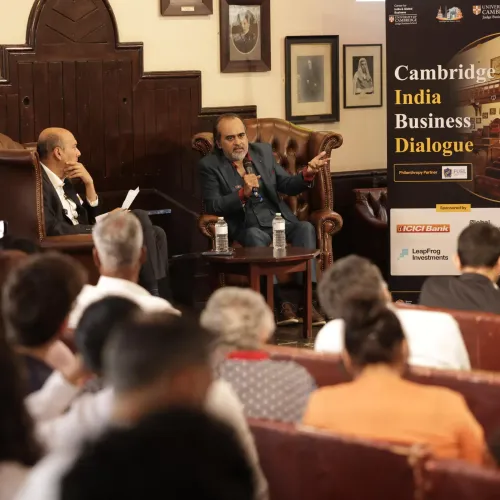
The dialogue is part of Acharya Prashant's UK tour, running until 10 July, during which he has engaged with academics and policymakers at the University of Oxford, the University of Cambridge, the London School of Economics, and the British Parliament. Upcoming engagements include a dialogue with Professor Steven Fleming at University College London, a conversation with Professor Lars Chittka at Queen Mary University of London, and a book signing at Watkins Book Store.
Acharya Prashant has previously held dialogues with PETA co-founder Ingrid Newkirk and PETA International President Poorva Joshipura, including an earlier session with Joshipura during this same UK tour. PETA honoured him with its Most Influential Vegan of the Year award in 2022. An alumnus of IIT Delhi and IIM Ahmedabad and founder of the PrashantAdvait Foundation, he reaches more than 100 million subscribers across social media and was recently named among the world's most influential living thinkers in the Watkins 2026 list.
Point of View
And it deserves scrutiny as well as credit. The dialogue's reach into Oxford, Cambridge, and the British Parliament signals a deliberate strategy to move veganism from lifestyle choice to philosophical imperative. Yet the audience at these events is already sympathetic; the harder question is whether this message travels to the voter and consumer Acharya Prashant himself identifies as the real change-maker. The individual-responsibility argument is philosophically coherent but risks letting systemic actors — industrial agriculture, policy inertia — off the hook unless paired with an equally forceful structural critique.
NationPress
5 Jul 2026
Frequently Asked Questions
What did Acharya Prashant say at the PETA London dialogue on 5 July?
Acharya Prashant argued that compassion is humanity's innate nature and that violence toward animals is a learned condition that creates broader social violence. He stated, 'Now you don't have a child violent towards a rabbit or a goat. Now you have a violent child. We are raising a violent society.'
Who is Mimi Bekhechi and what is the PETA Foundation?
Mimi Bekhechi is the President of the PETA Foundation, the UK arm of PETA — the world's largest animal rights organisation. She hosted the fireside dialogue with Acharya Prashant at PETA's London office on 5 July.
What is Acharya Prashant's book 'Is She Just Food to You' about?
The book addresses the animal rights movement's core challenge of helping people see animals as thinking, feeling beings rather than objects of consumption. Acharya Prashant has explained that the 'She' in the title reflects his argument that the exploitation of animals and the exploitation of women stem from the same conditioned human ego.
What is Acharya Prashant's connection to PETA?
The 5 July dialogue was Acharya Prashant's fourth engagement with PETA's senior leadership, following earlier conversations with PETA co-founder Ingrid Newkirk and PETA International President Poorva Joshipura. PETA awarded him its Most Influential Vegan of the Year honour in 2022.
What else is on Acharya Prashant's UK tour schedule?
The UK tour runs until 10 July and includes a dialogue with Professor Steven Fleming at University College London, a conversation with Professor Lars Chittka at Queen Mary University of London, and a book signing at Watkins Book Store. He has already engaged with academics and policymakers at Oxford, Cambridge, LSE, and the British Parliament.