Adani Cement deploys electric trucks at Gujarat's Sanghi plant in India first
Synopsis
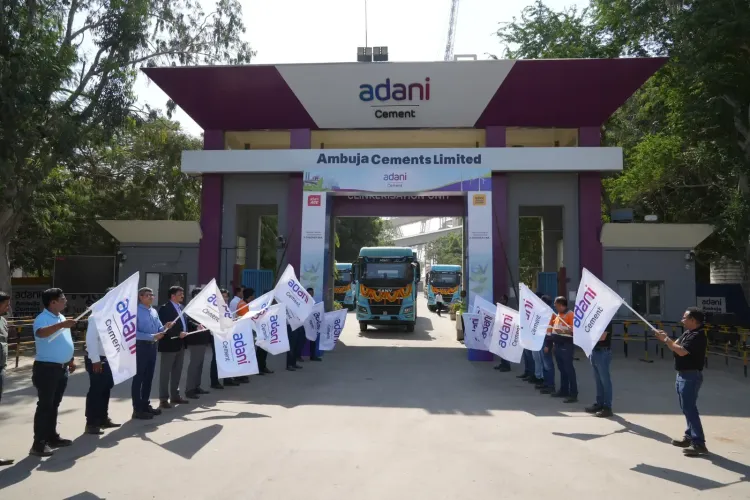
Adani Cement has deployed heavy-duty electric trucks at its Sanghi plant in Gujarat — a first for the company's logistics operations — with a 410-truck fleet projected to cut over 25,000 tonnes of CO2 and displace 11 million litres of diesel annually. With diesel up 60% over a decade and battery costs down 70%, the economics of freight electrification in India's cement sector have finally tipped.
Key Takeaways
Adani Cement deployed heavy-duty electric trucks at its Sanghi plant in Gujarat on 18 November 2026 — the company's first-ever EV logistics deployment.
The initiative is part of a plan to expand EV-based transport of clinker and cement across multiple routes in India.
Adani Cement's 410-truck fleet is projected to cut more than 25,000 tonnes of CO2 emissions and displace 11 million litres of diesel per year.
Diesel prices have risen 60% over the past decade; lithium-ion battery pack costs have fallen by approximately 70% and solar tariffs by 47% , improving EV economics.
Electric trucks powered by renewable energy can eliminate up to 100% of freight-related emissions versus 0.7375 kg of CO2 per km for diesel trucks.
India is the world's second-largest cement producer ; logistics electrification is expected to address both cost pressures and Scope 3 emissions targets.
Adani Cement on Wednesday, 18 November 2026, announced the deployment of heavy-duty electric trucks at its Sanghi plant in Gujarat — marking the first-ever use of electric vehicles for cement transportation in the company's logistics operations. The move is part of Adani Cement's broader green logistics and sustainability agenda, with plans to scale the initiative across multiple routes in India.
The Deployment and What It Covers
The electric trucks are being deployed initially at the Sanghi plant for the transportation of clinker and finished cement. Vinod Bahety, CEO – Cement Business, Adani Group, described the launch as a launchpad for a nationwide rollout. 'The deployment at Sanghi is just the beginning. We have identified multiple routes across India for EV-based transport of clinker and cement. Every truck we electrify reduces our carbon footprint and insulates our logistics cost base from diesel price volatility,' Bahety said.
The Economics Behind the Shift
The timing of the initiative reflects a maturing cost equation. According to the company, diesel prices in India have risen by 60 per cent over the past decade, while lithium-ion battery pack costs have declined by approximately 70 per cent and solar tariffs have fallen by 47 per cent. These converging trends have made the economic case for heavy-duty electric trucks in the cement sector significantly more viable than even five years ago. Diesel trucks emit approximately 0.7375 kg of carbon dioxide per kilometre, whereas electric trucks powered by renewable energy can eliminate up to 100 per cent of freight-related emissions, the company noted.
Scale of Impact: Emissions and Fuel Savings
Adani Cement's 410-truck fleet is projected to reduce carbon dioxide emissions by more than 25,000 tonnes annually and displace the equivalent of 11 million litres of diesel consumption per year. The electrification drive is also expected to address Scope 3 emissions — the category covering indirect emissions from the company's supply chain — which are increasingly scrutinised by institutional investors and sustainability frameworks alike.
India's Cement Sector Context
India is the world's second-largest cement producer, and the transportation of limestone, clinker, and finished cement constitutes a significant share of the industry's overall operational costs and emissions. The logistics segment has historically been among the hardest to decarbonise, given the dependence on long-haul diesel-powered vehicles. Adani Cement's initiative represents one of the more concrete steps by a major Indian cement player to directly address this challenge. The company has indicated plans to extend the electric truck deployment to additional routes and plants as the rollout progresses.
Point of View
The green pivot is as much a cost hedge as an ESG move. The more significant question is pace of scale: a 410-truck target is meaningful within a single company's fleet, but India's cement logistics network runs on hundreds of thousands of diesel vehicles, and voluntary corporate commitments have rarely driven sector-wide transformation at speed. The Scope 3 angle deserves scrutiny — cement companies globally have been slow to account for supply chain emissions, and India's disclosure frameworks remain weaker than international peers. If Adani Cement publishes independently verified emissions data as the rollout progresses, it would set a benchmark others in the sector would struggle to ignore.
NationPress
18 Nov 2026
Frequently Asked Questions
What has Adani Cement done at its Sanghi plant in Gujarat?
Adani Cement has deployed heavy-duty electric trucks at its Sanghi plant in Gujarat for the transportation of clinker and cement — the company's first-ever use of electric vehicles in its logistics operations. The deployment is part of a wider green logistics initiative with plans to expand to multiple routes across India.
How many trucks are part of Adani Cement's electric fleet?
Adani Cement's electric truck fleet is projected to reach 410 trucks. This fleet is expected to reduce carbon dioxide emissions by more than 25,000 tonnes annually and displace the equivalent of 11 million litres of diesel consumption per year.
Why is Adani Cement switching to electric trucks now?
The shift is driven by improved economics: diesel prices have risen 60% over the past decade, while lithium-ion battery costs have fallen by approximately 70% and solar tariffs by 47%. This makes heavy-duty electric trucks increasingly cost-competitive for long-haul cement logistics in India.
What is the environmental impact of using electric trucks in cement logistics?
Diesel trucks emit approximately 0.7375 kg of carbon dioxide per kilometre, whereas electric trucks powered by renewable energy can eliminate up to 100% of freight-related emissions. The initiative also targets a reduction in Scope 3 emissions — indirect emissions from the company's supply chain.
What are Adani Cement's future plans for electric truck deployment?
The company plans to expand the electric truck programme to additional routes and plants beyond the initial Sanghi deployment. CEO Vinod Bahety has indicated that multiple routes across India have already been identified for EV-based transport of clinker and cement.