Sagar Adani calls for faster electrification to boost energy security and growth
Synopsis
At a high-profile London Climate Action Week dialogue, Sagar Adani declared faster electrification 'no longer an option but an imperative' — and backed the call with AGEL's 50 GW target by 2030 and the Adani Group's $100 billion energy-transition commitment. With Gautam Adani separately announcing a 10 GW nuclear push, the group is signalling a full-spectrum clean energy strategy that goes well beyond solar.
Key Takeaways
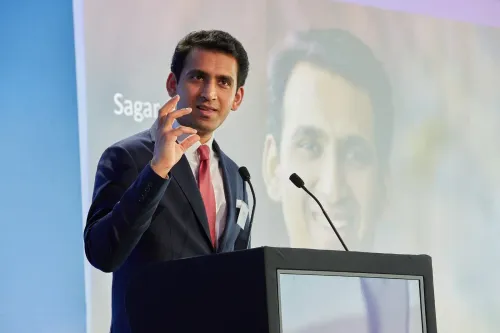
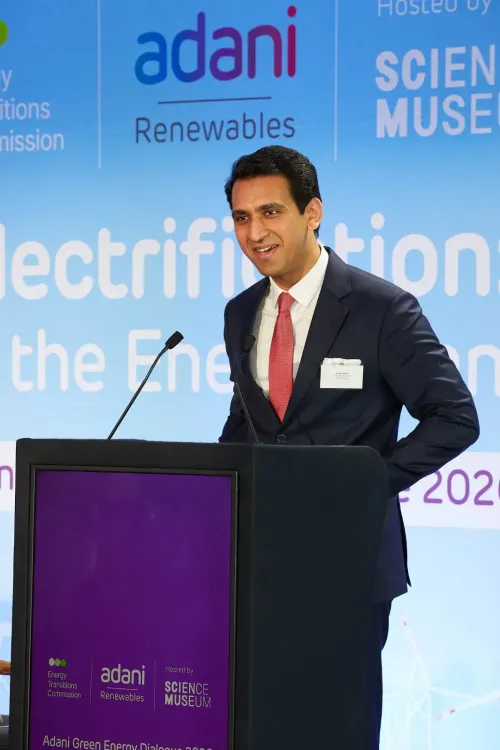
Sagar Adani addressed the inaugural Adani Green Energy Dialogue at the Science Museum, London on 27 June during London Climate Action Week .
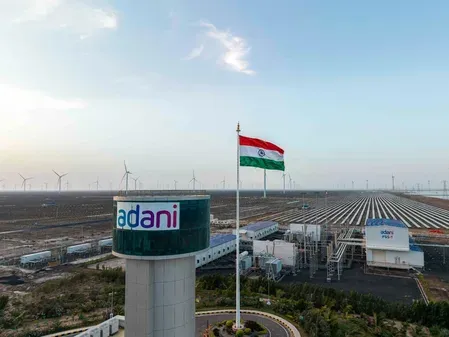
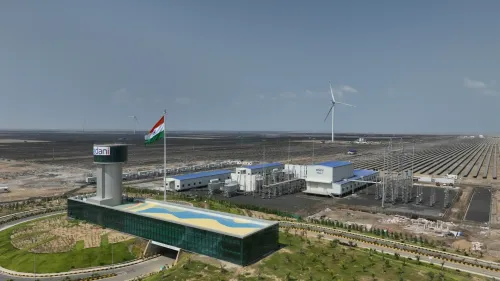
AGEL is targeting 50 GW of renewable energy capacity by 2030 , anchored by the world's largest renewable plant at Khavda, Gujarat .
The Adani Group has committed more than $100 billion to the energy transition and related infrastructure.
Chairman Gautam Adani announced plans to develop up to 10 GW of nuclear power capacity as part of a diversified energy portfolio.
Lord Adair Turner (ETC) and Nigel Topping (UK Climate Change Committee) both identified clean electrification as the central lever for decarbonisation.
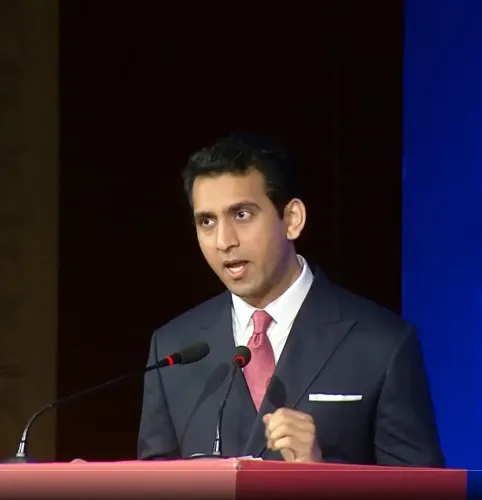
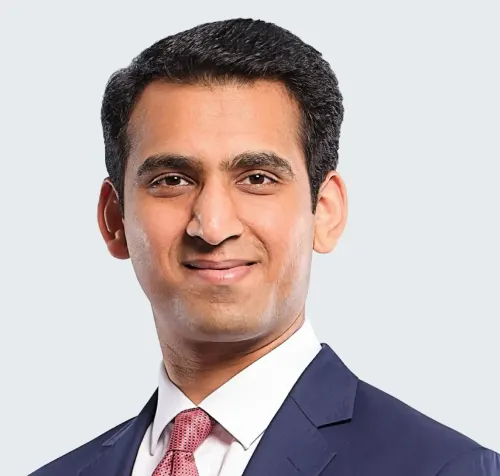
Sagar Adani, Executive Director of Adani Green Energy Limited (AGEL), on 27 June called for accelerated electrification as a strategic imperative to strengthen energy security and underpin economic growth, arguing that renewables integrated with storage technologies are essential to delivering reliable, affordable, and round-the-clock clean power.
The Case for Accelerated Electrification
Speaking at the inaugural Adani Green Energy Dialogue — hosted by AGEL in partnership with the Energy Transitions Commission (ETC) at the Science Museum, London, during London Climate Action Week — Adani described energy security, affordability, and sustainability as 'among the defining challenges of our time.'
'Electrification is emerging as one of the most effective pathways to address all three. For countries seeking resilient growth and greater energy independence, accelerating electrification is no longer an option but an imperative,' he told the gathering.
Storage as the Missing Link
Adani stressed that renewable energy reaches its full potential only when paired with storage technologies such as Battery Energy Storage Systems (BESS) and Pumped Storage Projects (PSPs). He said these technologies 'make clean power reliable, affordable and available round the clock.'
He pointed to AGEL's own trajectory as evidence of this approach in action: the company is advancing towards 50 GW of renewable energy capacity by 2030, anchored by what it describes as the world's largest renewable energy plant at Khavda, Gujarat, where large-scale storage is being integrated with clean generation.
Global Voices at the Dialogue
Lord Adair Turner, Co-chair of the ETC, underscored that clean electrification is 'by far the most important lever' for building zero-emission economies. He noted that electrification is already economically viable in road transport, building heating, and low-temperature industrial heat, and that technological progress is increasingly making it feasible even for high-temperature industrial processes.
Nigel Topping, Co-founder of Ambition Loop and Chair of the UK Climate Change Committee, added that the real economic and climate gains come from electrifying sectors still predominantly powered by fossil fuels. He said a clear understanding of falling technology costs and grid flexibility 'are keys to unlocking the large amounts of investment required.'
Adani Group's Broader Energy Commitment
The Adani Group has committed more than $100 billion towards the energy transition and related infrastructure — among the largest private-sector commitments of its kind globally. The group is also investing in transmission, energy storage, green hydrogen, digital infrastructure, and next-generation industrial ecosystems.
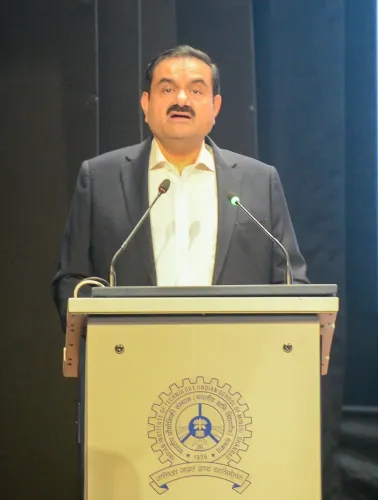
Separately, at the Adani Group's Annual General Meeting (AGM) earlier this week, Chairman Gautam Adani reaffirmed the conglomerate's commitment to meeting India's growing energy needs through a diversified portfolio. He also announced plans to develop up to 10 GW of nuclear power capacity, with nuclear positioned to complement renewables and storage in delivering reliable, low-carbon electricity at scale.
What Comes Next
The London dialogue brought together policymakers, investors, business leaders, and climate experts to map the policy, investment, and infrastructure requirements for the clean energy transition. As India pushes toward its own renewable energy targets, the interplay between private capital commitments and public policy frameworks will be closely watched in the months ahead.
Point of View
And framing Khavda as the world's largest renewable plant at an ETC-partnered event is a credibility play aimed squarely at institutional investors. The more substantive signal, however, is Gautam Adani's 10 GW nuclear announcement: it suggests the group has concluded that renewables-plus-storage alone cannot guarantee baseload reliability at the scale India requires. Whether the group's $100 billion commitment translates into verifiable capacity additions — rather than cumulative investment across loosely related infrastructure — is a question regulators and analysts should press. India's energy transition needs private capital at this scale; it also needs the accountability frameworks to match.
NationPress
25 Sept 2026
Frequently Asked Questions
What did Sagar Adani say about electrification at London Climate Action Week?
Sagar Adani said that accelerating electrification is 'no longer an option but an imperative' for countries seeking resilient growth and energy independence. He argued that renewables paired with storage technologies like BESS and PSPs are essential to delivering reliable, affordable, round-the-clock clean power.
What is Adani Green Energy's renewable capacity target?
AGEL is targeting 50 GW of renewable energy capacity by 2030. The company's flagship project is the Khavda plant in Gujarat, described as the world's largest renewable energy facility, where clean generation is being integrated with large-scale storage.
How much has the Adani Group committed to the energy transition?
The Adani Group has committed more than $100 billion towards the energy transition and related infrastructure, which the group describes as one of the largest private-sector commitments of its kind globally.
What is Gautam Adani's nuclear energy plan?
At the Adani Group's AGM, Chairman Gautam Adani announced plans to develop up to 10 GW of nuclear power capacity. Nuclear is positioned to complement renewables and storage, delivering reliable and low-carbon electricity at scale as part of a diversified energy portfolio.
What was the Adani Green Energy Dialogue and who attended?
The inaugural Adani Green Energy Dialogue was hosted by AGEL in partnership with the Energy Transitions Commission at the Science Museum in London during London Climate Action Week. It brought together policymakers, investors, business leaders, and climate experts — including Lord Adair Turner (ETC) and Nigel Topping (UK Climate Change Committee) — to discuss policy, investment, and infrastructure needed to accelerate the clean energy transition.