Adani Green Energy hits 20 GW, India's first renewable firm to reach milestone
Synopsis
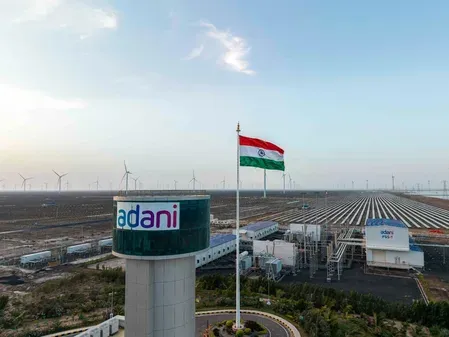
Adani Green Energy has become the first renewable energy company in India to cross 20 GW of operational capacity — built almost entirely through greenfield projects in under a decade. With the world's largest BESS deployment outside China and a 50 GW target by 2030, AGEL is repositioning itself as a global clean energy heavyweight, not just an Indian one.
Key Takeaways
Adani Green Energy Limited (AGEL) crossed 20 GW of operational renewable capacity on 1 July 2025 , the first Indian renewable firm to do so.
The company generates over 52 billion units of clean electricity annually — nearly 3% of India's total electricity consumption.
AGEL added 5,051 MW in FY26 , the highest annual addition by any renewable company outside China .
The company has commissioned 3.55 GWh of Battery Energy Storage Systems — the world's largest BESS deployment outside China.
AGEL targets 50 GW of renewable capacity by 2030 , with Khavda, Kutch as the centrepiece of its next growth phase.
Plans include adding 10 GWh of battery storage in FY27 and scaling to 50 GWh over five years.
Adani Green Energy Limited (AGEL) on Wednesday, 1 July 2025, announced it has crossed 20 gigawatts (GW) of operational renewable energy capacity, becoming the first renewable energy company in India to reach this landmark — achieved predominantly through greenfield development. The company now generates over 52 billion units of clean electricity annually, accounting for nearly 3% of India's total electricity consumption.
Scale of the Achievement
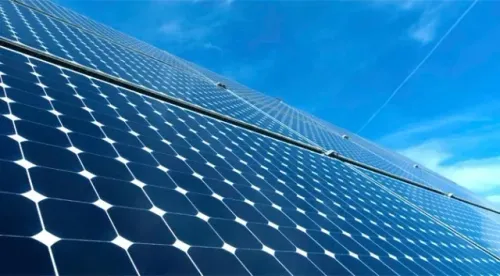
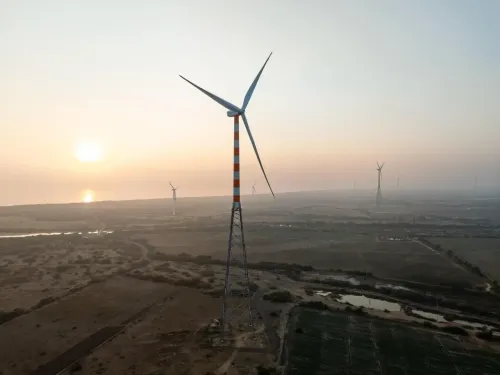
AGEL's operational portfolio now comprises approximately 14.2 GW of solar, 2.7 GW of wind, and 3.3 GW of wind-solar hybrid capacity. The company added 5,051 megawatts (MW) in FY26 alone — the highest annual renewable capacity addition by any company outside China.
The milestone was reached within a decade of commissioning AGEL's first project at Kamuthi, Tamil Nadu, in 2016, making it India's largest and fastest greenfield renewable energy capacity build-out.
What the Leadership Said
'Surpassing 20 GW demonstrates what disciplined execution and long-term vision can achieve. Today, AGEL, along with our efficient team and longstanding partners, delivers renewable electricity almost equivalent to the annual power requirement of Mumbai and New Delhi combined, reinforcing the country's energy security while accelerating its clean energy transition,' said Sagar Adani, Executive Director, AGEL.
Adani had also addressed the inaugural Adani Green Energy Dialogue during London Climate Action Week at The Science Museum, London, last month, where he stressed the need to accelerate electrification through renewable energy integrated with large-scale storage for reliable, round-the-clock clean power.
Battery Storage: A Global First Outside China
Beyond generation capacity, AGEL has commissioned 3.55 GWh of Battery Energy Storage Systems (BESS) — the world's largest such deployment outside China and one of the fastest executed globally. 'As renewable energy assumes a larger share of India's power mix, battery storage is becoming central to delivering reliable, dispatchable clean power,' Sagar Adani said.
The company plans to add 10 GWh of battery storage in FY27 and scale its storage portfolio to 50 GWh over the next five years.
What Comes Next: The Road to 50 GW
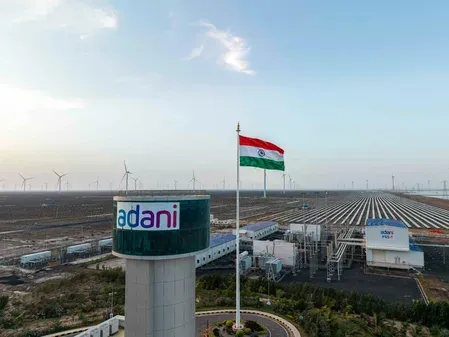
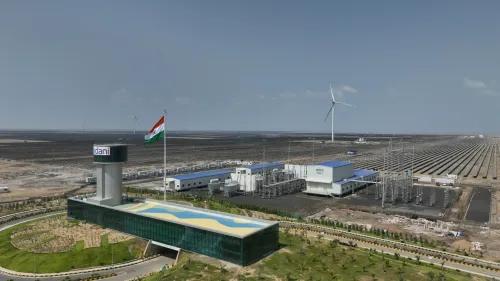
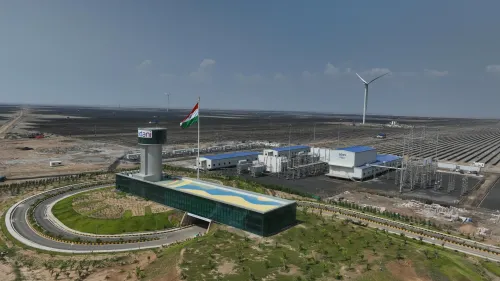
AGEL's next phase of growth is anchored at Khavda in Kutch, Gujarat — the site of the world's largest renewable energy plant currently under development. The company is targeting a total portfolio of 50 GW of renewable energy by 2030, which would place it among the largest clean energy producers globally. This expansion comes as India races toward its own national target of 500 GW of non-fossil fuel capacity by 2030.
Point of View
And the numbers are hard to dispute. But the more consequential signal is AGEL's BESS play: at 3.55 GWh already commissioned and 50 GWh targeted, it is betting that storage, not just generation, will define the next decade of Indian power. That bet aligns with where grid operators are heading, but execution at that scale has no domestic precedent. The 50 GW by 2030 target also implies doubling capacity in five years — ambitious even by AGEL's own track record, and contingent on land, grid evacuation, and financing conditions that remain uncertain.
NationPress
29 Sept 2026
Frequently Asked Questions
What is the 20 GW milestone achieved by Adani Green Energy?
Adani Green Energy Limited (AGEL) has crossed 20 gigawatts of operational renewable energy capacity, making it the first renewable energy company in India to reach this mark, built predominantly through greenfield development rather than acquisitions.
How significant is AGEL's annual electricity generation?
AGEL generates over 52 billion units of clean electricity annually, which represents nearly 3% of India's total electricity consumption — roughly equivalent to the combined annual power requirement of Mumbai and New Delhi.
What is AGEL's battery storage achievement?
AGEL has commissioned 3.55 GWh of Battery Energy Storage Systems (BESS), the world's largest such deployment outside China. The company plans to add 10 GWh of storage in FY27 and reach 50 GWh over the next five years.
What is AGEL's renewable energy target for 2030?
AGEL is targeting 50 GW of total renewable energy capacity by 2030. Its next major growth phase is centred on Khavda in Kutch, Gujarat, the site of the world's largest renewable energy plant currently under development.
How fast has AGEL grown since its first project?
AGEL commissioned its first renewable energy project at Kamuthi, Tamil Nadu, in 2016. Reaching 20 GW in under a decade makes it India's fastest greenfield renewable energy capacity build-out. In FY26 alone, it added 5,051 MW — the highest annual addition by any company outside China.