Adani Group backing Viksit Bharat 2047 with large-scale infra push: Dr Priti Adani
Synopsis
At a Varanasi symposium on ancient wisdom, Adani Foundation Chairperson Dr Priti Adani framed the Adani Group's $100 billion energy-transition pledge and the world's largest planned renewable energy park at Khavda as concrete contributions to India's Viksit Bharat 2047 goal — positioning corporate infrastructure as the bridge between ancient duty and modern development.
Key Takeaways
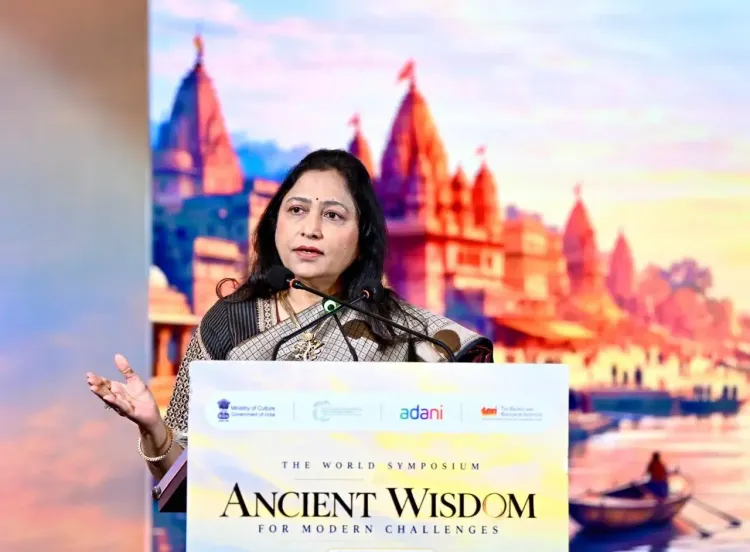
Dr Priti Adani addressed the World Symposium on 'Ancient Wisdom for Modern Challenges' in Varanasi on 2 November .
The Adani Group has committed more than $100 billion towards energy-transition infrastructure.
The group's Khavda project in Gujarat is described as the world's largest renewable energy park, with a planned capacity of 30 GW .
Dr Priti Adani said India still faces critical challenges including poverty , malnutrition , illiteracy , and last-mile electricity access.
She urged businesses to place sustainability at the core of operations and prioritise duty over self-interest, drawing on India's ancient wisdom.
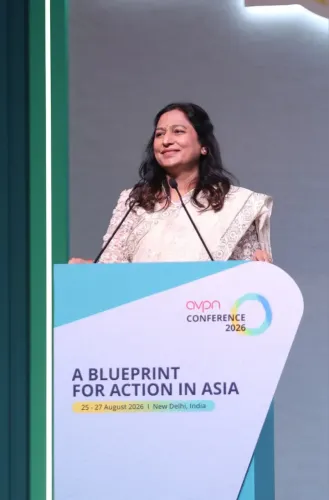
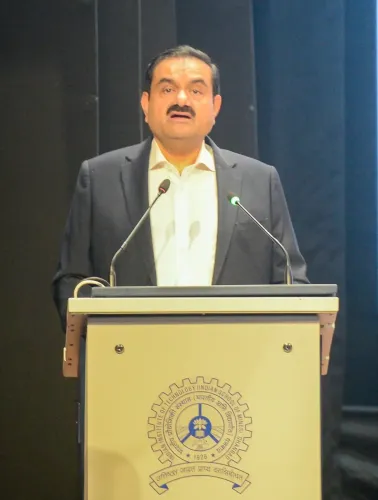
Adani Foundation Chairperson Dr Priti Adani on Monday, 2 November said the Adani Group has been rolling out large-scale infrastructure projects to address India's most pressing developmental challenges and advance the country's goal of becoming a developed nation by 2047. She was speaking at the World Symposium on 'Ancient Wisdom for Modern Challenges' in Varanasi.
Infrastructure as a Development Imperative
Dr Priti Adani stressed that India continues to grapple with structural challenges — including poverty, malnutrition, illiteracy, and uneven access to electricity — and that the private sector bears a responsibility to contribute meaningfully to resolving them.
'A vast country like India continues to face critical challenges such as poverty, malnutrition, illiteracy and last-mile access to necessities like electricity,' she said. 'At the Adani Group, we have implemented large-scale infrastructure projects to address India's challenges and contribute towards the vision of a developed nation by 2047.'
Sustainability at the Core
Drawing on ancient Indian thought, Dr Priti Adani urged businesses to embed sustainability into their core operations and prioritise duty over self-interest. She invoked yoga and millets as examples of India's timeless wisdom finding global relevance today — yoga for balancing mind and body, and millets for nutrition, climate resilience, and food security.
'We believe sustainability cannot simply remain a chapter in the annual report. Sustainability must be put into practice,' she said.
$100 Billion Energy Transition Commitment
Highlighting concrete commitments, Dr Priti Adani said the Adani Group has pledged more than $100 billion towards energy-transition infrastructure. She pointed to the group's renewable energy project at Khavda in Gujarat as a flagship example, describing it as the world's largest renewable energy park with a planned capacity of 30 GW from combined solar and wind power generation.
This comes amid a broader national push under the government's Viksit Bharat vision, which seeks to transform India into a fully developed economy within the next two decades. Large conglomerates have increasingly positioned their infrastructure and energy investments as aligned with this national roadmap.
Ancient Wisdom, Modern Application
The World Symposium's theme provided Dr Priti Adani a platform to connect India's philosophical heritage with contemporary business strategy. Her remarks reflect a growing trend among Indian corporate leaders to frame ESG and sustainability commitments within a cultural and civilisational context, rather than purely in Western corporate governance terms.
Notably, the Adani Foundation has been active in rural education, healthcare, and skill development alongside the group's infrastructure projects. Whether such philanthropic efforts keep pace with the scale of the group's commercial footprint remains a subject of ongoing scrutiny.
The Khavda project in Gujarat, if completed as planned, would mark a significant milestone in India's renewable energy transition, which targets 500 GW of non-fossil fuel capacity by 2030.
Point of View
And aligning its infrastructure narrative with the nationally resonant Viksit Bharat frame is a deliberate reputational move. The $100 billion energy-transition pledge is substantial, but the Khavda project's 30 GW target is still 'planned capacity', not commissioned megawatts. India's 500 GW renewable target by 2030 will need far more than one conglomerate's ambition; the real question is execution speed and grid integration. Invoking ancient wisdom at a symposium is effective optics, but investors and citizens will ultimately judge the group on delivered gigawatts and community outcomes, not philosophy.
NationPress
2 Nov 2026
Frequently Asked Questions
What did Dr Priti Adani say at the Varanasi symposium?
Dr Priti Adani, Chairperson of the Adani Foundation, said the Adani Group has been implementing large-scale infrastructure projects to address India's development challenges and support the Viksit Bharat 2047 vision. She also called on businesses to embed sustainability into their core operations, drawing on India's ancient wisdom.
How much has the Adani Group committed to energy transition?
The Adani Group has committed more than $100 billion towards energy-transition infrastructure, according to Dr Priti Adani's remarks at the symposium. A key component is the Khavda renewable energy park in Gujarat, planned at 30 GW of solar and wind capacity.
What is the Khavda renewable energy project?
The Khavda project, located in Gujarat, is described by the Adani Group as the world's largest renewable energy park, with a planned generation capacity of 30 GW from solar and wind power. It is a flagship element of the group's energy-transition strategy.
What is the Viksit Bharat 2047 vision?
Viksit Bharat 2047 is India's national goal of becoming a fully developed nation by the centenary of its independence. It encompasses targets across infrastructure, energy, education, and economic growth, with both government and private sector stakeholders expected to contribute.
Why did Dr Priti Adani reference yoga and millets in her speech?
Dr Priti Adani used yoga and millets as examples of India's ancient wisdom finding contemporary global relevance — yoga for its mind-body balance and millets for their role in modern conversations on nutrition, climate resilience, and food security. She used these examples to argue that sustainability is rooted in India's cultural heritage, not just a Western corporate concept.