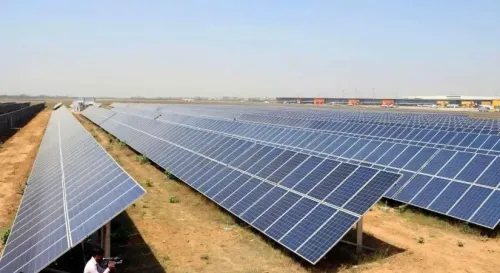
Adani Solar ranks 6th globally in Wood Mackenzie's 2026 PV module list

Synopsis
Adani Solar has climbed to sixth place in Wood Mackenzie's 2026 global PV module rankings — the only Indian firm in the top 10 and two spots higher than last year. With a Grade A rating, a 10 GW expansion underway at Mundra, and India's module capacity doubling to 74 GW in just one year, this signals a genuine structural shift in global solar supply chains.
Key Takeaways
Adani Solar ranked 6th in Wood Mackenzie's Global PV Module Manufacturer Rankings 2026 , up from 8th the previous year.
The company received a 'Grade A' classification — the only Indian manufacturer in the global top 10.
Adani Solar is expanding its Mundra, Gujarat facility to 10 GW annual capacity; currently operates 4 GW each of cell and module capacity.
Domestic solar module sales surged 95 per cent YoY to 1,459 MW in Q4 FY26 .
India's module manufacturing capacity rose from 38 GW to 74 GW between March 2024 and March 2025 , per MNRE data.
Adani Wind is separately the only Indian company in the Bloomberg NEF Global Top 15 wind turbine manufacturers list .
Adani Solar has secured the sixth position in Wood Mackenzie's 'Global Solar Photovoltaic (PV) Module Manufacturer Rankings 2026', making it the highest-ranked Indian firm in the annual global assessment, the company announced on Wednesday, 10 June 2025. The energy research and consultancy firm awarded Adani Solar a 'Grade A' classification, recognising its performance across manufacturing capability, technology maturity, financial health, supply chain resilience, and operational metrics.
Key Developments
Adani Solar, the solar manufacturing arm of Adani New Industries Ltd (ANIL), climbed two spots from its previous eighth-place ranking, and is now the only Indian manufacturer to feature in the global top 10. The Wood Mackenzie report evaluated 48 solar module manufacturers worldwide on parameters including capacity utilisation, technology maturity, financial performance, supply chain resilience, and operational strength.
Notably, Adani Wind, also under ANIL, holds the distinction of being the only Indian company on the Bloomberg NEF Global Top 15 wind turbine manufacturers list — underscoring the conglomerate's dual footprint in renewable energy rankings.
Manufacturing Capacity and Expansion Plans
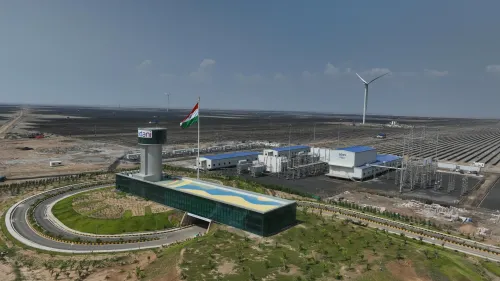
Adani Solar currently operates 2 GW of ingot and wafer capacity, alongside 4 GW each of solar cell and module manufacturing capacity. The company is in advanced stages of expanding its integrated facility at Mundra, Gujarat, to 10 GW of annual production capacity — a scale that would place it among the largest solar manufacturers outside China.
Domestic solar module sales surged 95 per cent year-on-year to 1,459 MW during Q4 FY26, reflecting strong demand momentum. The company has also consistently featured as a top performer in independent solar module reliability assessments conducted by Kiwa PVEL.
India's Broader Solar Manufacturing Push
The ranking arrives at a strategically significant moment for India's clean energy ambitions. According to data from the Ministry of New and Renewable Energy (MNRE), domestic solar module manufacturing capacity nearly doubled — rising from 38 GW in March 2024 to 74 GW in March 2025. Cell capacity expanded even faster, growing from 9 GW to 25 GW over the same period, driven by Production-Linked Incentive (PLI) schemes and protective customs duties on imports.
A recent Morgan Stanley report identified renewable energy as the central pillar of India's medium-term strategy to structurally reduce external energy dependence — a framing that lends geopolitical weight to rankings such as this one. This is the third consecutive year in which Indian manufacturers have improved their standing in Wood Mackenzie's global assessment, reflecting a structural shift in global solar supply chains away from near-total Chinese dominance.
What This Means for India's Clean Energy Goals
India has set an ambitious target of 500 GW of non-fossil fuel capacity by 2030. Adani Solar's rise in global rankings is seen as validation that domestic manufacturers can compete on quality and scale, not just cost. The Mundra expansion, once complete, would represent one of the largest vertically integrated solar manufacturing complexes outside of China, covering ingot, wafer, cell, and module production under a single roof.
With PLI disbursements accelerating and customs duties curbing cheap imports, analysts expect further consolidation among domestic players — and potentially more Indian names entering Wood Mackenzie's top tier in coming years.
Point of View
But the more consequential number is India's module capacity doubling to 74 GW in a single year — that is a policy-driven structural shift, not just one company's achievement. The real test is whether domestic quality can match scale: Wood Mackenzie's methodology weights technology maturity and financial health, not just output, which makes this ranking harder to game than a capacity leaderboard. What mainstream coverage underplays is the supply chain risk concentration: if Adani Solar is the sole Indian name in the global top 10, India's manufacturing ambitions remain heavily dependent on a single private conglomerate — a vulnerability that PLI policy has not yet diversified away from.
NationPress
23 Sept 2026
Frequently Asked Questions
What is Wood Mackenzie's Global PV Module Manufacturer Rankings?
It is an annual assessment by energy research firm Wood Mackenzie that evaluates solar photovoltaic module manufacturers worldwide on criteria including manufacturing capacity, technology maturity, financial health, supply chain resilience, and operational performance. The 2026 edition assessed 48 manufacturers globally.
Why is Adani Solar's ranking significant for India?
Adani Solar is the only Indian manufacturer in the global top 10, ranking sixth with a Grade A classification — up from eighth the previous year. The ranking signals that Indian solar manufacturers are now competing on quality and scale, not just cost, at a time when India is targeting 500 GW of non-fossil fuel capacity by 2030.
What is Adani Solar's current and planned manufacturing capacity?
Adani Solar currently operates 2 GW of ingot and wafer capacity and 4 GW each of solar cell and module manufacturing. It is in advanced stages of expanding its integrated Mundra, Gujarat facility to 10 GW of annual capacity.
How fast has India's solar manufacturing capacity grown?
According to MNRE data, India's domestic solar module capacity nearly doubled from 38 GW in March 2024 to 74 GW in March 2025, while cell capacity grew from 9 GW to 25 GW in the same period, driven by PLI schemes and customs duties on imports.
How did Adani Solar perform in reliability assessments?
Adani Solar has consistently been rated a top performer in independent solar module reliability assessments conducted by Kiwa PVEL, a globally recognised testing and certification body for solar products.