Adhir Chowdhury writes to Bengal CM over animal slaughter notice amid Murshidabad unrest
Synopsis
Congress leader Adhir Ranjan Chowdhury has written to West Bengal CM Suvendu Adhikari over a May 13 animal slaughter notice that has unsettled Murshidabad — a district where the minority community forms the majority. Rather than demanding a rollback, Chowdhury is proposing demarcated zones for religious practices, a pragmatic but politically loaded ask.
Key Takeaways
Adhir Ranjan Chowdhury wrote to West Bengal CM Suvendu Adhikari on 17 May 2026 over the state's animal slaughter notice.
The 13 May 2026 notice mandates a fit-for-slaughter certificate before slaughtering bulls, bullocks, cows, calves, buffaloes, and related animals.
The notice also bans public slaughter and protects enforcement officials from obstruction.
Murshidabad district , where the minority community constitutes the majority of the population, has seen particular unrest.
Chowdhury proposed that the district administration identify and demarcate specific locations for communities to practise religious customs.
The Chief Minister's office had not publicly responded as of the time of reporting.
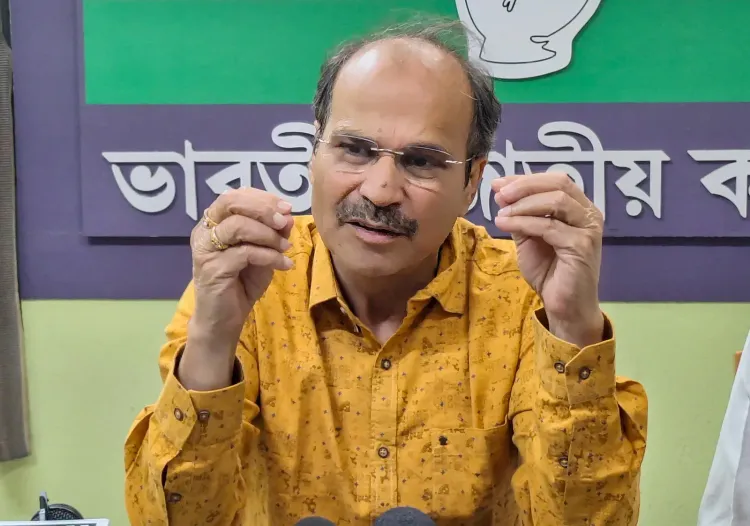
Senior Congress leader Adhir Ranjan Chowdhury on Sunday, 17 May 2026, wrote a formal letter to West Bengal Chief Minister Suvendu Adhikari over the state government's 13 May public notice on 'Animal Slaughter Guidelines', flagging that the directive has triggered confusion and unrest — particularly in Murshidabad district, where the minority community constitutes the majority of the population.
What the Notice Says
The West Bengal government, on 13 May 2026, made it mandatory to obtain a fit-for-slaughter certificate before slaughtering bulls, bullocks, cows, calves, buffaloes, buffalo calves, and castrated buffaloes. The notice also prohibited public slaughter of these animals and directed that officials conducting enforcement inspections must not face obstruction. The order has since drawn sharp reactions from minority community groups in several districts.
What Chowdhury Wrote
In his letter, Chowdhury stated: 'I am writing with the intention of bringing to your notice the fact that the Public Notice dated 13th May, 2026, issued by the Government of West Bengal regarding adherence to the Animal Slaughter Guidelines has been causing confusion and also unrest, which needs to be addressed.'
The Congress leader underscored that Murshidabad, as a district where the minority community forms the demographic majority, has been particularly affected. He wrote that the notice has caused 'consternation in the Community', given the multifarious cultural and religious traditions practised across the state.
Chowdhury's Proposed Solution
Rather than demanding a rollback of the notice, Chowdhury urged the Chief Minister to direct the district administration to identify and demarcate specific locations where communities could practise their socio-religious customs without conflict. He argued that such designated spaces would be 'an ideal solution for putting to rest the unease the Notice may be causing, particularly amongst the people of the Minority community.'
This approach, he suggested, would allow different communities to continue their customary religious practices while remaining within the regulatory framework set by the state.
Political and Community Context
The slaughter guidelines notice has come at a politically sensitive moment for West Bengal. Murshidabad, which shares a border with Bangladesh and has a predominantly Muslim population, has historically been a flashpoint for communal tension. The Congress, which has a residual base in the district, appears to be positioning itself as a mediating voice between the state administration and minority community concerns.
Notably, this is not the first time animal slaughter regulations have stirred controversy in the state — similar guidelines in other states have led to prolonged legal and political disputes. Whether the Adhikari government responds to Chowdhury's letter with administrative action or treats it as a political overture remains to be seen.
What Happens Next
The Chief Minister's office has not publicly responded to the letter as of the time of reporting. Community organisations in Murshidabad are reportedly awaiting clarity from the district administration on how the guidelines will be enforced on the ground. The Congress's move signals that the issue is likely to escalate into a broader political debate in the run-up to local body elections in the state.
Point of View
But it sidesteps the harder question: whether the slaughter guidelines themselves are constitutionally sound and proportionately enforced. West Bengal has a long history of communal fault lines being activated by regulatory overreach, and the Adhikari government's silence — or response — to this letter will signal how seriously it takes minority grievance management ahead of the next electoral cycle.
NationPress
14 Oct 2026
Frequently Asked Questions
What is the West Bengal animal slaughter notice about?
The West Bengal government issued a public notice on 13 May 2026 making it mandatory to obtain a fit-for-slaughter certificate before slaughtering bulls, bullocks, cows, calves, buffaloes, buffalo calves, and castrated buffaloes. The notice also bans public slaughter of these animals and shields enforcement officials from obstruction.
Why has the notice caused unrest in Murshidabad?
Murshidabad is a district where the minority community — predominantly Muslim — constitutes the majority of the population. The slaughter guidelines directly affect customary religious practices in the district, leading to what Chowdhury described as 'consternation in the Community.'
What did Adhir Ranjan Chowdhury ask the Chief Minister to do?
Chowdhury urged Chief Minister Suvendu Adhikari to intervene and direct the district administration to identify and demarcate specific locations where different communities can practise their socio-religious customs without conflict, rather than rolling back the notice entirely.
Has the West Bengal government responded to Chowdhury's letter?
As of the time of reporting, the Chief Minister's office had not publicly responded to Chowdhury's letter. Community organisations in Murshidabad are reportedly awaiting clarity on how the guidelines will be enforced on the ground.
What is the broader political significance of this controversy?
The dispute signals a broader tension over religious practice and regulatory authority in West Bengal ahead of local body elections. The Congress's intervention positions it as a mediating voice in Murshidabad, a district with a historically significant Muslim population and a residual Congress base.