Agri Minister Chouhan launches Nayi Chetna Abhiyan 5.0
Synopsis
Union Agriculture Minister Shivraj Singh Chouhan and WCD Minister Annapurna Devi launched Nayi Chetna Abhiyan 5.0 in New Delhi. Chouhan said it is not a ritual but a bid to change attitudes on violence against women, village by village.
Key Takeaways
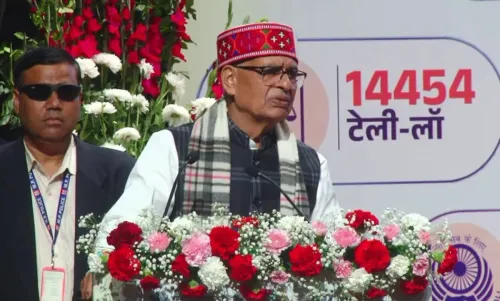
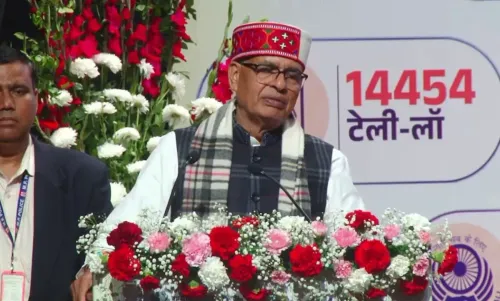
Union Agriculture Minister Shivraj Singh Chouhan launched Nayi Chetna Abhiyan 5.0 in New Delhi on 25 November 2026 with WCD Minister Annapurna Devi .
He said the campaign is not a ritual but an effort to change society’s thinking and behaviour on violence and discrimination against women.
He argued that schemes and laws already exist, and that changing social attitudes is equally necessary.
The stated aim is to take a message of equality, safety and respect to every village.
The approach sits alongside earlier dual-track efforts such as Beti Bachao Beti Padhao (2015) and laws including the Protection of Women from Domestic Violence Act.
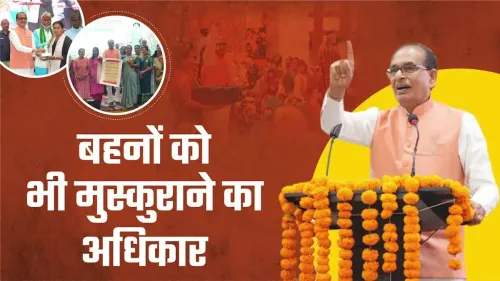
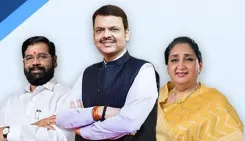
Union Agriculture Minister Shivraj Singh Chouhan marked 25 November 2026 in New Delhi with a blunt claim: a women’s campaign is worthless if it stays a ritual. With Union Women and Child Development Minister Annapurna Devi, he launched Nayi Chetna Abhiyan 5.0, tying economic and political empowerment to an end to violence and discrimination against women.
In a post on X, Chouhan said the campaign is no karmakaand (ritual), but an effort to change society’s thinking and behaviour. Economic, educational, social and political empowerment, he argued, must go with an end to violence and discrimination. The government is making schemes and laws already exist, he wrote; changing how society thinks is just as necessary.
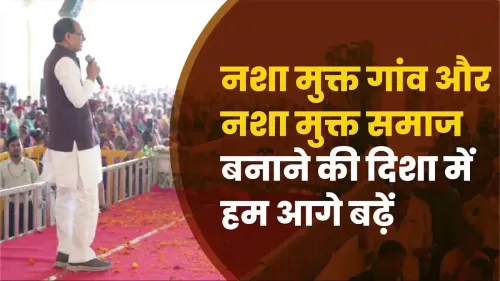
He pledged to carry a message of equality, safety and respect — samaanata, suraksha aur samman — village by village. Come, he said, let us build an atmosphere in which violence and discrimination against women have no place.
Not a ritual, a shift in thinking
That phrasing is the heart of the pitch. Chouhan is not announcing a new statute. He is arguing that the missing piece is attitude — the quiet rules that decide whether a woman in a village can claim the safety the law already promises.
India has long run this two-track approach. Legal frameworks such as the Protection of Women from Domestic Violence Act sit beside welfare schemes aimed at economic and social empowerment. Awareness campaigns have been used to attack attitudes that courts cannot reach. Rural women remain the constituency this dual strategy is meant to serve.
Beti Bachao’s logic, taken to the last mile
Beti Bachao Beti Padhao, launched in 2015, was built on the same wager: reverse a declining child sex ratio, and push girls’ education, by changing both policy and public mind. Nayi Chetna Abhiyan 5.0, as Chouhan described it, continues that dual emphasis — delivery plus behavioural change, with the village as the real theatre.
The launch was in the capital. The destination he named is every village. What follows will be the test: whether village-level activities actually trail the Delhi event in the months ahead. Schemes and laws, he said, are already there. The thinking still has to catch up.
Point of View
Whose brief is agriculture and rural development, pairing with the WCD minister underlines that the last mile for women’s safety is the village, not only the statute book. As described, Nayi Chetna Abhiyan 5.0 is less a new entitlement than an attempt to push behavioural change alongside existing schemes such as Beti Bachao Beti Padhao. The political test will be whether village-level activity actually follows the capital-city launch.
NationPress
25 Nov 2026
Frequently Asked Questions
What is Nayi Chetna Abhiyan 5.0?
Nayi Chetna Abhiyan 5.0 is a campaign launched in New Delhi by Union Agriculture Minister Shivraj Singh Chouhan and Union WCD Minister Annapurna Devi to change social thinking on violence and discrimination against women. Chouhan said it is not a ritual and that a message of equality, safety and respect would be taken to every village.
Who launched Nayi Chetna Abhiyan 5.0?
Union Agriculture Minister Shivraj Singh Chouhan launched it with Union Women and Child Development Minister Annapurna Devi. The launch was announced in Chouhan’s post on X on 25 November 2026.
When and where was Nayi Chetna Abhiyan 5.0 launched?
It was launched on 25 November 2026 in New Delhi. Chouhan said the campaign’s message is meant to travel from the capital to every village.
What did Shivraj Singh Chouhan say about laws and schemes?
He said the government is making schemes and that laws already exist, but changing society’s thinking is equally necessary. He argued that economic, educational, social and political empowerment must be paired with an end to violence and discrimination against women.
How does this campaign fit existing women welfare policy?
Central governments have long combined laws such as the Protection of Women from Domestic Violence Act with welfare schemes and awareness drives. Beti Bachao Beti Padhao, launched in 2015, followed a similar mix of policy and attitude change; village-level rollout is what to watch next.