AGuH Implements Covert Tactics: Expansion in Northern Regions while Remaining Under the Radar in J&K
Synopsis
Intelligence agencies are increasingly concerned about the resurgence of the Ansar Ghazwat-ul-Hind (AGuH), an Al-Qaeda-linked group, as they adopt a new strategy focusing on operations outside Jammu and Kashmir.
Key Takeaways
AGuH is linked to Al-Qaeda and was founded in 2017.
After a period of dormancy, the group is planning a resurgence.
They aim to support Jaish-e-Mohammed while avoiding direct engagement in Jammu and Kashmir.
AGuH is establishing networks across North India.
Funding sources may include cryptocurrency.
New Delhi, Feb 28 (NationPress) Intelligence agencies have raised alarms regarding the resurgence of the Ansar Ghazwat-ul-Hind (AGuH), a group closely affiliated with Al-Qaeda.
This group was established by Zakir Rashid Bhat in July 2017 in Jammu and Kashmir. Known as Zakir Musa, he assumed leadership of the group with Al-Qaeda's endorsement, aiming to execute terrorist activities in Jammu and Kashmir. However, the organization faced significant setbacks and was largely suppressed by Indian security forces.
Initially a member of Hizbul Mujahideen, Musa broke away to create AGuH with Al-Qaeda's backing. His life ended in a confrontation in 2019 at Tral, Jammu and Kashmir.
After Musa's demise in 2019, AGuH opted for a quieter approach. In 2022, however, the group determined it was time for a resurgence, but with a revised strategy. They chose to support Jaish-e-Mohammed in carrying out operations within India. Al-Qaeda, which mentors AGuH, approved this plan but insisted that AGuH refrain from direct operations in Jammu and Kashmir.
Subsequently, AGuH decided to orchestrate operations across different regions of India from Jammu and Kashmir. This shift led to the establishment of the Faridabad module, which attracted several operatives motivated by the ideologies of AGuH and Jaish-e-Mohammed.
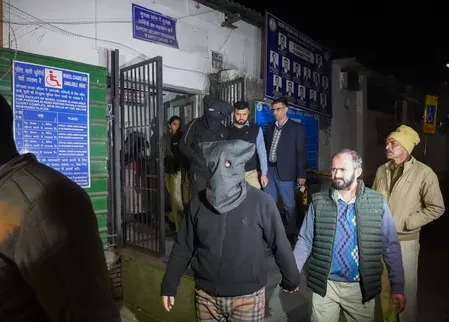
For instance, Umar Nabi, who executed the car bomb explosion near the Red Fort on November 10, 2025, was influenced by AGuH's ideology and was managed by Mufti Irfan, an asset for both AGuH and Jaish-e-Mohammed.
An official from the Intelligence Bureau indicated that AGuH intended to convey its resurgence when the Faridabad module plotted a series of attacks in Delhi and its adjoining regions. This operation aimed to announce the group’s return. The official remarked that this revival pattern is distinct. The ISI has been attempting to establish numerous homegrown modules in India and is increasingly relying on AGuH for these initiatives.
Another official elaborated that the goal is to replicate the Faridabad module's success across North India. The ISI envisions AGuH as the primary operative force for North India, utilizing its members to create new modules. Moreover, AGuH operatives in Jammu and Kashmir have been instructed to supervise these operations in North India.
Investigations reveal that these operations are not being directed from Pakistan. AGuH has successfully formed a dedicated team of operatives in both Jammu and Kashmir and Nepal.
During a recent high-level meeting at the Ministry of Home Affairs, the AGuH was a focal point of discussion. The Intelligence agencies are well aware of the plans that this organization harbors. Nonetheless, it is crucial to trace the funding sources intended for such expansive operations.
Officials speculate that cryptocurrency may be utilized to finance these activities. Recent months have seen increased communications intercepted by agencies regarding AGuH's revival efforts. Handlers from both Nepal and Jammu and Kashmir maintain consistent contact with operatives across various regions of North India.
Eventually, AGuH is expected to aim for significant operations in Jammu and Kashmir, although current conditions make this impractical. Any attempts to operate in Kashmir would likely provoke substantial backlash. Consequently, AGuH will prioritize establishing modules akin to the one in Faridabad throughout North India while keeping a low profile in Jammu and Kashmir. If they are apprehended in J&K, it would severely undermine their ambitions in North India, the official added.
Point of View
The implications for national safety are profound. Continuous vigilance and proactive measures will be essential to counter any threats posed by this organization.
NationPress
30 Sept 2026
Frequently Asked Questions
What is the current strategy of AGuH?
AGuH is focusing on supporting other groups like Jaish-e-Mohammed to conduct operations in India while maintaining a low profile in Jammu and Kashmir.
How is AGuH funding its operations?
Officials suspect that AGuH may be using cryptocurrency to finance its operations.
What regions is AGuH targeting?
AGuH is primarily targeting regions in North India, aiming to set up operational modules similar to those in Faridabad.