Are Investigators Connecting the Red Fort Cell to a Plot Supported by the ISI to Rejuvenate AGuH with Kashmiri Elements?

Synopsis
The investigation into the Delhi Red Fort blasts is uncovering a significant plot aimed at reviving the Ansar Ghazwat-ul-Hind (AGuH) with local Kashmiri support. With connections to the ISI and a strategy to operate outside Kashmir, the implications of this plot could impact regional security.
Key Takeaways
Investigation into the Red Fort blasts is expanding.
AGuH aims to establish a local terror module.
Article 370's abrogation altered the operational landscape.
Maulvi Irfan Ahmed is central to the revival efforts.
Collaboration with the ISI suggests a strategic shift in tactics.
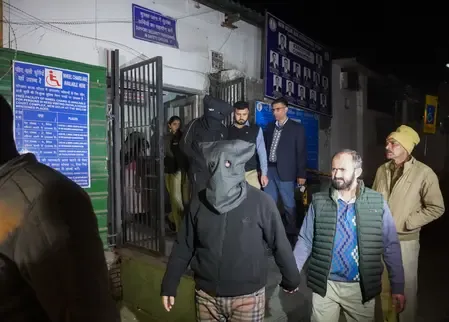
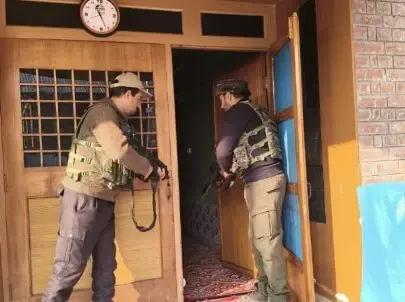
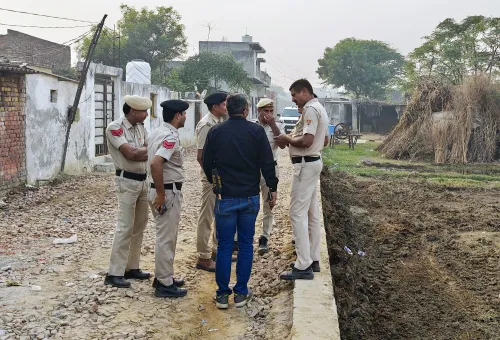
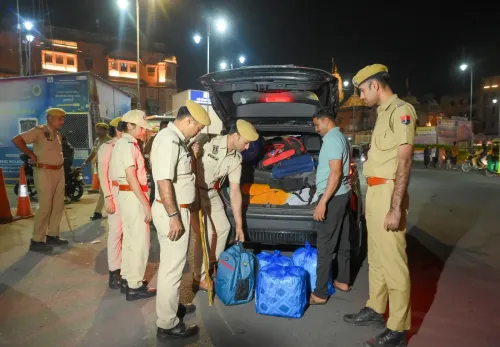
New Delhi, Dec 5 (IAS) The investigation surrounding the Delhi Red Fort blasts is expanding significantly, revealing attempts to rejuvenate the Ansar Ghazwat-ul-Hind (AGuH). The objective was to establish a localized terror unit to divert scrutiny away from Pakistan, as uncovered by the inquiry.
The AGuH, an offshoot of Al Qaeda in Jammu and Kashmir, had begun to gain substantial traction during its inception. However, the abrogation of Article 370 transformed the dynamics in the region, leading to the disbanding of the AGuH by 2021, with its final commander eliminated.
This development was met with discontent from Maulvi Irfan Ahmed, a cleric based in Srinagar, who is now a focal point in the ongoing investigation. Authorities believe he was instrumental in establishing the Faridabad module.
Initially, it was suspected that the module was formed by Jaish-e-Mohammad. While the Jaish's involvement is still being evaluated, investigators have discovered that Ahmed was eager to revive the AGuH, realizing that operating within Jammu and Kashmir was becoming increasingly difficult, necessitating a shift outside the Valley.
Reports indicate that Ahmed has been associated with the AGuH since its inception, harboring hopes of liberating J&K from Indian control. During his association with the group, he facilitated the movement of weapons and provided logistical support to its members.
Despite being an affiliate of Al Qaeda, the AGuH relied heavily on Jaish for operational assistance in Jammu and Kashmir. Following the abrogation of Article 370, the Jaish's activities in the Valley were significantly curtailed.
The AGuH struggled to function without support from Pakistan and its proxies, ultimately leading to its demise. An official noted that Ahmed's strategy was to launch attacks outside Kashmir by establishing a considerable module in Faridabad. This module, comprising individuals from the Valley, was a deliberate strategy to create an all-Kashmiri unit outside J&K to execute attacks.
For now, Ahmed's focus wasn't on targets in Jammu and Kashmir, but rather to use his recruits as an inspiration for other youth from the Valley. Another official highlighted that Ahmed aimed to motivate the Kashmiri youth to act beyond the Valley, hoping this would attract more individuals to join his terror group.
The overarching goal was to recruit as many youths as possible to reinvigorate the AGuH in Jammu and Kashmir. An official from the Intelligence Bureau stated that Ahmed anticipated the AGuH's collapse post-abrogation of Article 370. Furthermore, with Pakistan instructing its terror factions like Lashkar-e-Taiba and Jaish to remain subdued in the Valley, Ahmed recognized that the AGuH's operational viability was diminishing. Consequently, Ahmed was resolute in his mission to resurrect the group by forming a significant module outside J&K largely composed of local youths.
Officials report that his aim was to reinforce the AGuH's strength to nearly 500 youths from Jammu and Kashmir. This initiative aligned with the objectives of the ISI, which sought to establish a homegrown terror group after its attempts to reestablish Hizbul Mujahideen were unsuccessful.
Additionally, as the Financial Action Task Force (FATF) intensified scrutiny on Pakistan, it became essential for the ISI to have a terror group with Indian participants. The ISI was fully aware of Ahmed's plan and decided to provide comprehensive support. The intention was for a locally sourced module to remain operational in Jammu and Kashmir, and thus, the revival of the AGuH with local terrorists was sanctioned, according to an official.
Point of View
It is essential to approach the unfolding investigation with a commitment to factual reporting. The potential revival of the AGuH poses a serious threat to national security, necessitating vigilant scrutiny and a comprehensive understanding of the implications for both Jammu and Kashmir and broader Indian stability.
NationPress
30 Sept 2026
Frequently Asked Questions
Who is Maulvi Irfan Ahmed?
Maulvi Irfan Ahmed is a Srinagar-based cleric linked to the revival efforts of the AGuH and the establishment of a terror module in Faridabad.
How did the abrogation of Article 370 affect the AGuH?
The abrogation of Article 370 severely restricted the operational capabilities of groups like the AGuH, leading to its decline.
What role does the ISI play in this context?
The ISI is believed to be supporting the revival of the AGuH to create a local terror group in Jammu and Kashmir amid international scrutiny.
What are the implications of this investigation?
The revelations from the investigation indicate a potential resurgence of localized terrorism, posing threats to national security.