Ahmedabad 2008 blasts: Gujarat HC upholds death penalty for 38 convicts

Synopsis
Seventeen years after 21 bombs ripped through Ahmedabad in 70 minutes, the Gujarat High Court has confirmed death sentences for all 38 convicts sentenced by the trial court — one of the largest capital punishment affirmations in Indian legal history. The convicts can still approach the Supreme Court, but Tuesday's ruling is a decisive moment in a case that has defined the arc of India's anti-terror jurisprudence.
Key Takeaways
The Gujarat High Court on 7 July 2025 upheld death sentences for 38 convicts in the 2008 Ahmedabad serial bomb blasts case.
The court also dismissed appeals by 11 convicts sentenced to life imprisonment, confirming their terms as well.
The Division Bench heard arguments on a day-to-day basis since March 2025 before delivering its verdict.
The 26 July 2008 blasts involved 21 explosions in roughly 70 minutes , killing 56 people and injuring more than 200 .
The court ordered compensation: ₹10 lakh for families of the deceased, ₹5 lakh for grievous injury victims, and ₹1 lakh for those with simple injuries.
All 38 death-row convicts retain the right to challenge the verdict before the Supreme Court of India .
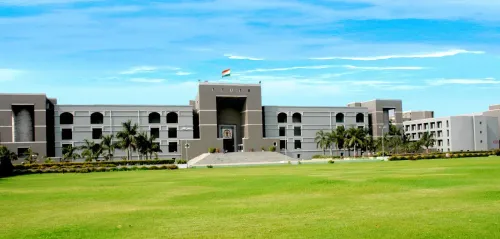
The Gujarat High Court on Tuesday, 7 July 2025, upheld death sentences for 38 convicts and confirmed life imprisonment for 11 others in the 2008 Ahmedabad serial bomb blasts case, closing the appeal stage of one of India's longest and most consequential terrorism trials. The Division Bench delivered its judgment after hearing arguments on a day-to-day basis since March 2025.
What the Court Decided
The High Court affirmed the findings of the special trial court, which had in February 2022 convicted 49 accused — sentencing 38 to death and 11 to imprisonment for the remainder of their natural lives. Both sets of convicts had challenged their sentences before the Division Bench; the state simultaneously sought statutory confirmation of the capital punishment awards, as required under Indian law.
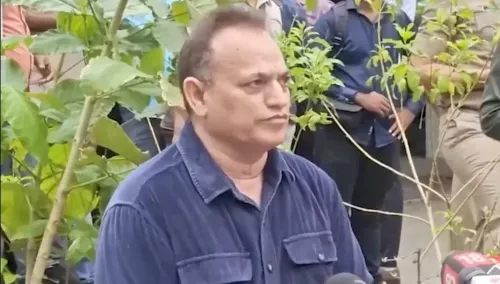
The court dismissed all appeals by the convicts and confirmed every death sentence handed down at the trial stage — an outcome that Special Public Prosecutor Amit Patel described as a full affirmation of the lower court's verdict.
What the Prosecutor Said
'The hearing in this case had been going on since March 2025 on a day-to-day basis. Today, the Division Bench of the Honourable Gujarat High Court delivered its judgment,' Patel said after the ruling.
Patel added that the detailed written judgment had not yet been uploaded to the court's portal at the time of his remarks. 'I will be able to comment on it in detail only after going through the full text of the judgment,' he said, indicating that a fuller legal analysis would follow once the order became available.
Compensation Ordered for Victims
Beyond the sentencing, the High Court directed financial compensation for those affected by the blasts. Families of those killed are to receive ₹10 lakh each; victims who suffered grievous injuries will receive ₹5 lakh; and those who sustained simple injuries are entitled to ₹1 lakh.
Background: The 2008 Ahmedabad Blasts
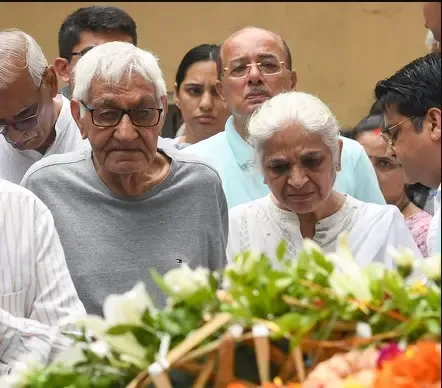
On 26 July 2008, 21 explosions tore through Ahmedabad within roughly 70 minutes, targeting buses, crowded public spaces, and hospitals. The attacks killed 56 people and injured more than 200. The Ahmedabad Crime Branch led the subsequent investigation, which culminated in a special court conviction in February 2022 — nearly 14 years after the blasts.
This is among the largest mass-casualty terrorist attacks on Indian soil since the 2006 Mumbai train bombings, and the trial is notable for the scale of its accused count and the length of proceedings.
What Happens Next
Tuesday's High Court ruling does not mark the end of the legal road. All 38 death-row convicts retain the right to challenge the verdict before the Supreme Court of India. Given the number of convicts and the gravity of the sentences, a Supreme Court challenge is widely anticipated. The detailed written judgment, once uploaded, will also be closely examined by legal experts for its reasoning on the application of the 'rarest of rare' doctrine.
Point of View
Which has in recent years shown greater caution on death penalty confirmation. The compensation amounts, while court-ordered, are modest relative to the scale of the tragedy and may reignite debate about victim reparation frameworks in terror cases. What this verdict does unambiguously establish is that India's special courts can process complex, multi-accused terrorism trials to conclusion — even if the timeline, spanning 17 years from blast to High Court ruling, remains a sobering commentary on the pace of justice.
NationPress
7 Jul 2026
Frequently Asked Questions
What did the Gujarat High Court rule in the 2008 Ahmedabad blasts case?
The Gujarat High Court upheld death sentences for 38 convicts and confirmed life imprisonment for 11 others on 7 July 2025, dismissing all appeals filed by the convicts and affirming the special trial court's February 2022 verdict.
What were the 2008 Ahmedabad serial bomb blasts?
On 26 July 2008, 21 explosions struck Ahmedabad within approximately 70 minutes, targeting buses, public spaces, and hospitals. The attacks killed 56 people and injured more than 200, making it one of the deadliest terrorist strikes on Indian soil in the 2000s.
Can the convicts appeal further after the High Court ruling?
Yes. All 38 death-row convicts retain the right to challenge the Gujarat High Court's verdict before the Supreme Court of India. A Supreme Court challenge is widely anticipated given the severity of the sentences.
What compensation has the court ordered for blast victims?
The Gujarat High Court directed ₹10 lakh to families of those killed, ₹5 lakh to victims who suffered grievous injuries, and ₹1 lakh to those who sustained simple injuries.
How long did the Ahmedabad blasts trial and appeals process take?
The blasts occurred on 26 July 2008. The special trial court delivered its conviction in February 2022 — nearly 14 years later. The High Court then heard appeals on a day-to-day basis from March 2025 before ruling on 7 July 2025, bringing the total legal timeline to approximately 17 years.