Gujarat HC upholds death for 38 in 2008 Ahmedabad serial blasts case
Synopsis
More than 16 years after 21 bombs tore through Ahmedabad in 70 minutes, the Gujarat High Court has confirmed death sentences for 38 convicts in one of India's deadliest terror attacks. The ruling also orders ₹10 lakh compensation for each of the 56 victims' families — a rare financial mandate in a terrorism judgment. Supreme Court appeals are expected.
Key Takeaways
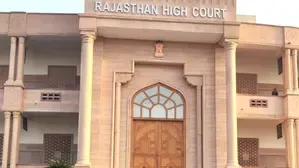
The Gujarat High Court on 7 July upheld the death penalty for 38 convicts in the 2008 Ahmedabad serial blasts case .
11 other convicts had their life imprisonment sentences confirmed; all appeals were rejected.
A Division Bench of Justice Alpesh Y Kogje and Justice Samir J Dave affirmed the special court's February 2022 verdict.
The court ordered ₹10 lakh compensation for families of each of the 56 people killed , and ₹1 lakh for each of the 200+ injured .
The 26 July 2008 attacks involved 21 explosions across Ahmedabad within 70 minutes , targeting buses, public spaces, and hospitals.
Convicts retain the right to appeal before the Supreme Court of India .
The Gujarat High Court on Tuesday, 7 July upheld the convictions and sentences of all 49 accused in the 2008 Ahmedabad serial bomb blasts case, confirming the death penalty for 38 convicts and life imprisonment for the remaining 11. A Division Bench of Justice Alpesh Y Kogje and Justice Samir J Dave affirmed the verdict originally delivered by a special court in February 2022, rejecting all appeals filed by the convicted persons.
What the Court Ordered
Beyond confirming the sentences, the High Court directed that families of the 56 people killed in the blasts receive compensation of ₹10 lakh each. The bench also ordered ₹1 lakh each for the more than 200 people injured in the attacks, according to details released following the verdict. Under Indian law, every death sentence awarded by a trial court must be confirmed by the relevant High Court before it can be executed — making Tuesday's ruling a mandatory procedural step as well as a substantive one.
The 2008 Ahmedabad Blasts: What Happened
The coordinated attacks unfolded on the evening of 26 July 2008, when 21 explosions ripped through Ahmedabad within approximately 70 minutes. Bombs were planted at buses, crowded public spaces, and — in a particularly calculated move — at two hospitals where survivors of the earlier blasts had been rushed for treatment. The attacks killed 56 people and injured more than 200, triggering one of the largest terrorism investigations in India's history. Police ultimately registered 35 FIRs and filed hundreds of charge sheets.
Scale of the Trial
The legal proceedings that followed were among the most extensive in Indian criminal history. The special court examined testimony from more than 1,100 witnesses and evaluated thousands of documentary and material exhibits before delivering its judgment in February 2022. Of the accused tried, 49 were convicted and 28 were acquitted. Following the special court's verdict, all convicted persons appealed to the Gujarat High Court, while the state government separately sought formal confirmation of the death sentences — a parallel process required by law.
What Happens Next
With the High Court's ruling, the convictions and sentences handed down by the special court remain fully in force. However, the legal process is not necessarily over. The convicts retain the right to challenge the High Court's judgment before the Supreme Court of India, and it is widely expected that appeals will be filed. This comes amid a broader national conversation about the pace of justice in major terrorism cases, with the 2008 blasts verdict arriving more than 16 years after the attacks occurred. The compensation orders for victims and their families mark a rare instance of financial relief being mandated alongside criminal sentencing in a terror case of this scale.
Point of View
But the 16-year gap between the attack and final High Court ruling raises hard questions about the pace of justice in India's most serious terror cases. The compensation orders — ₹10 lakh per family killed — are a step toward victim acknowledgment, but critics will note that no amount is adequate restitution for losses of this magnitude. The case now moves toward the Supreme Court, where the death sentences will face their most rigorous scrutiny. India's apex court has historically applied the 'rarest of rare' doctrine with considerable caution, meaning the final chapter of this case is far from written.
NationPress
6 Oct 2026
Frequently Asked Questions
What did the Gujarat High Court rule in the 2008 Ahmedabad serial blasts case?
The Gujarat High Court upheld death sentences for 38 convicts and confirmed life imprisonment for 11 others in the 2008 Ahmedabad serial bomb blasts case. The Division Bench affirmed the special court's February 2022 verdict and rejected all appeals filed by the convicted persons.
What happened in the 2008 Ahmedabad serial blasts?
On 26 July 2008, 21 coordinated bomb explosions struck Ahmedabad within approximately 70 minutes, targeting buses, public places, and two hospitals. The attacks killed 56 people and injured more than 200, making it one of the deadliest terror strikes in India's history.
How much compensation will victims' families receive?
The Gujarat High Court directed that families of each of the 56 people killed receive ₹10 lakh in compensation. Those injured in the blasts — more than 200 people — are entitled to ₹1 lakh each, as per the court's order.
Can the convicts appeal the Gujarat High Court's ruling?
Yes. The convicts retain the legal right to challenge the High Court's judgment before the Supreme Court of India. Given the magnitude of the sentences, appeals are widely expected to be filed.
How large was the trial in the 2008 Ahmedabad blasts case?
The trial was one of India's most extensive, involving more than 1,100 witnesses and thousands of documentary and material exhibits. Police filed 35 FIRs and hundreds of charge sheets; the special court convicted 49 accused and acquitted 28 in February 2022.