Joshi, Rajasthan CM Discuss MSP Wheat, Solar Push
Synopsis
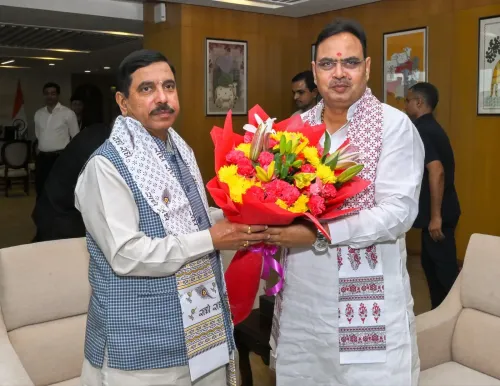
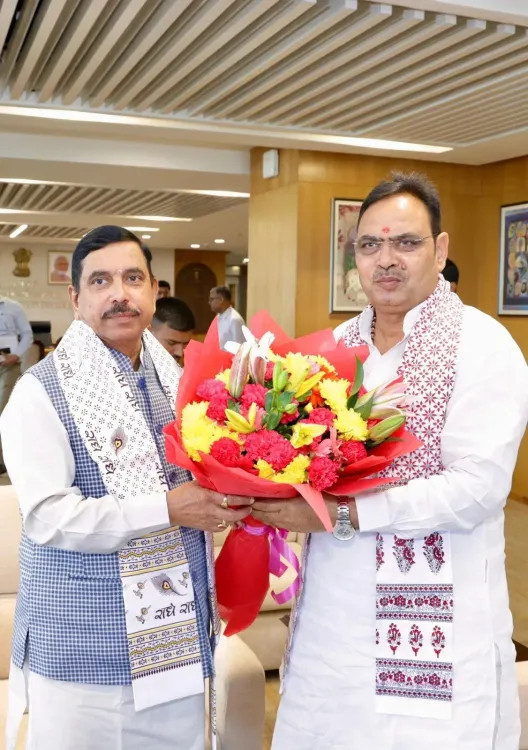
Union Minister Pralhad Joshi and Rajasthan CM Bhajanlal Sharma met at MNRE on 7 July 2026, reviewing rising wheat procurement under MSP, scientific storage expansion, and the push to accelerate PM Surya Ghar rooftop solar installations including the Utility-Led Aggregation model.
Key Takeaways
Pralhad Joshi and Rajasthan CM Bhajanlal Sharma met at the MNRE office on 7 July 2026 to review food distribution and renewable energy cooperation.
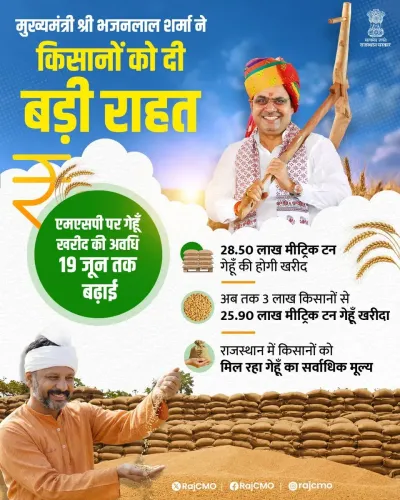
Wheat procurement under the MSP mechanism has recorded a significant increase over the last three Rabi Marketing Seasons in Rajasthan.
Both leaders discussed expanding scientific storage infrastructure to cut transportation costs and reduce post-harvest losses.
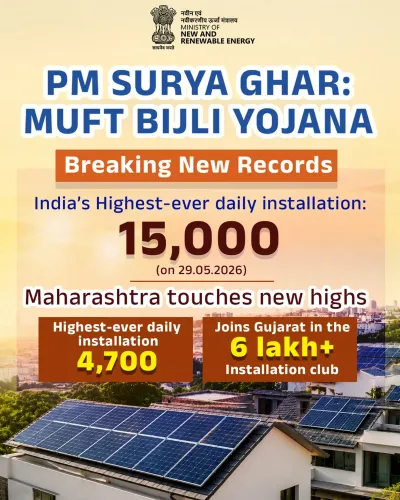
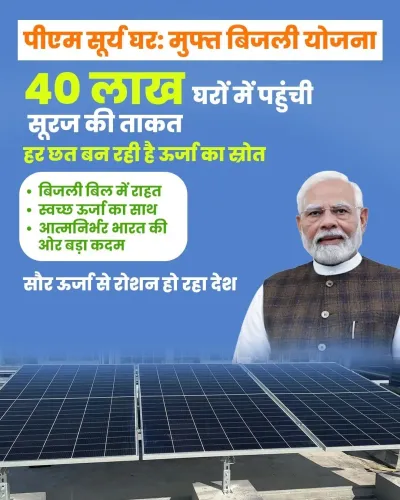
Joshi urged Rajasthan to accelerate rooftop solar installations under PM Surya Ghar: Muft Bijli Yojana , launched in February 2024 targeting one crore households .
The Utility-Led Aggregation (ULA) model — involving state power utilities in facilitating household solar adoption — was discussed as a key implementation pathway.
Joshi expressed confidence that Rajasthan will be central to India's clean energy transition under PM Narendra Modi .
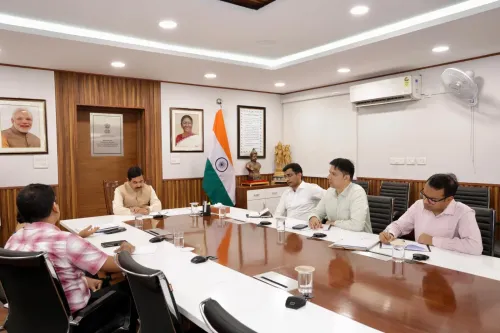
Union Consumer Affairs Minister Pralhad Joshi met Rajasthan Chief Minister Bhajanlal Sharma at the Ministry of New and Renewable Energy (MNRE) office on Tuesday, 7 July 2026, for wide-ranging talks covering food and public distribution, wheat procurement under the Minimum Support Price mechanism, and the state's renewable energy rollout.
Context
The meeting brought together two senior BJP leaders to review the performance of flagship central schemes in Rajasthan — a state that occupies a dual strategic position as a major wheat-surplus producer and one of India's most solar-resource-rich territories. Minister Joshi noted that wheat procurement under the Minimum Support Price (MSP) mechanism had recorded a significant increase over the last three Rabi Marketing Seasons, calling it a reflection of the 'strong partnership between the Centre and the State.'
The MSP system guarantees farmers a floor price for their produce, shielding them from market volatility. Rajasthan's decentralised procurement model, which routes grain acquisition through state agencies rather than solely through the central Food Corporation of India (FCI), has been progressively expanded over the past two decades to cut transportation costs and improve farmer access.
Policy Backdrop
A significant portion of the discussions centred on storage infrastructure. Minister Joshi underscored the need for timely expansion of scientific storage capacity to ensure safe preservation of foodgrains, reduce logistics costs, and facilitate smooth procurement operations. Inadequate storage has historically led to post-harvest losses and supply-chain inefficiencies — concerns the central government has sought to address through godown modernisation programmes.
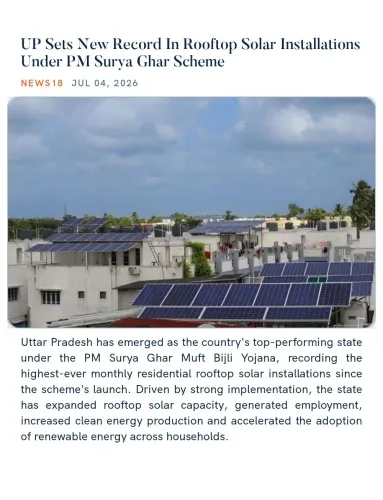
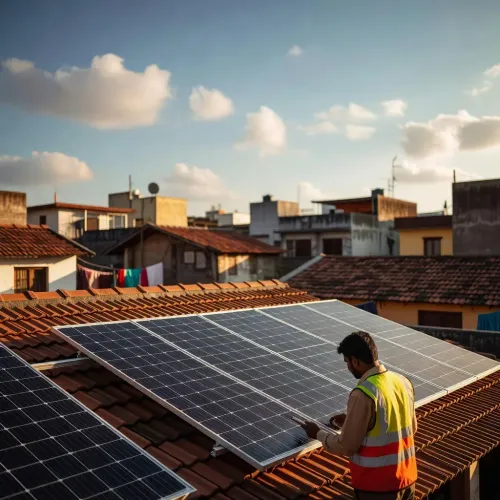
On the energy front, the two leaders discussed accelerating rooftop solar installations under the PM Surya Ghar: Muft Bijli Yojana, the central scheme launched in February 2024 targeting one crore households with subsidised rooftop solar systems. Joshi urged the state to speed up installations and also discussed advancing the Utility-Led Aggregation (ULA) model — an implementation approach under the scheme that involves state power utilities in aggregating and facilitating household-level solar adoption at scale.
Stakeholders and Impact
Wheat farmers across Rajasthan stand to benefit from a more robust MSP procurement network and expanded storage, which together can reduce distress sales and ensure timely payment. Households enrolled or seeking to enrol under PM Surya Ghar could see faster installation timelines if the state accelerates its implementation machinery.
State power utilities are central to the ULA model, as they serve as the primary interface between the central subsidy framework and individual beneficiaries. Stronger Centre-State coordination on this front could set a template for other high-solar-potential states. Rajasthan's large open land parcels and high solar irradiance make it a critical contributor to India's target of 500 GW of non-fossil energy capacity.
What's Next
Minister Joshi expressed confidence that Rajasthan will play a 'significant role in advancing India's clean energy transition' under the leadership of Prime Minister Narendra Modi. Observers will watch for state-level progress reports on PM Surya Ghar installations, any fresh central approvals for additional scientific storage godowns in Rajasthan, and further policy steps to deepen the ULA model's reach across the state.
Point of View
Giving the central government a high-visibility showcase state. The emphasis on the Utility-Led Aggregation model signals a shift toward using state power utilities as implementation anchors, which could prove decisive in scaling rooftop solar beyond urban centres. If Rajasthan delivers measurable gains on both wheat storage modernisation and solar installations, it strengthens the federal cooperative model as a template ahead of the next electoral cycle.
NationPress
7 Jul 2026
Frequently Asked Questions
What did Pralhad Joshi and Rajasthan CM Bhajanlal Sharma discuss?
They discussed strengthening food and public distribution, wheat procurement under the MSP mechanism, expansion of scientific storage infrastructure, and accelerating rooftop solar installations under PM Surya Ghar: Muft Bijli Yojana.
What is PM Surya Ghar: Muft Bijli Yojana?
PM Surya Ghar: Muft Bijli Yojana is a central government scheme launched in February 2024 that provides subsidised rooftop solar systems to one crore Indian households to reduce electricity bills.
What is the Utility-Led Aggregation (ULA) model in PM Surya Ghar?
The Utility-Led Aggregation model involves state power utilities acting as aggregators to facilitate and streamline rooftop solar installations for households under the PM Surya Ghar scheme.
How has Rajasthan performed in wheat procurement under MSP?
According to Minister Pralhad Joshi, Rajasthan has recorded a significant increase in wheat procurement under the MSP mechanism over the last three Rabi Marketing Seasons, reflecting strong Centre-State cooperation.
Why is Rajasthan important for India's renewable energy goals?
Rajasthan has high solar irradiance and vast open land, making it one of India's most solar-resource-rich states and a key contributor to the national target of 500 GW of non-fossil energy capacity.