Ahmedabad firecracker blast kills 9: Illegal ops, expired licence, decade of violations
Synopsis
The Ahmedabad firecracker blast that killed nine people — including three children — was not a sudden tragedy. It was the endpoint of a 12-year paper trail: a 2014 child-labour fatality at the same site, two cancelled-licence recommendations, and an alleged resumption of operations timed to exploit a police deployment gap during Rath Yatra. The factory had no valid licence, no fire safety clearance, and was storing explosives far beyond the legal 15-kg limit.
Key Takeaways
A firecracker factory blast in Vastral, Ahmedabad on 19 July killed nine people , including three children , and injured six others .
The unit, New Gujarat Fire Works , was allegedly operating without a valid licence, which had expired on 4 March 2026 .
The same site witnessed a fatal blast in 2014 , killing a 14-year-old child labourer ; the factory allegedly resumed within two months of that accident.
Investigators found explosives far exceeding the legal storage limit of 15 kg ; the factory had no permission whatsoever to operate.
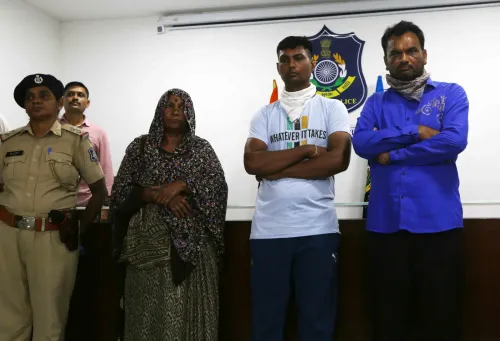
Three accused — Ramila Dodia , Mehul Dodia , and Sadiq Saiyed — have been arrested; 15 police teams were deployed in the manhunt.
Chief Minister Bhupendra Patel announced ₹4 lakh ex gratia per deceased; PM Modi announced ₹2 lakh per deceased from the PMNRF .
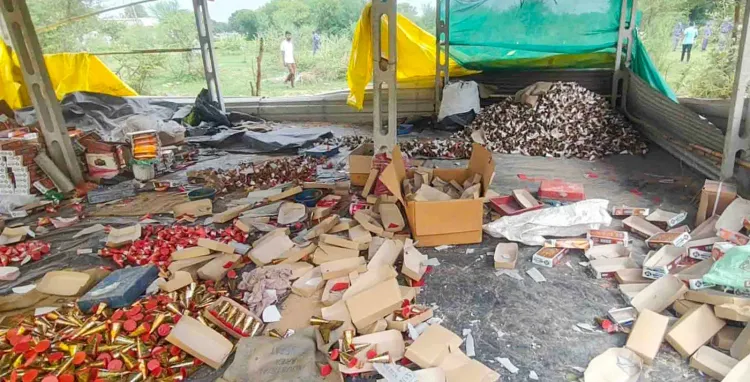
A massive explosion at a firecracker manufacturing unit on Ramol-Gatrad Road in Ahmedabad on Saturday, 19 July, killed nine people — including three children — and left six others seriously injured, according to the Gujarat Police investigation. The unit, operating as New Gujarat Fire Works on Survey No. 629/1/2/3 in Vastral village, was allegedly running without a valid licence, fire safety approval, or any mandatory permissions at the time of the blast.
How the Blast Unfolded
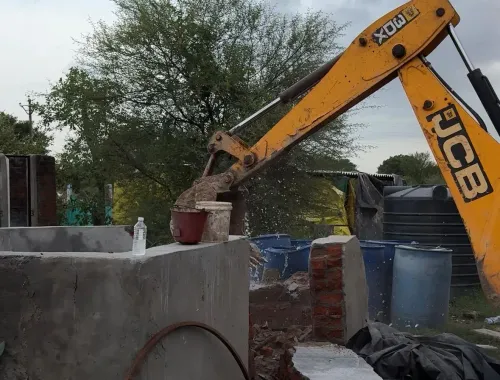
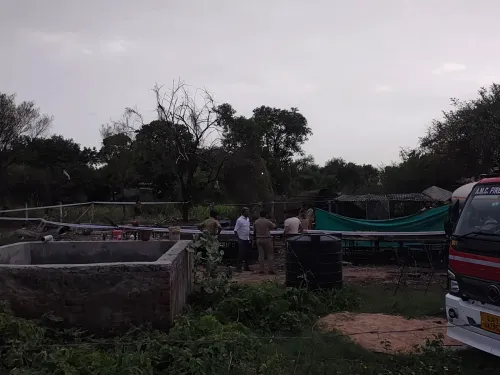
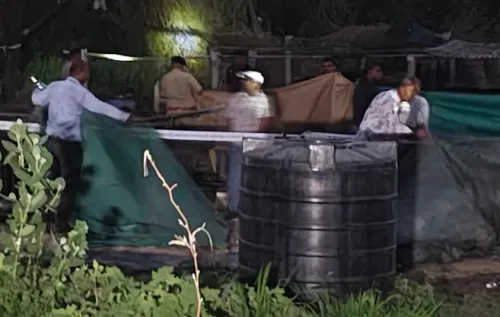
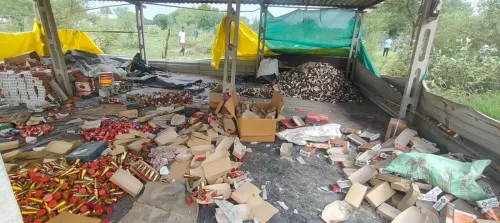
The explosion struck at approximately 3:45 p.m. near a canal behind the Rapid Action Force (RAF) camp, within the jurisdiction of Ramol Police Station. The force of the blast was heard up to five kilometres away, flattening manufacturing sheds, shattering windows at neighbouring industrial units, and disabling CCTV cameras at a fabrication factory roughly 500 metres away across the canal.
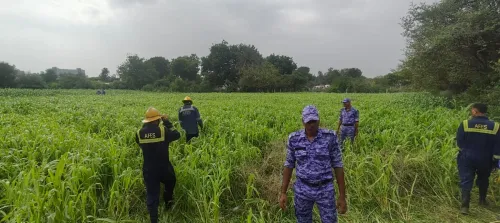
RAF personnel stationed nearby were among the first on the scene, beginning rescue operations before fire brigade teams arrived. Ahmedabad Fire and Emergency Services (AFES) deployed a Mini Fighter, two 20-kilolitre water bowsers, two Rapid Intervention Vehicles, and an ambulance. The blaze was eventually brought under control, after which cooling operations continued as forensic experts examined the site.
The severity of the explosion made identification of several victims difficult. Nine victims were taken to L.G. Hospital — four were declared dead on arrival, while four others, who had sustained approximately 95 per cent burns, later succumbed during treatment. Six people were taken to Ahmedabad Civil Hospital, where one person died; five remain under treatment in the Burns Ward of the Trauma Centre. One injured woman at L.G. Hospital is reported to be stable.
The deceased were identified as Ramila Charel, Rinku Charel, Shivani Charel, Ravina Charel, and Viral Charel, all residents of Itadi village in Dahod district's Sanjeli taluka; Usha Damor of Malekpur village in Singvad taluka, Dahod district; Savita Damor; Asrarali Saiyed of Kapadvanj; and Asaruddin Kazi of Bhalej in Anand district. Those undergoing treatment at Civil Hospital include Ajay Damor, Payal Damor, Bharat Charel, Suresh Charel, and Govind Damor, from Dahod and Panchmahal districts.
A Decade of Regulatory Failures
Police investigations have laid bare a troubling regulatory history stretching back more than a decade. A licence was first issued on 1 October 2013 in the name of Ramila Dodia for a firecracker manufacturing unit at the same Vastral location. Less than a year later, on 30 July 2014, a blast at the same site claimed one life — that of a 14-year-old child labourer named Vijay Chunara, according to family members. A criminal case was registered by Ramol Police under the Indian Penal Code in connection with that incident. Family members of the 2014 victim alleged that the factory resumed operations within two months of that accident.
On 4 August 2020, a fresh licence for the unit was obtained in the name of Ramila's son, Mehul Dodia. The licence was periodically renewed and remained valid until 4 March 2026. Following a firecracker factory blast in Deesa last year, state-wide inspections were carried out. The Vastral unit was found to have construction that did not conform to its approved plan, leading to a recommendation for licence cancellation. A subsequent inspection and site panchnama on 23 March this year again recommended cancellation. The factory was found closed during periodic inspections thereafter.
Police now allege that the operators resumed manufacturing approximately 10 to 15 days before the latest explosion, reportedly exploiting the heavy deployment of police personnel for Rath Yatra security arrangements. Firecrackers were allegedly being produced without any valid licence, fire safety approval, or other mandatory permissions.
What Investigators Found at the Site
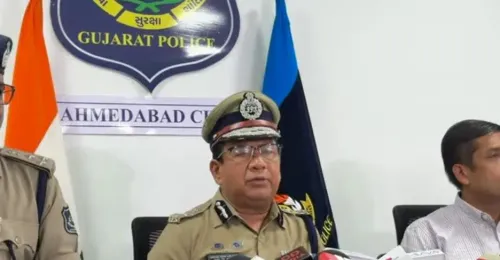
Ahmedabad Police Commissioner Anupam Singh Gahlaut said preliminary investigation indicates that sparks generated during the filling of firecrackers inside two or three small structures triggered the explosion. Workers employed at the factory had been brought from Sanjeli in Dahod district and were engaged to manufacture firecrackers after the unit received orders for the upcoming Ganesh festival, he added.
'Investigators found widespread violations at the site. Even if a licence had been valid, only 15 kilograms of explosives could legally have been stored, whereas officials found numerous sacks containing quantities far exceeding that limit. The factory had no permission whatsoever to operate,' Gahlaut said. The Forensic Science Laboratory (FSL) and explosives experts collected evidence and samples immediately after the incident.
Notably, police also learnt that a similar firecracker manufacturing unit linked to accused Sadiq Saiyed in Kheda district had also witnessed a recent blast, although no fatalities were reportedly recorded there.
Arrests, FIR, and the Crackdown
Ramol Police registered an FIR against Ramila Dodia, Mehul Dodia, and their alleged partner Sadiq Saiyed under Sections 105, 287, 288 and 61(2) of the Bharatiya Nyaya Sanhita, Sections 5(a) and 6 of the Explosive Substances Act, and Section 9(b) of the Explosives Act, 1884. Police alleged the three had rented the land and were operating the factory illegally as part of a criminal conspiracy for financial gain, disregarding mandatory safety norms and placing workers' lives at risk.
15 separate teams from the Ahmedabad Crime Branch, Local Crime Branch Units of Zones 5 and 8, and the Ramol Police surveillance squad were formed to trace the accused. Ramila and Sadiq were apprehended within hours. Mehul, who police said was present at the factory when the blast occurred and was himself injured, fled the scene. He was tracked down and arrested from the Sabarmati area on Sunday. Police said Ramila suffered ruptured eardrums in the explosion.
During questioning, investigators learnt that some customers had paid advances ranging from ₹50,000 to ₹1 lakh. The source of the explosives and the nature of the alleged partnership between Mehul Dodia and Sadiq Saiyed are under further investigation. Investigators are also examining the role of the landowner, financiers, and those who placed orders for the firecrackers.
The blast triggered overnight joint inspections by city police, the Ahmedabad Municipal Corporation (AMC), and the Fire Department. Two operational firecracker factories were found in agricultural fields in Gyaspur and Narol. Both were sealed, and their stock was seized and destroyed with water. Inspections are continuing across city and rural areas, where several similar units are suspected to be operating.
Government Relief and What Comes Next
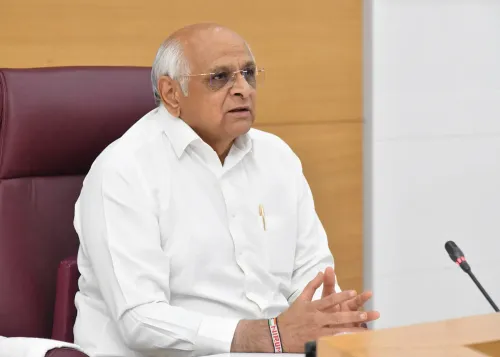
Gujarat Chief Minister Bhupendra Patel announced an ex gratia payment of ₹4 lakh to the families of each deceased victim and ₹50,000 for every injured person. Prime Minister Narendra Modi expressed condolences and announced assistance of ₹2 lakh from the Prime Minister's National Relief Fund (PMNRF) for the next of kin of each deceased and ₹50,000 for those injured.
Police Commissioner Gahlaut indicated that investigators would ensure all FSL and police evidence is incorporated into the charge sheet at the earliest, so the case can proceed swiftly to trial. The blast has prompted calls for a comprehensive audit of firecracker manufacturing units across Gujarat, and investigators say anyone else found responsible will be named as an accused.
Point of View
Drew two separate licence-cancellation recommendations in 2025-26, and was still found operational days before the explosion. That sequence points to a regulatory chain that flags violations but does not enforce closures. The alleged timing — resuming production during Rath Yatra when police were stretched thin — suggests the operators understood exactly where the enforcement gaps were. Gujarat's wider crackdown on illegal firecracker units is a necessary response, but the harder question is why a factory with this paper trail was not physically sealed after the first cancellation recommendation. Until inspection records translate into locked gates, the cycle will continue.
NationPress
20 Jul 2026
Frequently Asked Questions
What caused the Ahmedabad firecracker factory blast on 19 July?
The blast at New Gujarat Fire Works in Vastral, Ahmedabad, occurred on 19 July at around 3:45 p.m. Preliminary investigation by Gujarat Police indicates that sparks generated during the filling of firecrackers inside small structures triggered the explosion. The factory was allegedly operating without any valid licence, fire safety approval, or mandatory permissions at the time.
How many people were killed and injured in the Ahmedabad blast?
Nine people were killed and six others were seriously injured in the explosion. The victims included three children. Most of the deceased were workers brought from Sanjeli in Dahod district to manufacture firecrackers ahead of the Ganesh festival.
Who has been arrested in connection with the Ahmedabad firecracker blast?
Three people — Ramila Dodia, her son Mehul Dodia, and their alleged partner Sadiq Saiyed — have been arrested. Ramila and Sadiq were apprehended within hours of the blast; Mehul, who was injured and fled the scene, was tracked down and arrested from the Sabarmati area on Sunday.
What is the regulatory history of the New Gujarat Fire Works unit?
The unit has a documented history dating to 2013. A blast at the same site in 2014 killed a 14-year-old child labourer. A fresh licence was issued in 2020 in Mehul Dodia's name and remained valid until 4 March 2026. Inspections following a Deesa blast and a site panchnama in March 2026 both recommended licence cancellation, but the factory allegedly resumed operations 10 to 15 days before the July 2025 explosion.
What financial assistance has been announced for blast victims?
Gujarat Chief Minister Bhupendra Patel announced an ex gratia of ₹4 lakh for the family of each deceased and ₹50,000 for every injured person. Prime Minister Narendra Modi announced ₹2 lakh per deceased and ₹50,000 per injured person from the Prime Minister's National Relief Fund (PMNRF).