AI data centres over 20,000 sq m need environmental clearance: MoS

Synopsis
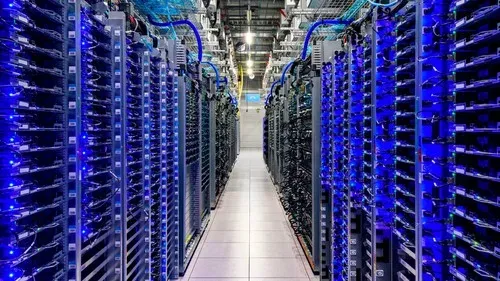
For the first time on the floor of Parliament, the Centre has formally confirmed that large AI data centres fall under India's EIA framework — requiring environmental clearance if built-up area crosses 20,000 sq m. With India racing to build AI compute capacity, this ruling puts resource accountability at the heart of the country's data centre boom.
Key Takeaways
AI data centres with built-up area exceeding 20,000 sq m require Environmental Clearance (EC) under the EIA framework.
Data centres under a Township and Area Development Project covering over 50 hectares also need a green nod.
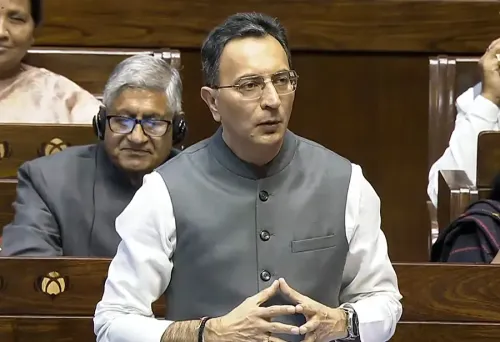
MoS Kirti Vardhan Singh made the disclosure in a written reply to the Rajya Sabha on 6 August .
Water use and discharge are regulated under the Water (Prevention and Control of Pollution) Act, 1974 and Air Act, 1981 ; compliance is monitored by SPCBs/PCCs .
The Bureau of Energy Efficiency's District Cooling Guidelines, 2023 recommend treated water for cooling towers to reduce freshwater dependence.
A dedicated 'Resilience, Innovation and Efficiency' Working Group under the India AI Impact Summit is examining energy and water resilience in AI infrastructure.
Artificial Intelligence data centres proposed as part of a Building and Construction Project with a built-up area exceeding 20,000 sq m require an Environmental Clearance (EC) under the Environmental Impact Assessment (EIA) framework, the Rajya Sabha was informed on 6 August.
Minister of State for Environment, Forest and Climate Change Kirti Vardhan Singh conveyed this in a written reply, adding that the mandate also extends to AI data centres proposed under a Township and Area Development Project covering more than 50 hectares and/or with a built-up area of less than 1,50,000 sq m.
Working Group on AI Infrastructure
According to Kirti Vardhan Singh, the Ministry of Electronics and Information Technology has constituted the 'Resilience, Innovation and Efficiency' Working Group under the India AI Impact Summit. The body is specifically tasked with examining energy efficiency, water management, and environmental resilience in digital and AI infrastructure — signalling that the regulatory focus on AI's resource footprint is intensifying at the national level.
Water and Environmental Safeguards
During the appraisal of building projects for EC grant, authorities consider the availability of freshwater — especially in water-stressed regions — along with water balance reports, greywater generation, and the recycling and reuse of greywater. Appropriate environmental safeguards are prescribed as a condition of clearance.
Water use and discharge during both the construction and operation phases of AI data centres are regulated under the Water (Prevention and Control of Pollution) Act, 1974, and the Air (Prevention and Control of Pollution) Act, 1981. Compliance with these statutes is monitored by the concerned State Pollution Control Board (SPCB) or Pollution Control Committee (PCC), as applicable.
Groundwater and Cooling Guidelines
Groundwater extraction for infrastructure and commercial projects — including data centres — is regulated in line with guidelines issued by the Ministry of Jal Shakti. Separately, the Bureau of Energy Efficiency (BEE) has issued the District Cooling Guidelines, 2023, which recommend using treated water as cooling tower make-up water wherever feasible, reducing dependence on freshwater resources.
The guidelines also advocate energy-efficient cooling technologies, optimised cooling system performance, use of alternative water sources, and water conservation measures. These are particularly relevant for large, cooling-intensive facilities such as AI data centres.
Why This Matters
India's AI infrastructure push — backed by the government's ambitious compute and data centre expansion plans — has raised questions about resource consumption at scale. A single hyperscale data centre can consume millions of litres of water annually for cooling. By bringing large AI data centres explicitly within the EIA framework, the Centre is signalling that environmental accountability will be a non-negotiable condition of the country's digital growth. This is the first time the government has formally articulated the EIA threshold for AI-specific infrastructure on the floor of Parliament.
How effectively State Pollution Control Boards enforce these norms — particularly in water-stressed states where data centre investment is concentrated — will determine whether the framework translates into meaningful environmental protection.
Point of View
The EIA threshold of 20,000 sq m targets only the largest facilities, leaving a potentially large band of mid-size data centres outside formal scrutiny. As global tech firms race to lock in Indian compute capacity, the Centre's regulatory posture will be tested well before the next Parliament session.
NationPress
21 Sept 2026
Frequently Asked Questions
Which AI data centres require environmental clearance in India?
AI data centres proposed as part of a Building and Construction Project with a built-up area exceeding 20,000 sq m require Environmental Clearance under the EIA framework. Those under a Township and Area Development Project covering more than 50 hectares also need clearance, regardless of built-up area thresholds.
Who monitors compliance for AI data centres under pollution laws?
Compliance with the Water (Prevention and Control of Pollution) Act, 1974, and the Air (Prevention and Control of Pollution) Act, 1981, is monitored by the concerned State Pollution Control Board (SPCB) or Pollution Control Committee (PCC), depending on the jurisdiction.
What are the Bureau of Energy Efficiency's District Cooling Guidelines, 2023?
The BEE's District Cooling Guidelines, 2023, recommend using treated water as cooling tower make-up water to reduce freshwater dependence. They also promote energy-efficient cooling technologies, alternative water sources, and water conservation — measures directly applicable to large data centres.
What is the 'Resilience, Innovation and Efficiency' Working Group?
It is a working group set up under the India AI Impact Summit, constituted by the Ministry of Electronics and Information Technology. Its mandate is to examine energy efficiency, water management, and environmental resilience specifically within digital and AI infrastructure.
How is groundwater use by data centres regulated in India?
Groundwater extraction for infrastructure and commercial projects, including data centres, is regulated in accordance with guidelines issued by the Ministry of Jal Shakti. Projects must comply with these norms in addition to obtaining environmental clearance where applicable.