AIADMK, BJP oppose TN delimitation resolution, warn against seat loss
Synopsis
Both AIADMK and BJP broke with Chief Minister C. Joseph Vijay's special resolution on delimitation — but not because they want Tamil Nadu to lose seats. Palaniswami's counterintuitive argument: protect the state's representation ratio and TN could actually gain Lok Sabha seats, jumping from 39 to 59. The real fault line isn't pro- or anti-delimitation — it's who gets credit for protecting Tamil Nadu's political weight.
Key Takeaways
AIADMK and BJP opposed Chief Minister C.
Joseph Vijay's special delimitation resolution in the Tamil Nadu Assembly on Wednesday .
AIADMK General Secretary Edappadi K.
Palaniswami said Tamil Nadu's Lok Sabha seats could rise from 39 to 59 if the state's representation ratio is protected during delimitation.
Palaniswami cited Home Minister Amit Shah's assurance that Tamil Nadu's parliamentary representation would not be reduced.
Bhojarajan called the resolution premature, noting delimitation remains at the proposal stage.
Both AIADMK and BJP expressed support for women's reservation, even while opposing the delimitation resolution.
The resolution is expected to pass given the TVK government's Assembly majority.
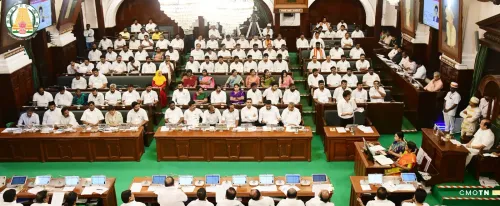
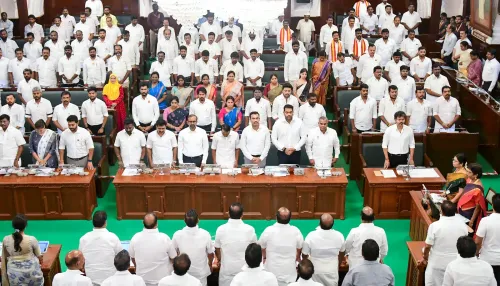
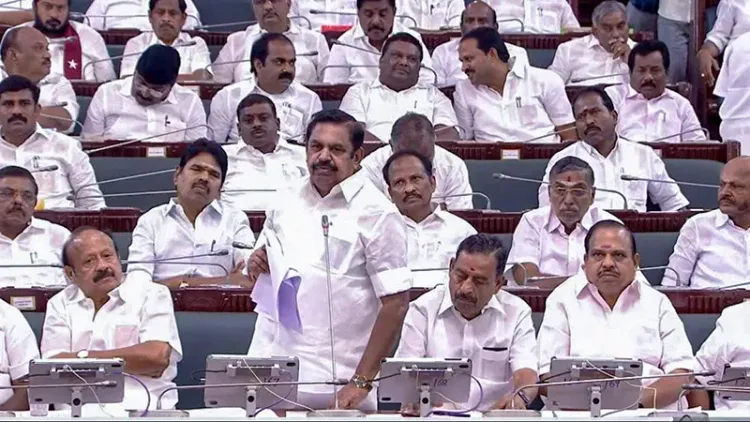
All India Anna Dravida Munnetra Kazhagam (AIADMK) and the Bharatiya Janata Party (BJP) on Wednesday jointly opposed a special resolution moved by Tamil Nadu Chief Minister C. Joseph Vijay against constituency delimitation in the state Assembly, even as both parties insisted that any future delimitation exercise must not reduce Tamil Nadu's representation in Parliament.
Palaniswami's Stand: Delimitation Not Wrong, But TN Must Not Lose Out
AIADMK General Secretary Edappadi K. Palaniswami, participating in the Assembly debate, said delimitation was not inherently objectionable if conducted for administrative convenience. He argued, however, that Tamil Nadu should not be penalised for successfully managing population growth — a concern shared by several southern states ahead of a proposed national delimitation exercise.
Palaniswami noted that his party had already urged the Union government to protect the state's existing representation ratio. He cited Union Home Minister Amit Shah's assurance that Tamil Nadu's parliamentary representation would not be cut.
Notably, Palaniswami contended that protecting the state's representation ratio could actually work in Tamil Nadu's favour — potentially increasing its Lok Sabha seats from the current 39 to as many as 59. He added that large constituencies could be redrawn for better administration, provided the overall exercise did not disadvantage the state.
The AIADMK leader accused the Tamilaga Vettri Kazhagam (TVK) government of tabling the resolution for political purposes even before the full details and consequences of the proposed delimitation were known. The AIADMK opposed the delimitation resolution but backed the separate proposal on women's reservation.
BJP's Position: Premature Resolution, But TN Interests Must Be Protected
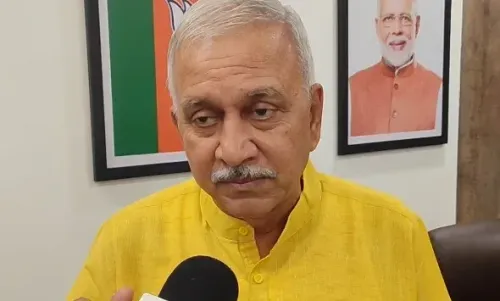
BJP MLA M. Bhojarajan also opposed the resolution, questioning the urgency behind the state government's move when delimitation remained at the proposal stage. He argued that constitutional changes should reflect the evolving needs of the population and that society must be prepared to embrace reforms for future generations.
Bhojarajan pointed to the new Parliament building as an example of infrastructure designed with the country's long-term requirements in mind. He maintained that India must move forward with necessary reforms while ensuring Tamil Nadu's political interests remained protected.
The BJP legislator also underscored his party's support for greater political representation for women, even as he made clear the BJP would not back Chief Minister Vijay's special resolution.
The Delimitation Debate: Why It Matters for South India
The proposed delimitation exercise has triggered sharp anxiety among southern states, which argue they are being penalised for implementing family planning policies more effectively than northern counterparts. A population-based reallocation of Lok Sabha seats could shift political weight toward states with higher population growth, diluting the influence of Tamil Nadu, Kerala, Andhra Pradesh, and Telangana.
This is not the first time Tamil Nadu's legislature has pushed back on delimitation concerns — the issue has been a recurring flashpoint between the state and the Centre since the freeze on seat allocation was extended in 2001. The current debate gains added urgency as the freeze is set to expire after 2026.
What Happens Next
The special resolution moved by Chief Minister Vijay will be put to a vote in the Assembly. With the ruling TVK commanding a majority, the resolution is expected to pass despite opposition from AIADMK and BJP. The outcome will carry symbolic weight as Tamil Nadu's formal legislative position ahead of any delimitation proceedings at the national level.
Point of View
Both parties are trying to deny the ruling TVK the political credit for standing up to Delhi on delimitation — a potent electoral issue in the South. Palaniswami's '39 to 59 seats' framing is particularly sharp: it reframes delimitation from a threat into an opportunity, provided the Centre keeps its word. But that framing rests entirely on Amit Shah's verbal assurance, with no legislative or constitutional guarantee in place. The deeper question mainstream coverage is missing: if delimitation truly could benefit Tamil Nadu, why has the Centre not committed that in writing?
NationPress
26 Sept 2026
Frequently Asked Questions
Why did AIADMK and BJP oppose Tamil Nadu's delimitation resolution?
Both AIADMK and BJP opposed Chief Minister C. Joseph Vijay's special resolution because they considered it premature — delimitation remains at the proposal stage nationally. However, both parties stressed that Tamil Nadu's parliamentary representation must not be reduced in any future exercise.
What is constituency delimitation and why does it concern Tamil Nadu?
Constituency delimitation is the redrawing of parliamentary and assembly seat boundaries, typically based on population data. Tamil Nadu and other southern states fear that a population-based reallocation of Lok Sabha seats would reduce their representation because they controlled population growth more effectively than several northern states.
How many Lok Sabha seats could Tamil Nadu gain under delimitation, according to Palaniswami?
AIADMK General Secretary Edappadi K. Palaniswami argued that if Tamil Nadu's existing representation ratio is protected, the state's Lok Sabha seats could increase from the current 39 to as many as 59 after delimitation.
What assurance has the Centre given Tamil Nadu on delimitation?
According to Palaniswami, Union Home Minister Amit Shah has assured that Tamil Nadu's parliamentary representation will not be reduced during any delimitation exercise. No formal legislative or constitutional guarantee has been reported.
What is the likely outcome of the Tamil Nadu Assembly vote on the delimitation resolution?
The special resolution moved by Chief Minister C. Joseph Vijay is expected to pass, as the ruling TVK holds an Assembly majority. The resolution will serve as Tamil Nadu's formal legislative position ahead of any national delimitation proceedings.