How Did AIIMS Delhi Doctors Successfully Remove a 19.9 kg Tumor from a 43-Year-Old Colon Cancer Patient?
Synopsis
This incredible surgery highlights the expertise of AIIMS Delhi surgeons who managed to remove a staggering 19.9 kg tumor from a colon cancer patient, demonstrating that even seemingly hopeless cases can lead to successful outcomes.
Key Takeaways
AIIMS Delhi successfully removed a 19.9 kg tumor from a colon cancer patient.
The surgery was led by Prof.
Ray , showcasing advanced medical techniques.
HIPEC was utilized to target residual cancer cells post-surgery.
The patient exhibited significant recovery and was discharged within five days.
Colon cancer, while serious, can be treatable with specialized care.
New Delhi, Jan 23 (NationPress) In a remarkable feat, surgeons at the All India Medical Sciences (AIIMS) Delhi have successfully performed surgery to extract an astonishing 19.9 kg tumor from a 43-year-old patient suffering from colon cancer, granting her a renewed chance at life.
Munmun, who is from Durgapur, West Bengal, arrived at AIIMS in July 2024 with noticeable abdominal swelling. She had a medical history that included a unilateral salpingo-oophorectomy—removal of one ovary and fallopian tube—25 years prior.
Diagnosed with Stage-4 colon cancer with significant pelvic involvement, Munmun had sought treatment in various hospitals and undergone multiple chemotherapy cycles. Unfortunately, her condition continued to deteriorate, with the tumor affecting several abdominal organs, leaving her with a prognosis of only 3-4 months to live.
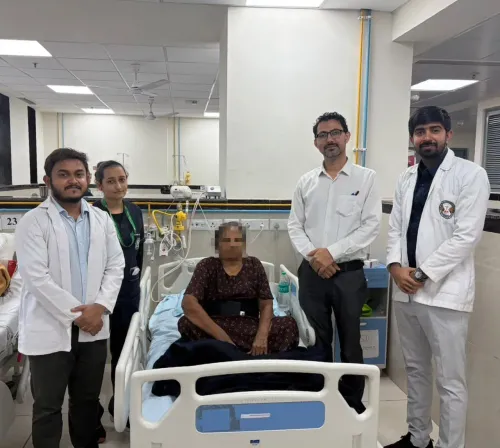
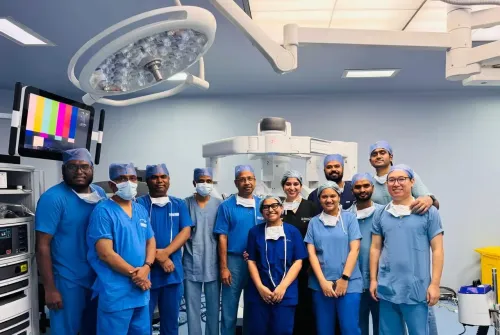
“Under the leadership of Prof. M.D. Ray, a surgical oncologist at AIIMS Delhi, a successful cytoreductive surgery was carried out on January 12, which involved the complete resection of the tumor weighing 19.9 kg. This extensive surgery included multi-organ resections and was followed by HIPEC on January 15, marking a comprehensive approach to her treatment. The patient was later moved from ICU to the ward and has shown remarkable recovery,” the institute stated.
Prof. Ray described how scans indicated that the tumor was considered inoperable, occupying the majority of the abdominal cavity with no distinct organs visible.
Due to the extent of the tumor, the surgical team opted for a two-stage approach. In the first stage, they excised the bulk of the tumor, which involved significant resection of various organs, including the ascending colon, parts of the ileum and transverse colon, sigmoid colon, omentum, uterus, and portions of the liver.
“Major blood vessels like the IVC were compromised due to inflammation and infiltration, making the operation exceedingly difficult,” Ray added, noting that the patient faced hemodynamic instability during this phase due to blood loss and other complications.
After a two-day interval, the second phase of surgery was performed, during which HIPEC was administered. This technique involves delivering heated chemotherapy directly into the abdominal cavity to eradicate any microscopic residual disease.
“Once we confirmed that all visible tumors were removed, HIPEC was given for an hour and a half to target any unseen cancer cells,” Ray explained.
“Post-surgery, the abdomen appeared free of tumors, with the liver and intestines clearly visible and unaffected,” he continued.
“Following the operation, the patient was kept in ICU and was already smiling and joking on the first day after surgery. She was discharged by the fifth day, having undergone the first surgery on January 12, the second on January 15, and her discharge on January 20,” the doctor elaborated.
Ray emphasized that colon cancer, once deemed terminal, can still be treatable in specific circumstances. “Metastatic colon cancer should not be considered untreatable without thorough assessment at a specialized center with experienced surgeons,” he urged.
Colon cancer ranks as the third most prevalent cancer among women and the sixth most common among men in India. Major risk factors include tobacco use, alcohol consumption, unhealthy lifestyles, obesity, inactivity, poor nutrition, and chronic stress.
Point of View
It’s essential to recognize the significance of this medical achievement at AIIMS Delhi. It not only showcases the dedication and expertise of our healthcare professionals but also offers hope to those battling severe health challenges, emphasizing the importance of specialized care in treating complex cases.
NationPress
26 Sept 2026
Frequently Asked Questions
What stages of colon cancer are treatable?
While Stage-4 colon cancer is advanced, with the right medical intervention and specialized care, some cases can still be treated successfully.
What are the common risk factors for colon cancer?
Major risk factors include tobacco and alcohol use, obesity, a sedentary lifestyle, poor diet, and chronic stress.
How long was the patient hospitalized after surgery?
The patient was discharged five days post-surgery, having undergone two surgical stages on January 12 and 15.
Is colon cancer curable?
In some instances, colon cancer can be treated successfully, especially with early detection and advanced surgical techniques.