AIMIM chief Owaisi: Constitution grants equal rights to all
Synopsis
AIMIM president Asaduddin Owaisi on 27 November 2026 said India's Constitution does not discriminate and grants equal rights to all, restating the charter's equality guarantee a day after its adoption anniversary.
Key Takeaways
AIMIM president Asaduddin Owaisi on 27 November 2026 said the Constitution does not discriminate and grants equal rights to all.
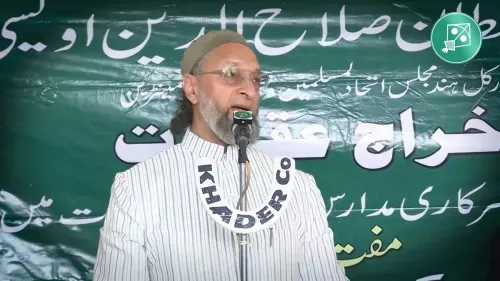
He posted the message in Hindi on X, with an accompanying video.
The Constitution of India was adopted on 26 November 1949; Article 14 guarantees equality before the law.
Owaisi is Lok Sabha MP from Hyderabad and president of AIMIM.
Leaders across parties periodically reaffirm the Constitution's equality provisions amid debates on fundamental rights.
AIMIM president Asaduddin Owaisi on Friday, 27 November 2026 drove a simple, high-stakes claim into the public square: India's Constitution does not discriminate against anyone. It promises equal rights to all.
In a Hindi-language post on X, the Hyderabad Lok Sabha MP wrote: हमारा संविधान किसी से भेदभाव नहीं, बल्कि सबको बराबर का हक़ देने की बात करता है (Our Constitution does not discriminate against anyone, but talks about giving equal rights to everyone). A video accompanied the message.
The line is not a slogan. It is a restatement of the charter's core legal architecture, and it lands a day after the anniversary of the Constitution's adoption.
Article 14 and the equality the charter writes
The Constitution of India was adopted on 26 November 1949. Its Preamble and Article 14 together set equality before the law and equal protection of the laws as a binding promise, and they prohibit the State from denying that equality to any person.
That is the legal floor Owaisi invoked: not a favour to any community, but a right that belongs to every citizen. Minority communities have historically leaned on this clause when they argue for protection against discrimination. Other groups have too. The text is universal.
Hyderabad MP's long argument on equal rights
Owaisi, president of the All India Majlis-e-Ittehadul Muslimeen, has for years used Parliament and public platforms to stress that secularism and equal rights are the Constitution's own language. Leaders across parties periodically issue similar affirmations whenever national debate turns to fundamental rights.
What to watch next is not another slogan. It is whether upcoming parliamentary sessions treat equality-related legislation and any proposed constitutional amendments with the same seriousness the original text demands.
The Constitution already says equal. The political test is whether the country still means it.
Point of View
Not a museum text. Indian parties of every stripe reach for the Constitution when identity, secularism and state power collide, and this message sits in that pattern. The unresolved question is whether upcoming parliamentary work on rights and amendments will honour the equality the Preamble already names. For minority communities and for every citizen, the gap between the clause and lived practice is the real story.
NationPress
27 Nov 2026
Frequently Asked Questions
What did Asaduddin Owaisi say about the Constitution?
AIMIM president Asaduddin Owaisi said India's Constitution does not discriminate against anyone and instead talks about giving equal rights to everyone. He posted the remark in Hindi on X on 27 November 2026, with a video.
What does Article 14 of the Indian Constitution say?
Article 14 guarantees equality before the law and equal protection of the laws. It prohibits the State from denying that equality to any person, and it sits alongside the Preamble as a core equality promise of the Constitution adopted on 26 November 1949.
Who is Asaduddin Owaisi?
Asaduddin Owaisi is president of the All India Majlis-e-Ittehadul Muslimeen (AIMIM) and the Lok Sabha MP from Hyderabad. He is a frequent public commentator on constitutional matters and minority rights.
When was the Constitution of India adopted?
The Constitution of India was adopted on 26 November 1949. That date is marked each year as the anniversary of the charter's adoption, a day before Owaisi's 27 November 2026 post.
Why do Indian leaders talk about constitutional equality?
Political leaders across parties periodically reaffirm the Constitution's equality provisions during national debates on fundamental rights and secularism. Such statements rest on the Preamble and Article 14, which prohibit discrimination and promise equal rights to all citizens.