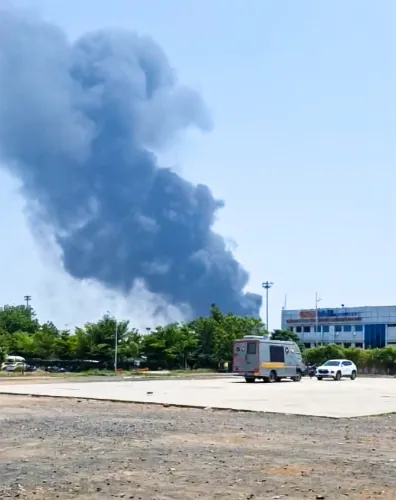
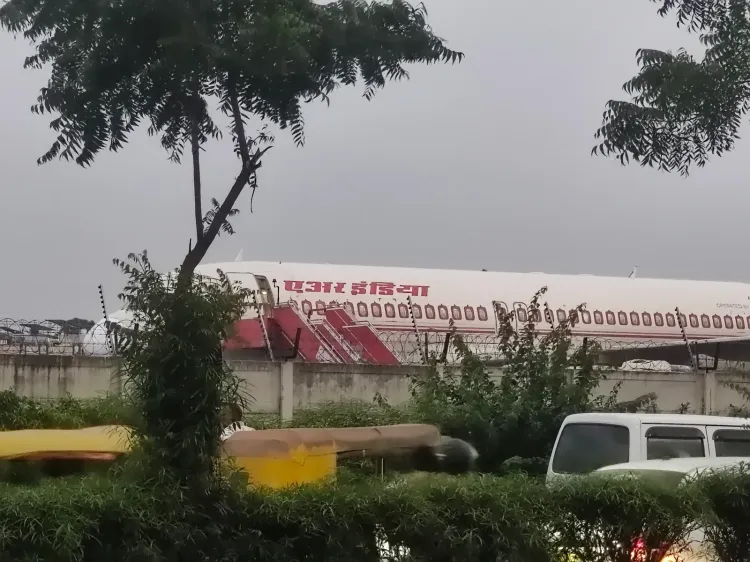
Air India Express Dammam-Delhi flight diverts to Ahmedabad after bomb threat
Synopsis
A mid-air bomb threat on an Air India Express Dammam–Delhi flight forced an emergency diversion to Ahmedabad on 31 August after a crew member found a tissue paper with the word 'bomb' written on it in the aircraft lavatory. CISF and bomb disposal teams swept the aircraft; no explosives were found, but the investigation into the threat's origin is ongoing — adding to a string of similar aviation security scares in India.
Key Takeaways
Air India Express flight from Dammam, Saudi Arabia , to New Delhi diverted to Ahmedabad on 31 August after a bomb threat.
A crew member found a tissue paper bearing the word 'bomb' in the aircraft's lavatory mid-flight.
The flight departed at 10:25 am IST and landed at Sardar Vallabhbhai Patel International Airport at 4:22 pm IST .
CISF and bomb disposal personnel were deployed; initial checks found no suspicious or explosive material .
All passengers and crew were safe; a full headcount and security sweep were conducted with the aircraft in an isolated area .
Authorities are continuing to investigate the source and credibility of the threat.
An Air India Express flight operating on the Dammam–New Delhi route made an emergency landing at Ahmedabad's Sardar Vallabhbhai Patel International Airport (SVPIA) on Monday evening, 31 August, after a bomb threat was reported mid-flight. Security agencies swiftly activated full safety protocols upon the aircraft's arrival.
How the Threat Was Discovered
The flight departed Dammam, Saudi Arabia, at 10:25 am IST and was en route to New Delhi when a crew member reportedly found a piece of tissue paper in the aircraft's lavatory bearing the word 'bomb'. The crew immediately alerted the pilot, who contacted air traffic control and sought clearance to divert the aircraft to Ahmedabad as a precautionary measure. The flight touched down at 4:22 pm IST.
Security Response on the Ground
Upon landing, the aircraft was moved to an isolated area of the airport. All passengers and crew were escorted through prescribed security procedures. Personnel from the Central Industrial Security Force (CISF) and bomb disposal units were deployed to conduct a comprehensive sweep of the cabin, baggage holds, and other areas of the aircraft. Airport terminal staff simultaneously undertook a sanitation process as the aircraft remained isolated.
Initial Findings and Ongoing Checks
According to initial reports from local sources, security personnel did not find any suspicious or explosive material during preliminary checks. However, agencies were continuing their detailed examination and investigation into the credibility and origin of the threat. A headcount of all passengers and crew was also being carried out as part of the mandated security protocol. There were no immediate reports of injuries.
Broader Context
This incident is the latest in a series of bomb threats targeting Indian carriers in recent months, prompting airlines and airport authorities to maintain heightened vigilance. Whenever a potential threat is reported, established protocols require immediate diversion, isolation of the aircraft, and a full security sweep before any further operations are cleared. Authorities are expected to trace the source of the written threat and assess its credibility as the investigation continues.
Point of View
Aircraft isolation, and hours of disruption, only for no device to be found. The real concern is not this single incident but the cumulative cost: each hoax or unverified threat strains CISF resources, delays hundreds of passengers, and normalises a response that must, by its very nature, be treated as real every time. Indian aviation authorities need a faster, credible post-incident mechanism to trace threat authors and impose deterrent consequences — without that, the frequency of such scares is unlikely to abate.
NationPress
15 Oct 2026
Frequently Asked Questions
Why did the Air India Express Dammam-Delhi flight land in Ahmedabad?
The flight made an emergency diversion to Ahmedabad on 31 August after a crew member discovered a tissue paper with the word 'bomb' written on it in the aircraft's lavatory. The pilot informed air traffic control and sought clearance to land at Ahmedabad as a precautionary measure.
Was any explosive material found on the Air India Express flight?
No. Initial checks by CISF and bomb disposal personnel did not find any suspicious or explosive material on board. However, security agencies were continuing their detailed examination and investigation as of the latest reports.
What security measures were taken after the flight landed in Ahmedabad?
The aircraft was moved to an isolated area of Sardar Vallabhbhai Patel International Airport. CISF personnel and bomb disposal units conducted a thorough sweep of the cabin, baggage, and other areas. All passengers and crew were taken through prescribed security procedures, and a headcount was carried out.
Were any passengers or crew injured in the incident?
No injuries were reported. The aircraft landed safely at Ahmedabad airport, and all passengers and crew were accounted for following the security procedure.
Is this the first such bomb threat on an Indian airline flight?
No. This incident is part of a broader pattern of bomb threats targeting Indian carriers in recent months, which has prompted airlines and airport authorities to maintain heightened security vigilance on all routes.