Harnessing AI for Inclusive Development: Bridging Urban-Rural Divides

Synopsis
The India AI Impact Summit 2026 underscores AI's role as a transformative tool for development, emphasizing its potential to bridge the urban-rural divide in India. By prioritizing real-world applications, the summit aims to address disparities and democratize opportunities across the nation.
Key Takeaways
AI as a Tool for Development: The summit highlighted AI's potential in addressing real-world issues.
Inclusive Growth: Emphasizing the need for equitable access to technology across urban and rural areas.
Focus on Local Context: AI solutions must be culturally relevant and sensitive to local needs.
Importance of Upskilling: Strengthening the workforce to engage with AI effectively.
Long-term Vision: The true measure of AI's success lies in its impact on improving livelihoods.
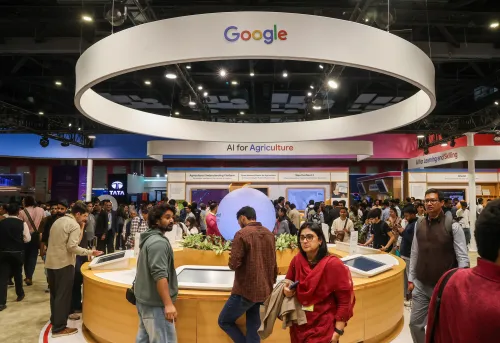
New Delhi, Feb 25 (NationPress) The India AI Impact Summit 2026 has highlighted a pivotal shift: artificial intelligence is evolving beyond mere jargon for business and tech enthusiasts. It is emerging as a vital tool for societal development, aimed at tackling real-world challenges rather than solely pursuing theoretical innovations.
During the summit, Prime Minister Narendra Modi underscored the guiding principle of "Sarvajan Hitay, Sarvajan Sukhaye" (welfare and happiness for all), emphasizing a critical message: India’s aspirations in AI should be rooted in the realities faced by its approximately 700,000 villages and nearly half a billion rural inhabitants.
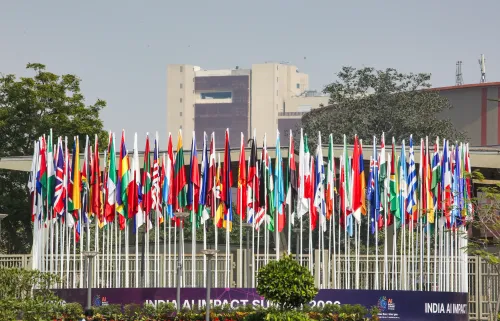
This February, amid a significant focus on inclusion, global leaders, industry executives, and tech innovators convened in Delhi. Their attendance underscored the need to position technology as a public utility while showcasing India's rising role in shaping the international AI landscape. The summit, marking its debut in the Global South, placed People, Planet, and Progress at the forefront of its agenda.
This signifies a departure from narrow commercial objectives towards a strategy centered on societal impact.
However, ambitious strategies will only yield benefits if they address the entrenched divisions within Indian society. The stark contrast between rural areas, characterized by inconsistent connectivity, low digital literacy, and limited economic opportunities, and urban centers with advanced digital infrastructure, is particularly concerning. Often, India's technology policies are formulated from an urban-centric viewpoint, yet their real effectiveness should be judged by their impact in rural communities where digital transformation remains elusive.
The disparities are not merely superficial. Urban India enjoys a flourishing ecosystem of data-driven services in sectors like healthcare and education, while rural regions grapple with unreliable internet access, a workforce that is both underqualified and precariously employed, and limited institutional capabilities. This isn't solely about gadget access; it's about translating technological potential into tangible improvements in livelihoods, resilience, and civic participation.
The pressing question arises: can AI be leveraged to create equal opportunities rather than perpetuate existing inequalities? The summit’s theme of "All-Inclusive Intelligence" reflects this ambition, as noted by Union ministers. AI should be analyzed based on its capacity to enhance lives and reduce disparities in service delivery, rather than the complexity of its algorithms, as rightly noted by India’s Minister of State for Health.
This presents a systemic and structural challenge. Urban regions benefit from network effects, economies of scale, and concentrations of human capital that amplify the value of AI. Conversely, rural areas require robust, affordable, and culturally relevant technologies that consider local contexts. AI solutions must accommodate diverse languages, educational backgrounds, and economic situations.
Consider the application of AI in agriculture, which still employs nearly half of India’s workforce. If AI-based market insights, soil health assessments, and precision farming technologies are provided in local languages through trustworthy intermediaries like panchayats or cooperatives, they could significantly boost productivity and income. Although investing in personalized, AI-driven agricultural support may seem minor compared to large-scale cloud infrastructure projects, its potential to improve rural livelihoods could be far greater.
Education is another domain where AI’s integration could be transformative. Customized learning platforms, adaptive tutoring in regional languages, and mentorship networks facilitated by AI could help alleviate the challenges faced by students in remote areas. However, without concurrent investments in local data infrastructure, reliable electricity, and teacher training, these tools risk remaining aspirational rather than practical.
Studies suggest that AI should complement human labor rather than replace it, especially in resource-constrained settings.
The summit also examined how AI could enhance public health surveillance and diagnostics. This is especially pertinent given that AI can amplify efforts in screening, early detection, and resource allocation in states with low doctor-to-patient ratios. However, the true challenge lies in integrating these technologies into public health systems, particularly in community outreach initiatives and rural primary health care centers.
These reflections raise two interconnected issues. Firstly, AI integration must be intentional rather than incidental. In the absence of tailored policies and financial incentives, market dynamics will likely concentrate AI benefits in urban areas with higher revenues and better infrastructure, thereby widening the gap. Secondly, inclusive AI must narrate India’s unique story, informed by its linguistic diversity, democratic principles, and developmental aspirations. It cannot simply be an imported narrative.
This necessitates a paradigm shift. Policymakers and practitioners should prioritize equity considerations—who benefits, who is disadvantaged, and how marginalized groups can assert agency in an AI-driven future—rather than viewing AI as either merely disruptive or stabilizing. Local languages, interoperability with rural service delivery systems, and grassroots capacity building must be prioritized in India’s AI governance frameworks. The summit's focus on AI for "social empowerment" and "democratizing resources" signifies this intention, but the real challenge lies in its practical application.
Addressing the skills gap is equally critical. India’s demographic dividend holds the potential to either drive prosperity or exacerbate inequality. Chief Economic Advisor V. Anantha Nageswaran cautioned that without robust upskilling initiatives, India risks underutilizing the potential of its youthful workforce in the AI era. If the development of AI outpaces human capital, the urban-rural divide may deepen, leaving rural youth more vulnerable to marginalization and displacement.
Ultimately, an ecological approach that harmonizes technology, institutions, and human agency is essential for realizing the promise of inclusive AI in India. Making decisions that empower every child in a village school, every farmer in a rain-shadow area, and every small business owner to engage with and benefit from the intelligence revolution is paramount—beyond merely providing algorithms.
While the India AI Impact Summit represents a positive stride forward, it is merely the beginning of a longer journey. The true measure of whether India's AI path addresses longstanding inequalities will be its success in enhancing the lives of those who have historically been left behind. If AI merely perpetuates existing disparities, it will have failed both in rural India and its broader mission. The enhancement of life will ultimately serve as the primary metric for assessing AI's true value.
(Mayank Chandra is a leader in social development with over two decades of on-the-ground experience)
Point of View
The insights from the India AI Impact Summit shed light on the critical role of AI in fostering inclusive growth. It highlights the urgent need to address the urban-rural divide and ensure equitable access to technology, emphasizing that the true success of AI will be measured by its impact on improving lives across all strata of society.
NationPress
23 Sept 2026
Frequently Asked Questions
What was the main focus of the India AI Impact Summit 2026?
The main focus was on leveraging artificial intelligence as a tool for inclusive development, particularly addressing the urban-rural divide in India.
How can AI improve agricultural practices in rural India?
AI can enhance agricultural practices by providing market insights, soil health assessments, and precision farming technologies in local languages, thereby increasing productivity and income for farmers.
What challenges does rural India face regarding AI adoption?
Rural India faces challenges such as inconsistent internet connectivity, low digital literacy, and limited access to advanced technologies, which hinder the adoption of AI solutions.
Why is upskilling important in the context of AI?
Upskilling is vital to ensure that the workforce, especially in rural areas, can effectively engage with AI technologies and avoid marginalization in the rapidly evolving job market.
What is meant by 'All-Inclusive Intelligence'?
'All-Inclusive Intelligence' refers to the emphasis on ensuring that AI technologies are accessible and beneficial to all sections of society, particularly marginalized communities.