How is Accuracy Essential for the Effective Implementation of AI in Legislatures?
Synopsis
In a significant address at the All India Presiding Officers Conference, Rajya Sabha Deputy Chairman Harivansh stressed the critical role of AI in modernizing legislative processes. He outlined the need for accuracy and reliability in AI applications to enhance the efficiency of both Parliament and State Legislatures. Discover how AI can transform governance.
Key Takeaways
AI is crucial for legislative efficiency.
Accuracy and reliability are paramount.
Collaboration between Parliament and State Legislatures is essential.
A 'Data Lake' can enhance AI training.
Human oversight is necessary for AI applications.
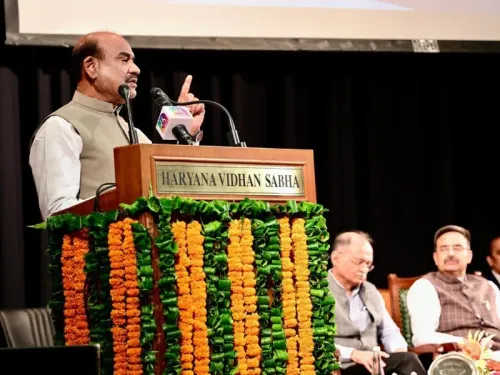
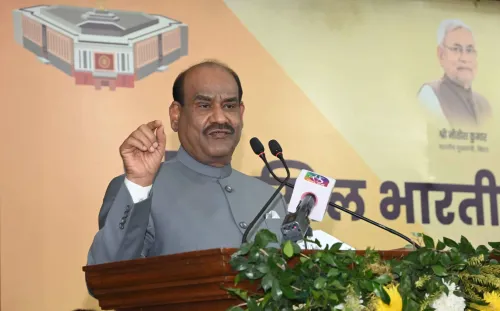
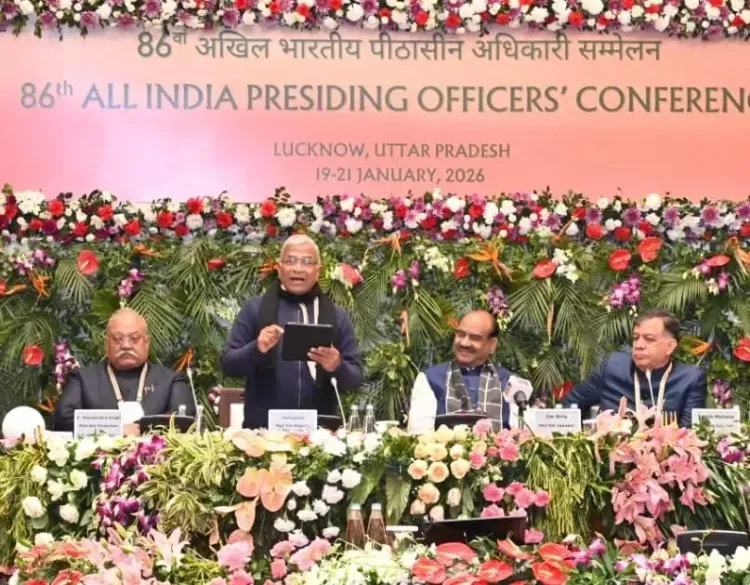
Lucknow, Jan 20 (NationPress) On Tuesday, Rajya Sabha Deputy Chairman Harivansh highlighted the significance of AI in enhancing the efficiency of legislatures while outlining necessary measures to ensure the technology's accuracy and reliability.
During the plenary session of the 86th All India Presiding Officers Conference (AIPOC) held in Lucknow, Harivansh presented various practical applications and strategies for integrating AI into Parliament, advocating for a collaborative approach between State Legislatures and Parliament.
This collaboration is intended to optimize the institutional knowledge of legislatures for effective use in both Parliament and State Legislatures, he stated.
Emphasizing a vision for enhanced coordination and information access regarding policies, he remarked, “Legislatures serve as the guardians of all official policy documents, including a range of debates on legislation, budgets, and more. These documents become part of the House once they are presented.”
“Currently, this information is often fragmented across different ministries. AI can assist Parliaments and State Legislatures in creating a platform to facilitate easy access to this information, thereby establishing the institution as a knowledge hub,” he elaborated.
Harivansh underscored the necessity for a ‘Data Lake’ where the unique language of legislative debates, vocabulary, and documents from across the nation can be utilized to train AI technologies that are tailored to the Indian context.
He proposed a hybrid model in which human oversight is maintained over the training process and the nature of AI-generated outputs.
“The suitability of AI for parliamentary applications goes beyond its algorithmic prowess. It is the knowledge base on which the technology is trained that truly matters. Therefore, parliamentary AI must be developed within Parliament, using meticulously curated parliamentary data. Skills can be developed, transferred, or outsourced,” he asserted.
The Deputy Chairman further stated, “Knowledge is contextual and intricately woven into the institution. Parliamentary knowledge is distinct, built over decades through debates, rulings, customs, and constitutional practices.”
He shared insights on how Parliament has been experimenting with AI-driven transcription and real-time translation to deliver services in various languages.
Currently, Members of Parliament can access House Business and other administrative documents in languages of their choice, facilitated by AI, he noted.
Harivansh explained how routine administrative tasks such as verifying the admissibility of Questions for Question Hour and researching past precedents and rulings can be streamlined using AI.
Additionally, he called for increased awareness and training sessions for staff and legislators to enhance their efficiency in fulfilling their roles.
Harivansh stated that discussions at the conference also included topics on enhancing accountability and capacity building for legislators.
The conference commenced on Monday, with the presence of Uttar Pradesh Governor Anandiben Patel and Lok Sabha Speaker Om Birla.
Point of View
The integration of AI in legislatures represents a pivotal shift towards modernization and efficiency. However, the emphasis on accuracy and human oversight is essential to maintain the integrity of democratic processes. This approach aligns with the Nation's commitment to enhancing governance through technology.
NationPress
26 Sept 2026
Frequently Asked Questions
What was the main focus of Harivansh's address?
Harivansh focused on the importance of accuracy in AI applications within legislatures to enhance efficiency.
What is a 'Data Lake' as mentioned by Harivansh?
A 'Data Lake' refers to a centralized repository for storing legislative debates, vocabulary, and documents for AI training.
Why is human oversight important in AI training?
Human oversight ensures that the training process and outputs of AI remain accurate and relevant to parliamentary needs.
How can AI improve legislative processes?
AI can streamline administrative tasks, enhance access to information, and support language translation for better communication.
What are the discussions beyond AI at the conference?
The discussions also included themes of accountability and capacity building for legislators to strengthen governance.