Ajmer Dargah-Shiv temple dispute: Court reserves order on impleadment

Synopsis
The Ajmer District Court has reserved its order on who gets to formally contest the Shiv temple-within-Dargah petition — a procedural step that will determine the shape of one of India's most sensitive ongoing religious-site legal battles.
Key Takeaways
Ajmer District Court reserved its order on 2 May 2025 on impleadment applications in the Ajmer Dargah–Shiv temple dispute.
Petition filed by Vishnu Gupta (Hindu Sena) and Rajvardhan Singh Parmar (Maharana Pratap Sena) claims a Shiv temple existed within the Dargah premises.
Dargah Diwan and Khadim bodies sought inclusion as parties under Order 1, Rule 10 CPC .
Petitioners cited the Akbarnama ; both sides called for Archaeological Department involvement to verify claims.
The impleadment order will determine which parties formally contest the case going forward.
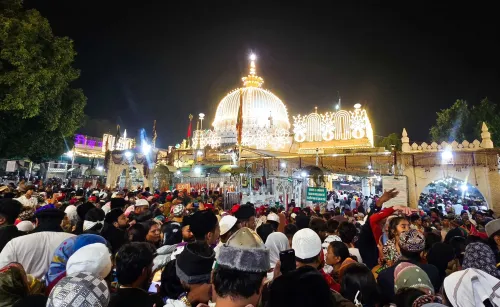
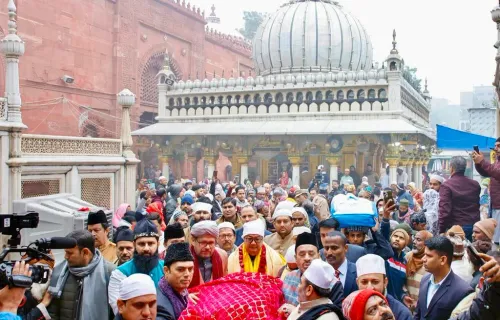
The Ajmer District Court on Saturday, 2 May 2025, reserved its order on impleadment applications in a sensitive petition claiming the existence of a Shiv temple within the premises of the Ajmer Dargah. The hearing saw heated legal arguments from multiple parties, each pressing for formal inclusion in what has become one of the most closely watched religious-site disputes in Rajasthan.
Background of the Petition
The petition has been filed by Vishnu Gupta, National President of the Hindu Sena, and Rajvardhan Singh Parmar, National President of the Maharana Pratap Sena. Their submission asserts that a Shiv temple historically existed within the Dargah premises — a claim that has drawn sustained public and legal scrutiny since it was first raised.
Two prominent bodies representing the Khadims — the hereditary custodians of the Dargah — including the office of the Dargah Diwan, filed applications under Order 1, Rule 10 of the Civil Procedure Code, seeking to be formally impleaded as parties in the case. The court's reserved order on these applications is expected to significantly shape the future course of proceedings.
Key Arguments on Both Sides
The petitioners relied on historical references, including citations from the Akbarnama, along with other documentary evidence, to substantiate their assertion. Senior Advocate A.P. Singh, appearing for the petitioners, argued,
Point of View
A historical text cited as evidence, and a call for an Archaeological Survey. The impleadment question is more than procedural: whoever is included as a party shapes the evidentiary record and the political weight of the proceedings. Notably, the Dargah Diwan's move to seek formal inclusion signals that the custodians are not leaving the legal field to the petitioners alone. The reliability of the Akbarnama as legal evidence — raised in court — is a legitimate question that courts have grappled with in similar disputes. How the Ajmer court navigates that question will set a precedent for how historical texts are weighed in religious-site cases.
NationPress
22 Sept 2026
Frequently Asked Questions
What is the Ajmer Dargah–Shiv temple dispute about?
The dispute centres on a petition filed by Hindu Sena's Vishnu Gupta and Maharana Pratap Sena's Rajvardhan Singh Parmar, claiming that a Shiv temple historically existed within the premises of the Ajmer Dargah. The petition is being heard by the Ajmer District Court.
What happened in the Ajmer court on 2 May 2025?
The Ajmer District Court held a detailed hearing on impleadment applications filed by Khadim bodies, including the Dargah Diwan, seeking to be formally included as parties in the case. After hearing all sides at length, the court reserved its order on these applications.
What is an impleadment application and why does it matter here?
An impleadment application under Order 1, Rule 10 of the Civil Procedure Code allows additional parties to be formally included in a lawsuit. In this case, the Dargah Diwan and Khadim bodies filed such applications, arguing they have a direct stake as hereditary custodians of the shrine. The court's decision will determine who formally contests the petition.
What evidence has been cited in the Ajmer Dargah case?
The petitioners have cited the Akbarnama — a Mughal-era historical text — along with other documentary evidence to support their claim. However, questions about the Akbarnama's reliability as legal evidence were raised during proceedings. Both sides have also called for the Archaeological Department to conduct surveys and scientific research.
What happens next in the Ajmer Dargah–Shiv temple case?
The court is expected to deliver its order on the impleadment applications, which will determine which parties are formally included in the case. Further proceedings, including any direction for an Archaeological Department survey, will depend on that ruling.